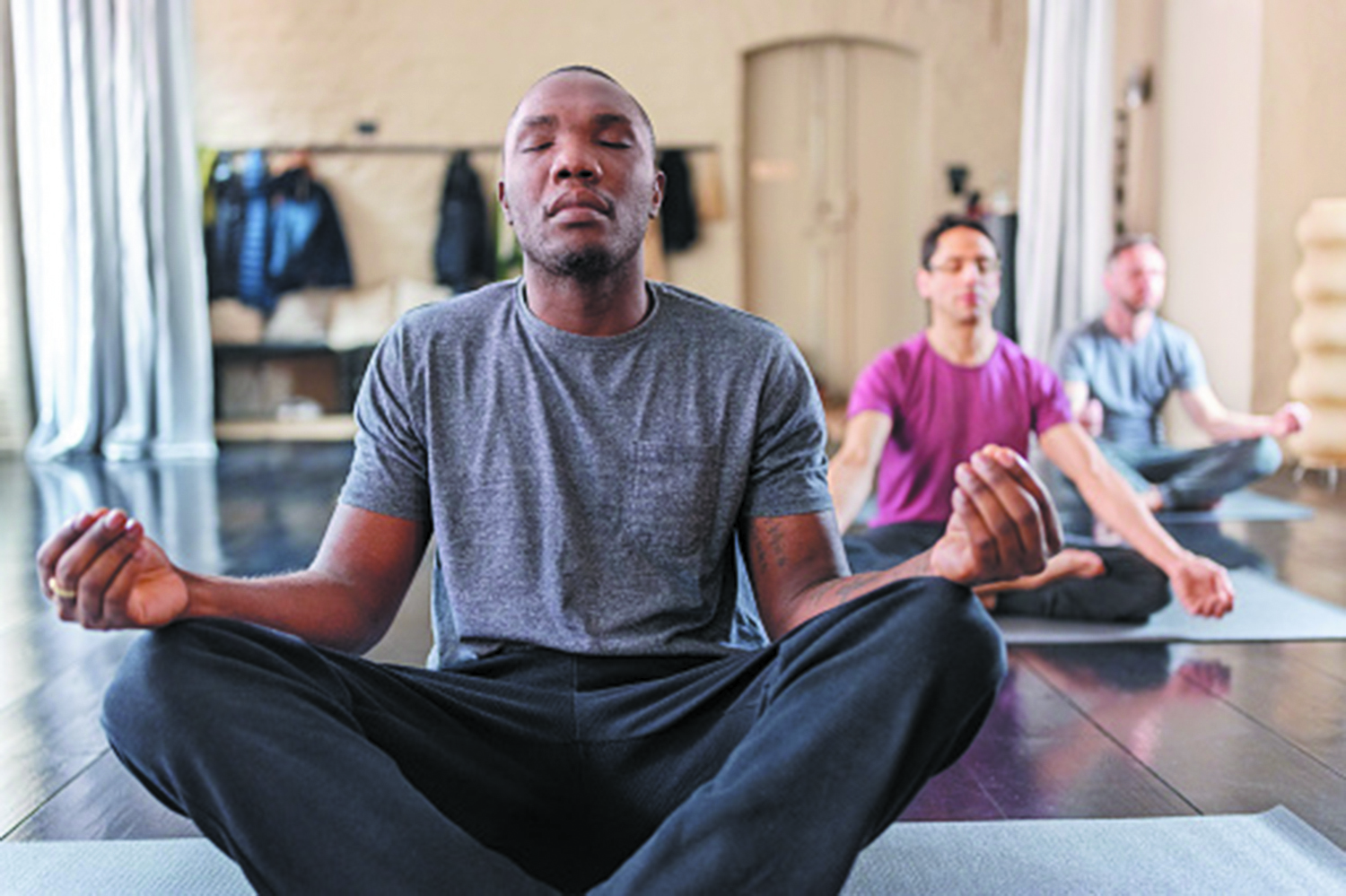
As the years go by, you may find yourself valuing presence over productivity and calm over regret, worry, and negativity. Mindfulness practices, such as meditation, focused breathing, and yoga, may help you get to a state where stress becomes more manageable, and you become better able to savor the moment.
In simple terms, mindfulness is when you are aware of all your senses and focus on the here and now. It’s not that you “empty” your mind; instead, you allow thoughts and feelings to move through your mind without letting them take over. You don’t dwell on negative experiences, your to-do list, or anything but what is happening around you.
“It’s nonjudgmental, moment-to-moment awareness,” says Darshan Mehta, MD, of Massachusetts General Hospital (MGH). He adds that mindfulness can be considered both a “state quality and a trait quality,” meaning you can be in a state of mindfulness, during meditation for example, as well as develop mindfulness as an attribute or a characteristic that shapes how you interact with the world around you.
Why Mindfulness Practices Are Important
Mindfulness can bring on immediate and ongoing benefits. It’s associated with stress relief, higher levels of life satisfaction, vitality, and adaptive emotional regulation—the ability to modify the intensity and duration of your emotions to reach a desired outcome. In other words, mindfulness may help you with skills like changing how you think and feel about a difficult situation and managing your emotions to maintain balance and respond appropriately to challenges.
Mindfulness is also associated with specific health benefits. For example, a 2023 study in the Journal of the American Heart Association found that adults who underwent a six-month mindfulness-based training program significantly improved their systolic blood pressure. And a 2022 study in the Journal of Experimental Psychology found that mindfulness meditation training was associated with improvements in working memory—the mental system that holds small amounts of information temporarily to be used in the near-term, such as solving a problem or remembering a phone number you’re about to call.
You also may experience improved sleep and cope more successfully with physical pain through mindfulness practices. Researchers also suggest that mindfulness-based treatments may help ease symptoms of depression. Focusing on the moment at hand makes your attention less likely to be pulled into negative thoughts about the past or future. Likewise, mindfulness may keep you from negative self-talk (“nothing ever works out for me” or “I’m not good enough”), which can become a pattern that fuels depression.
Dr. Mehta says the science behind mindfulness is becoming clearer as researchers learn more about what’s going on in the brain during mindfulness practices and how it impacts our epigenetics—the science that explores how external factors like our environment and behaviors influence gene activity and therefore affect health. “We’re realizing more and more about the real-world application of mindfulness as it relates to health and well-being,” he says.
Mindfulness Practices
Achieving these physical and mental health benefits means engaging in mindfulness practices.
Meditation is perhaps the best-known mindfulness exercise and may be the best place to start developing your own mindfulness skills. Dr. Mehta notes that several types of meditation practices can promote a state of mindfulness.
You can meditate while sitting or lying down (but don’t fall asleep). The key is to be quiet, comfortable, and in a place without unpleasant noise or other distractions. If you’re outside and you hear wind, water, or even gentle birdsongs, that may help put you at ease, too.
In one type of mindfulness meditation, you can begin by focusing on your breath and the physical sensation of your breathing. You may even notice the rate and depth of each breath. When a thought enters your mind, you see it, acknowledge it, and return to your breath. The idea is that your focus is just on you and how you are in the moment, and not on work, other people, or obligations you have to get to later.
Other meditative practices involve a mental body scan, in which you focus your thoughts on your feet and slowly move your attention up your body to your head. Dr. Mehta likens it to a mental MRI or CT scan. You notice the sensations in your body but do not stay stuck in one part of the body.
Another common mindfulness practice is loving-kindness meditation, which cultivates feelings of warmth, affection, and empathy toward yourself and others. While relaxed in a quiet place, you might silently repeat phrases such as, “May I be happy, may I be healthy, and may I live with ease.” You can then extend those thoughts to others, whether they are loved ones, people who you find challenging, or to all beings.
Other Mindfulness Practices
Yoga is another mindfulness practice, as your attention is occupied by your breathing as well as the movement of your body from one pose to another. People who have been doing yoga for a while may be able to use it as a mindfulness practice more than beginners, whose thoughts may be occupied by questions like “How do I get into the next position?” or “How do I look to others in this yoga class?”
Some people find that journaling can promote a sense of mindfulness. “Thinking and writing about what you’re experiencing or feeling in that moment can be very helpful,” Dr. Mehta says. “There are many practices that cultivate mindfulness.”
He adds that mindfulness isn’t restricted to meditation or journaling. You can be mindful and fully present in conversations with others, when walking the dog, or in many situations.
Getting Started with Mindfulness Practices
If you’d like to learn more about mindfulness and start engaging in practices that support it, Dr. Mehta suggests finding a class in your community or perhaps an online class that allows you to participate remotely. The Benson-Henry Institute for Mind Body Medicine at MGH offers in-person mindfulness courses and programs at its facilities in Boston, as well as online options for people anywhere. “It does require some guidance, especially at the beginning,” he says.
You can find computer or smartphone apps that teach mindfulness and offer guided meditations and other forms of education and support. Some widely used meditation apps include Headspace, Calm, and Insight Timer. Be willing to try a variety of apps or online videos to find those you think are the most beneficial.
“People are often advised to try meditation 10 to 20 minutes at a time, twice a day,” Dr. Mehta says. “You can also try multiple ‘mini-moments’ throughout the day. You can experience mindfulness in regular, everyday activities, like washing your hands. It can be a very informal practice.”