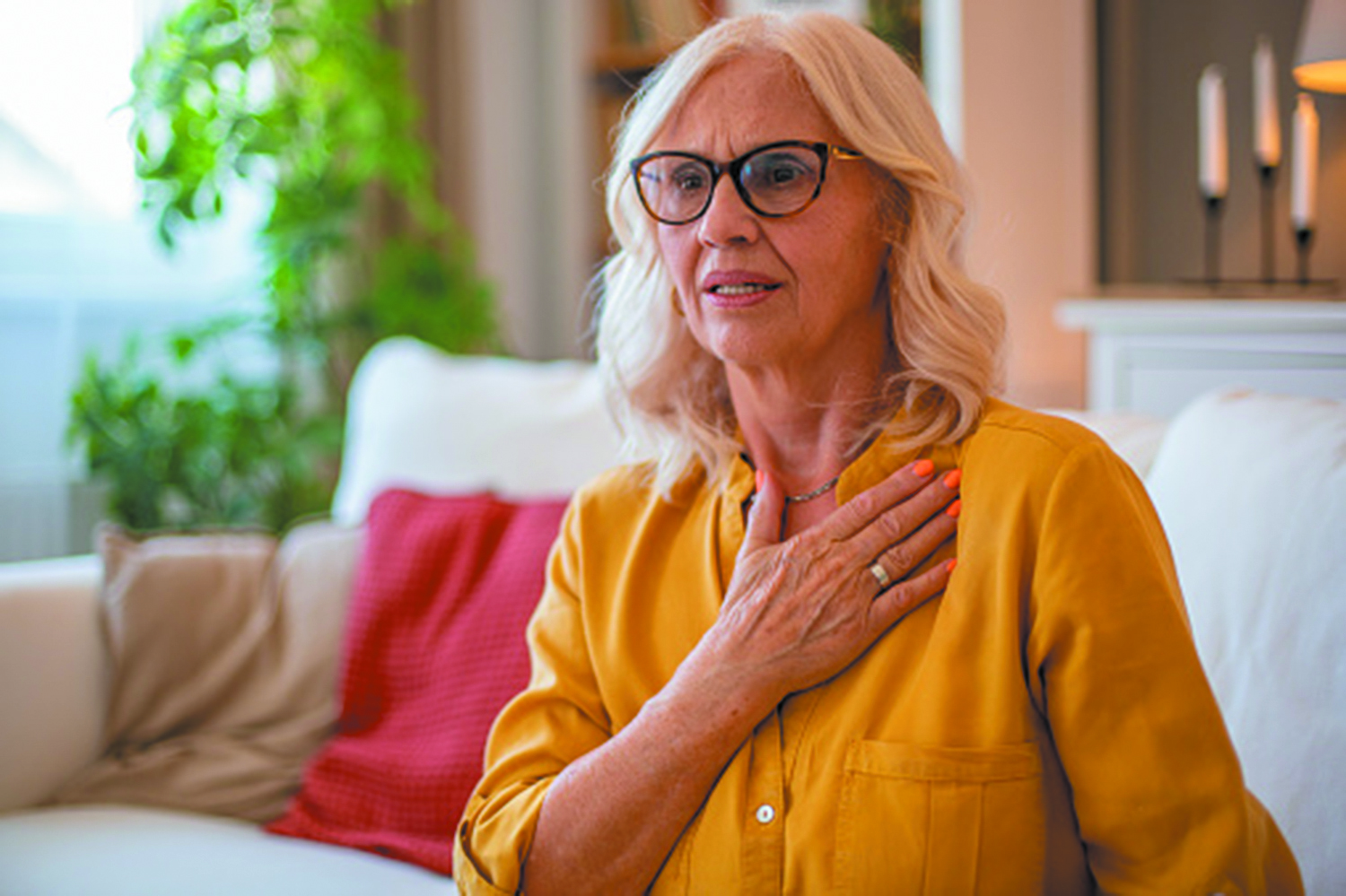
A rapid heartbeat. Tense muscles Stomach discomfort. Sometimes, you can feel them even before you’re consciously aware of anxious emotions.
You might think of anxiety as something that’s all in your mind, but this common emotional state can overtake your body just as easily. The physical symptoms of anxiety can range from a quickened pulse to the feeling that you can’t breathe or you may faint.
“Anxiety often shows up in the body before we recognize that we are anxious,” explains Amanda Baker, PhD, a Massachusetts General Hospital psychologist.
Other common symptoms of anxiety include muscle tension, sweating, stomach discomfort, restlessness, or difficulty sleeping. “While these symptoms are often paired with worried thoughts or a sense of unease, not everyone notices the cognitive signs right away,” Dr. Baker says. “So yes, it’s possible to be somewhat unaware of rising anxiety until your body sounds the alarm. Noticing physical cues can be an important part of recognizing and managing anxiety early.”
What Is Anxiety?
Anxiety is an emotion characterized by extreme worry or apprehension and one accompanied by physical symptoms of tension. Your mind and body become mobilized in response to a perceived threat or misfortune.
Given that, you may start to wonder what is anxiety and what is fear? Anxiety differs from fear in certain ways, particularly in that fear is often an appropriate, short-lived response to a threat or circumstance in your presence. You may fear going into the water at the beach because of recent shark sightings, for example. Anxiety tends to be a more future-oriented and long-acting response to a threat that may not be realistic or easy to identify.
What causes anxiety in you may be much different from what causes similar feelings and symptoms in someone else. “Triggers vary a great deal for each person, but may include public speaking or social situations, work or school pressures, health concerns, financial stress, big life changes or sensory changes such as being in a hot environment,” Dr. Baker says. “Even things like too much caffeine, lack of sleep, or scrolling on your phone late at night can make anxiety worse. Everyone has a unique set of triggers, so part of managing anxiety is learning to notice your personal patterns—what tends to set off symptoms for you.”
What Does Anxiety Feel Like?
In addition to the racing heart, shortness of breath and other physical symptoms of anxiety, you also might experience:
- Difficulty concentrating
- Nervousness, tension, or restlessness
- Sense of panic or impending doom
- Trembling
- Weakness
Anxiety can also produce a strong urge to avoid things that may trigger anxiety or that you associate with your fears or worries. If you experience symptoms that don’t seem to have an obvious cause and that linger for days, talk with your health-care provider.
What Is an Anxiety Attack?
Dr. Baker explains that an anxiety attack isn’t a formal clinical term, but it’s often how people describe feeling overwhelmed by anxiety. “It’s like a surge of racing thoughts, restlessness, and body tension that builds over time,” she says, adding that the physical symptoms of anxiety attacks. “might feel like your heart is pounding, your stomach is knotted, or you can’t take a deep breath.”
You may have also heard the term “panic attack” and wondered if it’s the same as an anxiety attack. Dr. Baker explains that the main difference is how quickly one comes on and how soon it resolves. The physical symptoms of an anxiety attack aren’t that different than those of a panic attack, but the duration of those feelings and how quickly they develop are what separate these two unofficial diagnoses.
“A panic attack tends to come on more suddenly and intensely,” Dr. Baker says. “It often peaks within minutes and may include chest pain, racing heart, dizziness, sweating, shaking, or feeling like you can’t breathe. Many people even fear they’re having a heart attack or are going to pass out. Both experiences are real and distressing—the main difference is that panic attacks are typically sharper, more intense, and shorter-lived, while anxiety attacks may feel more gradual and sustained.”
Awareness Is Key
While some physical symptoms of anxiety can be subtle, you may find it helpful to take note of unexplained episodes of a rapid heartbeat or sweaty palms. But keep in mind that not every anxious symptom or feeling is problematic.
“It’s important to note that anxiety is not dangerous or abnormal,” Dr. Baker says. “It’s a very helpful process that can unfortunately pop up in unhelpful contexts. If you notice your anxiety building in an unhelpful way, grounding yourself physically can help calm your nervous system.”
She suggests trying slow, steady breathing from your stomach rather from your chest. It can be one of the fastest routes to a more relaxed state. Try placing one hand on your chest and one hand on your stomach and inhaling slowly for five counts, exhaling for five counts, and focusing on the rise and fall of your stomach, Dr. Baker explains.
“Relaxing your muscles—progressively tensing and releasing different areas of the body—can also help,” she says. “Shifting your attention outward—naming five things you see, four things you feel, three things you hear—pulls your mind to your surroundings and out of the anxious cycle. These techniques won’t make anxiety vanish, nor should they, since anxiety is very normal, but they can slow it and help keep it from snowballing.”
If anxiety feels persistent, interferes with things like sleep or concentration, or makes you avoid activities you care about, that’s a good sign that treatment focusing on anxiety could be helpful.
“One of the most helpful steps is awareness,” Dr. Baker says. “The earlier you catch anxiety—whether through physical cues, racing thoughts, or changes in your behavior—the easier it is to manage. Think of it like a smoke alarm: It’s better to respond when you smell smoke than when the fire is already blazing. Over time, practicing calming skills regularly (not just in moments of crisis) builds resilience, so your body and mind are less reactive to stress.”