Heart catheterization is the gold standard test for identifying the presence and extent of fatty plaques obstructing blood flow through the coronary arteries. More than 1 million heart catheterizations are performed every year in the U.S. The cardiac catheterization procedure has an excellent safety record, but it is not unusual for individuals undergoing their first heart catheterization to wonder about the seriousness of the test.
“While heart catheterization is considered a minor procedure, we acknowledge that no procedure is truly minor for the patient,” says Amar Krishnaswamy, MD, a Cleveland Clinic interventional cardiologist. “It is important to understand the rationale for ordering the test and why any potential risks—even small ones—are worth taking for the benefit gleaned from the procedure.”
What Is a Heart Catheterization?
Heart catheterization is the procedure used to obtain an angiogram, an x-ray movie of the beating heart and its arteries.
A small tube is inserted in the radial artery in the right wrist or the femoral artery in the groin. A smaller catheter is then inserted through the tube and advanced into the heart.
When the catheter reaches the place where the coronary arteries branch off the aorta, a liquid contrast material (“dye”) that blocks x-rays is injected directly into the arteries while moving x-rays are taken. The “dye” reveals the internal contours of the arteries, and any areas that are narrowed or blocked by plaque are clearly seen. Because the arteries are visible only for a second before the “dye” is cleared out by the next heartbeat, the angiograms are digitally recorded for close inspection by the cardiologist.
Why Is a Heart Catheterization Done?
Several situations call for cardiac catheterization:
- An individual is experiencing severe or worsening chest discomfort or shortness of breath with exertion (angina).
- A noninvasive computed tomography (CT) scan or stress test indicates there may be a narrowed artery in the heart.
- An individual with symptoms of heart attack has arrived in the emergency department.
- To determine preoperatively whether it is safe for an individual to undergo heart surgery.
How Serious Is a Heart Catheterization?
The outcome of heart catheterization depends on what the test reveals.
“Sometimes, no blockage or an insignificant blockage is found,” Dr. Krishnaswamy says. “If we find severe narrowings, the question is whether medical therapy, angioplasty and stent placement or coronary artery bypass grafting will be the best treatment for this individual. The decision also depends on a patient’s age, presence of other medical conditions, location and characteristics of the blockage, and other clinical and anatomic features,” he adds.
What to Expect Before, During and After the Procedure
Here’s a look at what you can expect when you prepare for a cardiac catheterization, during the procedure, and afterward:
CARDIAC CATHETERIZATION PREPARATION
Preparations for a catheterization are minimal, but important.
Food and drink restrictions may differ among hospitals, but in general, you should have no food or drink for four to five hours before the procedure. At Cleveland Clinic, restrictions depend on the time your heart catheterization is scheduled: You may be told to have no food after midnight before your procedure and to limit liquids to sips of water needed to take medications. Alternatively, you will be allowed to have a small glass of juice and one piece of toast (but no coffee or tea) before 7 a.m.
Your doctor will tell you which routine medications you may take or should stop taking in advance of your catheterization. Some of these instructions are for your own safety, such as when to stop taking an anticoagulant (blood thinner). Other instructions, such as whether you should stop taking a diuretic, help ensure the test will provide the information needed to make a treatment decision.
You will probably be able to return home shortly after your catheterization. In case it is necessary to stay overnight in the hospital, you may wish to pack an overnight bag and leave it in the car for easy retrieval if it is needed.
CARDIAC CATHETERIZATION PROCEDURE
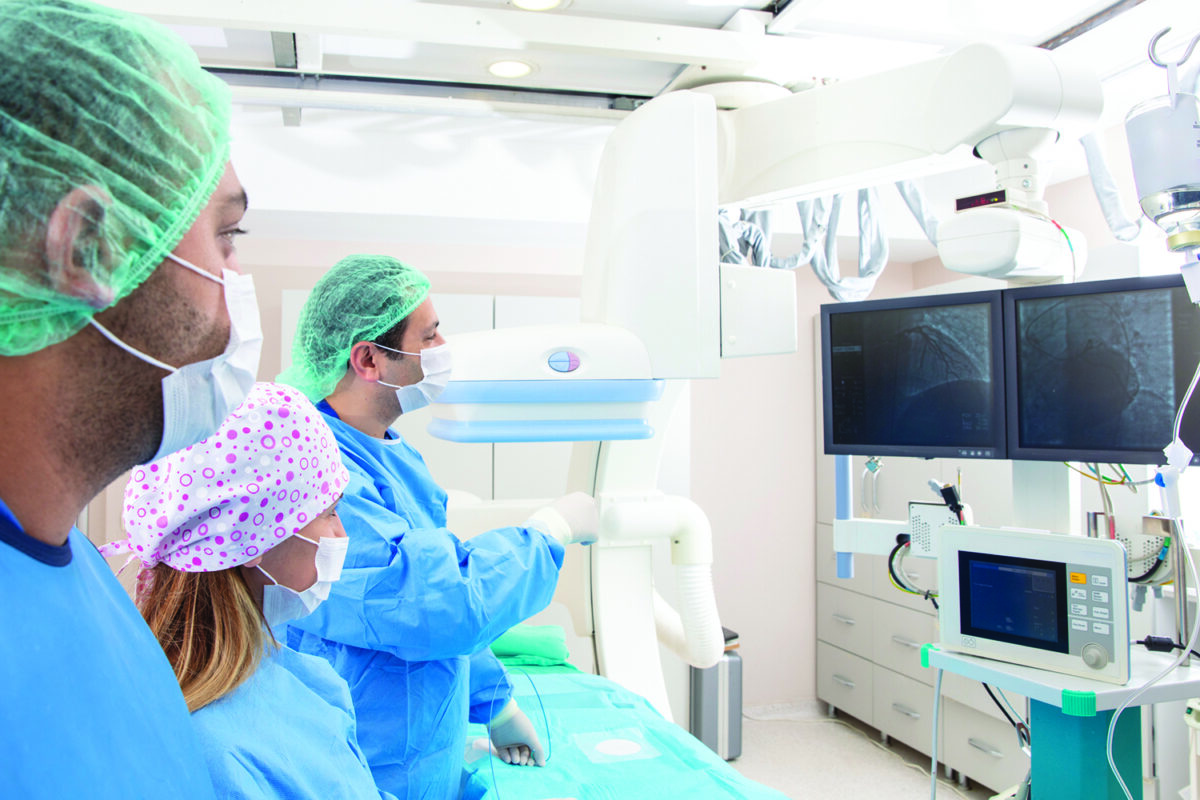
Heart catheterizations are performed in a specially equipped room called a cath lab. The procedure is not painful, so you will not be anesthetized, but you will be given medication to help you relax as the procedure begins.
In the cath lab, you will be positioned in such a way that you can see the x-ray movies of your beating heart when the contrast material is injected. You will see your arteries turn black when the contrast material blocks the x-rays. A routine diagnostic heart catheterization takes only 15 to 30 minutes. The new type of contrast material causes no sensation when it is injected.
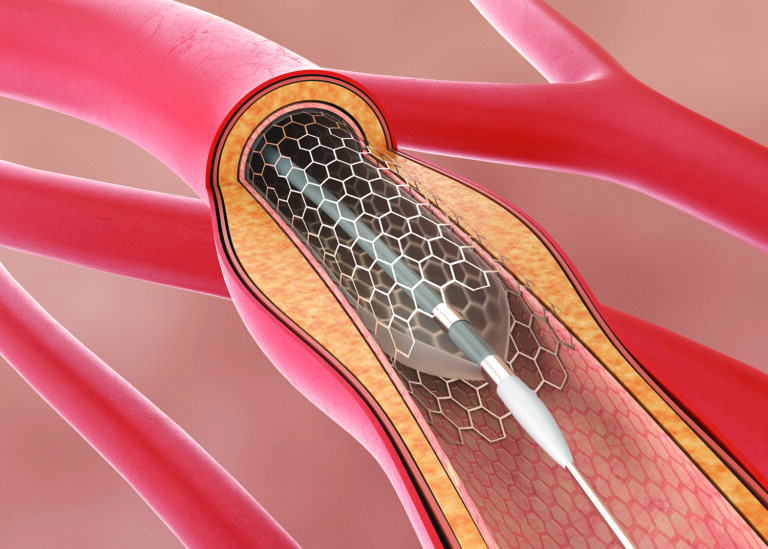
Heart catheterization is also used to identify the location of an obstruction in the coronary arteries for people undergoing angioplasty and stent placement. After the obstruction has been pinpointed, a wire is placed in the obstructed artery. Then, a balloon-tipped catheter is introduced into the arteries and, under x-ray guidance, positioned inside the obstruction. It is inflated to push the plaque against the artery walls, opening the artery to improve blood flow. The balloon is withdrawn, and a small metal scaffold known as a stent is inserted in its place and expanded to hold the artery open. When angioplasty and stent placement is performed, the procedure takes 30 minutes to several hours.
HEART CATHETERIZATION RECOVERY
Whenever possible, catheterizations are done from the wrist because it is not necessary to lie flat for several hours after the procedure. Additionally, the risks of post-procedure bleeding and bruising are minimal.
You will go home with a dressing on the site where your catheter was inserted. The next morning, you may wet the dressing during your shower and remove it. Then, cover the wound with a bandage. The site may be bruised, swollen, and pink for several days. You may feel a lump the size of a quarter at the site. This is normal.
You will be instructed to wash the catheter insertion site very gently with soap and water at least once a day for several days. Do not apply creams or lotions; keep the site clean and dry. Do not take a bath, use a hot tub or Jacuzzi, or swim for at least one week.
You may resume light activity when the insertion site has healed, usually after seven to 10 days. If your catheterization was done from the wrist, you should not lift more than two pounds during the first 24 hours or more than 10 pounds for one week.
The need for heart catheterization indicates the presence of atherosclerotic cardiovascular disease, a disease leading to heart attack and stroke. To lower this risk, after your catheterization, be sure to adopt habits that lower this risk.
“It is important that you commit to a heart-healthy lifestyle,” Dr. Krishnaswamy says. “Your healthcare team can help you achieve your goals, but it is up to you to take your medications as prescribed, make necessary dietary changes, avoid tobacco, complete a cardiac rehabilitation program, keep your follow-up appointments, and participate as an active member of your treatment team.”
Risks and Possible Complications
Heart catheterization is very safe. According to Dr. Krishnaswamy, the risk of a catastrophic complication like stroke or a tear is less than 1 in 1,000.
Most issues are minor and include discomfort at the site where the catheter was inserted. “We often give mild sedatives and pain medications during the procedure to minimize this risk. If it occurs at home, it can be easily treated with a local anesthetic or acetaminophen (Tylenol),” he says.
How to Reduce Your Risk
Pre-catheterization instructions for limiting food and drink are given for good reason. Follow them closely.
The same caution applies to stopping certain medications you take. Blood thinners, in particular, need to be discontinued 48 hours to three days before the procedure, depending on the medication. There are few exceptions.
“We must balance the risk of developing a blood clot with the risk of causing unwanted bleeding,” Dr. Krishnaswamy says. “The instructions are very specific, so you will need to talk to your doctor well before your catheterization.”
When to Call Your Doctor
If you have chest pain, shortness of breath, severe pain, or near or complete loss of consciousness, call 911 first. After you arrive at the hospital, ask a family member or member of your treatment team to call your doctor’s office, tell them what happened and let them know where you are.
“Your symptoms might stem from your catheterization, but very likely could indicate a complication related to your existing heart disease or even an unrelated medical problem,” Dr. Krishnaswamy says. “Your doctor will not be able to diagnose you over the phone. It is important that you treat symptoms like these as a medical emergency and call 911.”