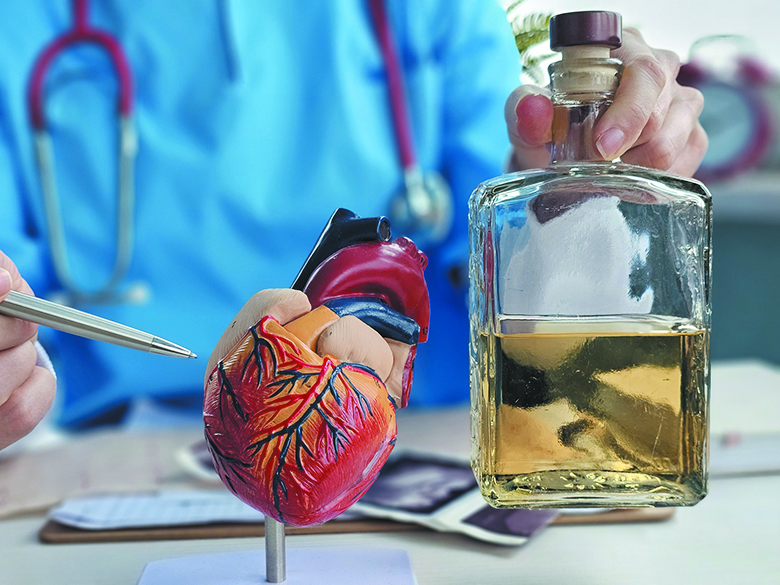
The World Health Organization says no amount of alcohol consumption is safe, while the U.S. surgeon general advised that any alcohol consumption increases cancer risk. But how does alcohol affect the heart?
In a recent scientific statement, the American Heart Association (AHA) noted that while excessive drinking or alcohol abuse may increase cardiovascular disease (CVD) risk, moderate consumption largely does not and in some cases might reduce your risk.
Still, alcohol is no boon for heart health, a Cleveland Clinic expert cautions.
“We know that alcohol is not great for your body, including your heart,” says Michelle Dodd, RD, LD, a dietitian specializing in cardiovascular health. “In no way are we saying drinking is going to be good for your heart. In preventive cardiology, regular alcohol intake is not in the picture.”
How Does Alcohol Affect the Heart?
In reviewing the available scientific evidence, the AHA experts wrote that drinking at moderate levels—widely defined as no more than two standard drinks a day for men and one a day for women—might reduce the risk of coronary artery disease and does not increase the risk of heart failure, while the effects of moderate consumption on stroke risk remain unclear. They also advised that alcohol abstainers appear to have a lower risk of atrial fibrillation than drinkers. The AHA statement cautions that heavy or binge drinking is associated with greater risks of these CVD types and sudden cardiac death (Circulation, July 8, 2025).
Here are some questions and answers about the ways alcohol can affect your risk of CVD:
Does alcohol raise blood pressure?
Alcohol initially can dilate blood vessels, but with continued consumption, the vessels constrict, thereby increasing blood pressure, Dodd says.
Does alcohol affect cholesterol?
Some evidence suggests that moderate alcohol consumption can raise levels of high-density lipoprotein (HDL “good”) cholesterol, but other data suggest this HDL is dysfunctional, meaning it may not provide a benefit. What’s clear is that heavier alcohol consumption can increase triglycerides (a type of fat in the blood linked to increased cardiovascular risk) and levels of low-density lipoprotein (LDL “bad”) cholesterol.
Does alcohol contribute to diabetes?
Drinking alcohol can cause blood-sugar levels to rise, increasing your risk of type 2 diabetes, a major CVD risk factor.
Does alcohol affect obstructive sleep apnea (OSA)?
Yes, alcohol consumption can exacerbate OSA, a condition in which the tissues in the back of your throat collapse and block your airway, resulting in frequent interruptions in breathing during sleep. OSA can increase blood pressure and has been linked to increased CVD risk.
Does alcohol contribute to obesity?
At seven calories per gram, alcohol can add to your waistline, and obesity is a significant CVD risk factor.
It’s important to note that the risks of imbibing are increased further in individuals with established CVD.
“If you’ve already had a cardiac episode or you’ve been diagnosed with cardiovascular diseases, you should abstain from alcohol,” Dodd cautions. “It’s not only because of the effect it could have on your heart and worsening symptoms, but it also interferes with a lot of cardiovascular medications. We do not recommend it at all.”
Imbibe with Caution
It’s easy to consume more than recommended amounts of alcohol (see “Standard Drinks Defined”). For instance, 5 ounces of wine is considered a standard drink, but many wine glasses hold 12 to 14 ounces or more. And while 12 ounces of regular beer (5% alcohol by volume) constitutes a standard drink, the alcohol volume of some craft beers may exceed 10%.
Given age-related changes in your body composition, metabolism and other factors, moderate alcohol intake may be risky drinking now that you’re older. In fact, the National Institute on Alcohol Abuse and Alcoholism recommends limiting alcohol consumption to one standard drink or fewer per day (seven or fewer per week) for all healthy adults over age 65.
If you do imbibe, limit your alcohol consumption to social occasions. Consider nonalcoholic beer, wine or “mocktails,” and be sure to count or record your alcohol servings to monitor how much you consume.
In the context of a heart-friendly diet, regular exercise and an otherwise healthy active lifestyle, an occasional drink probably won’t have ill effects if you don’t already have CVD, Dodd says. Talk to your doctor about your alcohol limits, and be mindful of how much and how frequently you’re drinking.
“We cannot forget that alcohol is a toxin, so how much of a toxin is going to be OK in your body? Not a lot,” she says. “No amount of alcohol is going to be suggested as healthy, but if you’re going to drink, moderation is key.”
- Beer/wine cooler
- Alcohol volume: about 5%*
- 1 drink = 12 oz.
- Table wine
- Alcohol volume: about 12%*
- 1 drink = 5 oz.
- 80-proof spirits
- Alcohol volume: about 40%
- 1 drink = 1.5 oz.†
*Alcohol content in beer and wine varies. Some craft beers may contain 10% or more alcohol per serving, while some wines exceed 17% alcohol. Read the labels and adjust your consumption accordingly.
† A mixed drink can contain one to three (or more) standard drinks.
Source: National Institute on Alcohol Abuse and Alcoholism