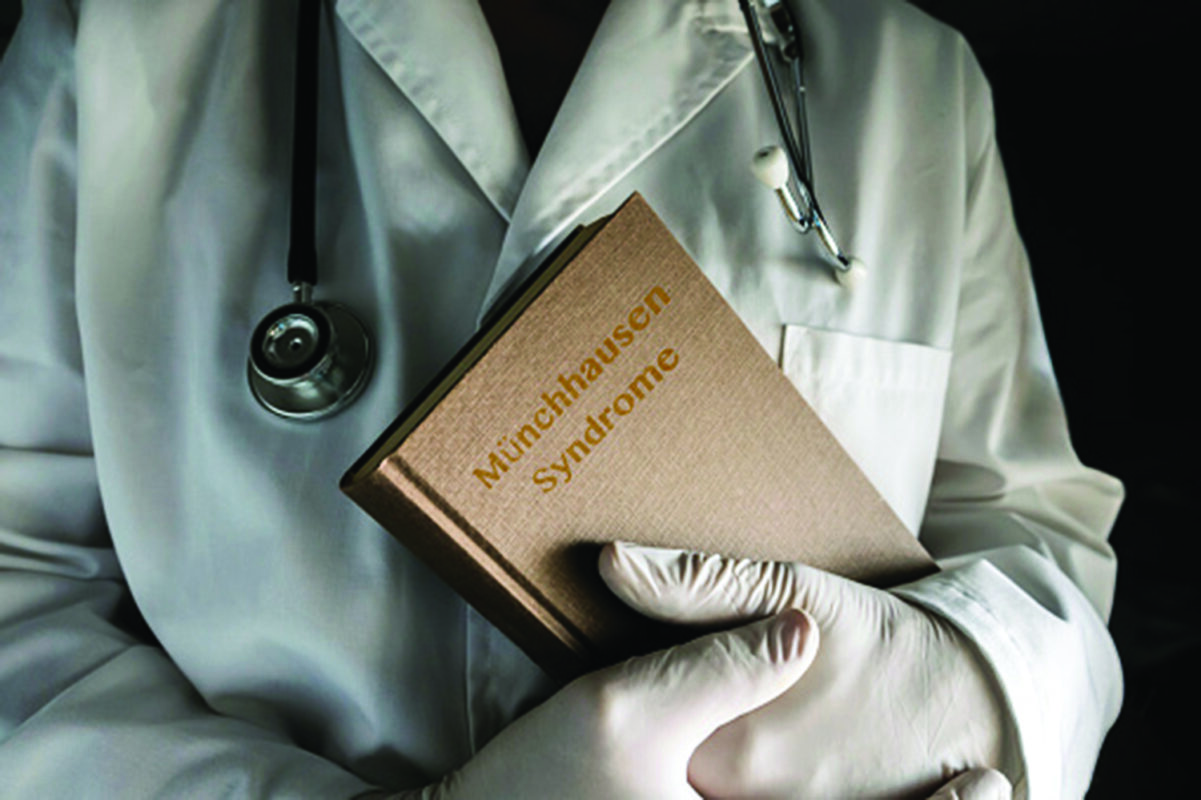
Munchausen syndrome is a psychiatric disorder in which individuals either take steps to make themselves sick or pretend to have physical or mental health symptoms. While the condition may stem from an unconscious desire to be viewed as being sick, Munchausen syndrome can lead to expensive and unnecessary tests and procedures, as well as potentially serious medical complications.
A challenge to diagnose and treat, Munchausen syndrome can also entangle loved ones and caregivers, increasing their distress and affecting their time, emotional energy, work, relationships, and quality of life.
What Is Munchausen Syndrome?
Munchausen syndrome is a condition known clinically as factitious disorder, explains psychiatrist Scott R. Beach, MD, with the Massachusetts General Hospital Psychiatric Consultation Service.
“The hallmark of the illness is that the individual actually does things to make themselves sick,” Dr. Beach adds. “For example, we know some patients with factitious disorder inject themselves with bacteria or purposefully contaminate their wounds in order to develop an infection. Another individual with factitious disorder might knowingly take insulin, even though they don’t have diabetes, in order to become hypoglycemic. Less commonly, individuals with factitious disorder may feign psychiatric symptoms, such as reporting auditory hallucinations when none are present or expressing suicidal ideation even when they don’t have any thoughts of hurting themselves.”
The condition is sometimes referred to as factitious disorder imposed on self. A related illness is Munchausen’s by proxy, or factitious disorder imposed on another (FDIA), in which a person knowingly makes another individual sick.
“The other individual is typically someone under their care, like a child,” Dr. Beach says. “Most states now classify this behavior as medical child abuse. People with factitious disorder know what they are doing, but they don’t understand why they are making themselves or others sick. We think they primarily do it because they unconsciously enjoy being in the sick role, which includes things like being taken care of.”
He adds that Munchausen syndrome is considered a “deception syndrome” because individuals knowingly deceive and lie to providers—and often family members as well—regarding the nature of their illness.
Dr. Beach also explains that factitious disorder is quite different from hypochondriasis (known colloquially as hypochondria), which is more recently recognized as illness anxiety disorder. “In illness anxiety disorder, people are very worried that they might have a specific illness, but this is scary to them, and they wouldn’t actually do anything to cause that illness,” he says. “Nonetheless, they might need constant reassurance from doctors that they don’t have a particular illness, and they might request expensive tests to prove that they aren’t sick, which could themselves carry some risk.”
Who Is at Risk?
While anyone can develop factitious disorder, the illness appears to be more common in women and those with a history of abuse in childhood (often sexual abuse), Dr. Beach says.
He adds that there seems to be an increased representation among people with jobs in healthcare fields, such as nurses or personal care assistants—including those working in hospitals, nursing homes, or as private home health aides. It isn’t surprising, given that there is a heightened risk of psychological disorders in caregivers, including family members caring for loved ones.
Dr. Beach also notes that true Munchausen syndrome, which accounts for only 8% to 10% of all factitious disorder cases, more commonly affects men, usually with antisocial personality disorder. “In psychiatry, the term Munchausen syndrome, in its purest form, actually refers to a specific subtype of factitious disorder, with very severe symptoms. In this subtype, patients move from hospital to hospital seeking care and often impersonate someone of high standing, like a war hero.”
Causes and Risk Factors
“Risk factors for factitious disorder have been described, but they aren’t well-studied,” Dr. Beach says, adding that there are no established causes of Munchausen syndrome or other forms of factitious disorder.
Risk factors may include childhood trauma, working in healthcare, and experiencing a personality disorder. Other factors associated with factitious disorder may include a strong desire to be nurtured or a need to escape or find distraction from various life stressors.
Parent-child relationships that leave a young person without a sense of being loved or cared for, or conversely, needing to be hurt or punished, may lead an individual to grow up and develop factitious disorder. Some people also have an inexplicable need to deceive, which can manifest as Munchausen syndrome or other forms of factitious disorder.
Signs and Symptoms
The signs and symptoms of Munchausen syndrome imposed on self or Munchausen syndrome by proxy can vary considerably from one person to another.
While family members and healthcare professionals don’t want to dismiss or ignore someone describing their symptoms or the symptoms of a child or someone in their care, there are some patterns worth noting. For example, an individual may seek care from many doctors and healthcare providers, or take a loved one to several different doctors. To keep the deception going, a person with factitious disorder may not want healthcare professionals talking with family or friends, or even other healthcare professionals familiar with that individual.
“Family members might be prompted to consider factitious disorder when individuals have recurrent episodes of medical illness that lack a clear explanation, or when they suspect that someone is intentionally making themselves sick,” Dr. Beach says. “In that setting, it may be worth asking the treating doctor to consider that possibility, though it is not recommended that family members directly confront the individual, as doing so will generally rupture the relationship.”
Diagnosis
“Factitious disorder is a very challenging diagnosis to make,” Dr. Beach says. “Because psychiatrists and healthcare providers don’t want to assume that anyone is intentionally making themselves ill and deceiving providers, these conditions are considered ‘rule-out disorders,’ meaning all other causes of symptoms have to be effectively eliminated.”
He adds that most confirmed cases of factitious disorder are diagnosed only when the person is actively caught doing something like manipulating a wound site. “Even then, most patients with factitious disorder will deny the behavior and often request to leave the hospital against medical advice,” Dr. Beach says. “They are generally very reluctant to see a psychiatrist.”
Maintaining thorough and up-to-date medical records is also important in having an accurate assessment of a person’s health history. An ongoing pattern of symptom onset and resolution in which no diagnosis could be made might also help determine if a person has factitious disorder.
Treatment and Protection
Despite the seriousness of the condition, effective treatment for Munchausen syndrome or related factitious disorders remains somewhat elusive. Instead, the focus is on managing the condition and preventing real harm to the individual.
“Unfortunately, there is no well-established treatment for factitious disorder,” Dr. Beach says. “No medications have been shown to be helpful. The usual recommendation is psychotherapy, but there are no structured therapies targeted at factitious disorder, and therapy has never been formally studied in this population.”
He adds that most people with factitious disorder refuse to engage with mental health professionals, and some providers are reluctant to see patients with this diagnosis.
However, that doesn’t mean you should give up on psychotherapy. Consider participating in therapy sessions with your loved one if that person agrees to see a mental health professional.
In addition to contacting local mental health resources in your community, you may want to try organizations such as NAMI (National Alliance on Mental Illness) at 1-800-950-NAMI (6264) or by texting “Family” to 62640.
In addition, if a loved one has taken steps to hurt themselves, the priority should be getting them medical attention as soon as possible. Addressing any mental health concerns can wait until they are out of any physical danger.
What to Do If You Suspect Munchausen Syndrome
If you suspect a loved one has Munchausen syndrome or a related type of factitious disorder, try to avoid direct confrontation. Words that are taken as an accusation can make people defensive or may motivate them to flee.
Instead, express concern for their symptoms and health compassionately. Try to get more information in a nonthreatening way.
If you can speak to one of their healthcare providers, share your concerns. If you have access to their medical records or you can document their medical history, share that information with their providers. You also may want to talk with a mental health professional about how to proceed.
Long-Term Effects and Recovery
Because Munchausen syndrome and other factitious disorders aren’t fully understood, there isn’t much data on the long-term effects of the condition, Dr. Beach says. “We do know that some individuals will eventually make themselves sick enough that they die, and many individuals with factitious disorder develop chronic medical problems as a result of their behavior,” he says.
The outlook for someone with factitious disorder depends greatly on their willingness to follow a treatment plan. Some people may experience a single episode, though most people deal with recurring episodes throughout their lives. For these individuals, ongoing treatment is often necessary.