Psoriasis is a common, yet often misunderstood, chronic condition. While many people associate psoriasis with visible scaly patches or itchy skin, the condition is far more complex.
“One of the biggest misconceptions is that psoriasis is just a cosmetic skin problem,” says April W. Armstrong, MD, MPH, FAAD, a UCLA dermatologist. “It is actually a chronic immune-mediated inflammatory disease. The inflammation we see on the skin can also be present in the joints and elsewhere in the body.” It’s also associated with psoriatic arthritis, obesity, and depression.
Psoriasis is considered an autoimmune disease, meaning the body’s immune system mistakenly attacks healthy skin cells. This process leads to the buildup of skin plaques, redness, and inflammation. Importantly, psoriasis is not contagious and is not caused by poor hygiene, Dr. Armstrong stresses.
Types of Psoriasis
There are several distinct forms of psoriasis, each with unique characteristics.
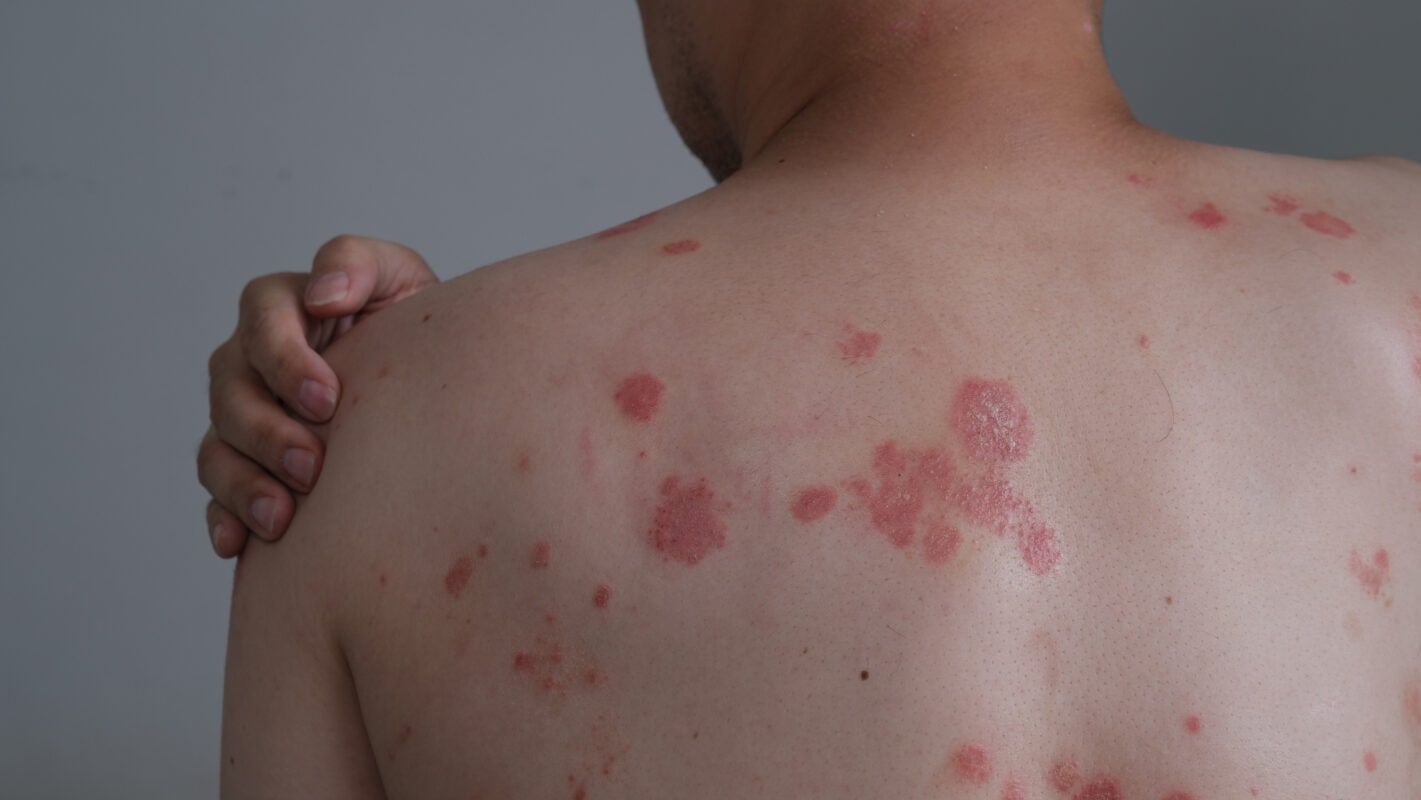
- Plaque Psoriasis. Plaque psoriasis is the most common type, accounting for about 80% to 90% of cases. It appears as raised, red patches covered with silvery-white scales. These plaques often develop on the elbows, knees, scalp, and lower back.
- Guttate Psoriasis. Guttate psoriasis is characterized by small, drop-shaped lesions. It often occurs in children or young adults and may be triggered by infections such as strep throat.
- Inverse Psoriasis. Inverse psoriasis develops in skin folds, such as under the breasts, in the groin, or around the buttocks. Unlike other forms, it appears smooth and shiny rather than scaly.
- Pustular Psoriasis. Pustular psoriasis is less common but more severe, featuring white pustules surrounded by inflamed skin. It can occur in localized areas or across the entire body.
- Erythrodermic Psoriasis. Erythrodermic psoriasis is a rare, but life-threatening, form that causes widespread redness, shedding, and intense itching or burning. Immediate medical attention is required.
- Nail Psoriasis. Nail psoriasis affects the fingernails and toenails, leading to pitting, discoloration, thickening, and separation from the nail bed.
- Scalp Psoriasis. Scalp psoriasis can range from mild flaking to thick crusted plaques covering the scalp. It may extend beyond the hairline and cause significant itching.
Symptoms and Signs
The symptoms of psoriasis vary by type but often include:
- Skin inflammation
- Thickened skin plaques with silvery scales
- Dry, cracked skin that may bleed
- Persistent itchy skin or burning sensations
- Nail changes such as pitting or separation
Symptoms can come and go, often appearing in cycles known as flares or flare-ups.
Common Causes and Risk Factors
Psoriasis is caused by a combination of genetic and environmental factors. If you have a family history of psoriasis, your risk increases significantly.
At its core, psoriasis involves an overactive immune response that speeds up skin cell production. Instead of renewing every 28 to 30 days, skin cells may turn over in just a few days, leading to buildup and inflammation.
Psoriasis Triggers and Flare-Ups
Certain triggers can worsen psoriasis symptoms or cause flare-ups:
- Cold, dry weather
- Medications, such as beta-blockers, nonsteroidal anti-inflammatory drugs (NSAIDs), lithium, interferons, antimalaria medications, ACE inhibitors, imiquimod (Aldara, Zyclara), and terbinafine (Lamisil, Terbinex). Stopping a course of systemic (e.g., oral) or strong topical corticosteroids can trigger a flare as well.
- Strep throat and other infections, such as bronchitis, COVID-19, Candida, and Staphylococcal skin infections
- Skin injuries, such as cuts or sunburn
- Stress
- Smoking
- Alcohol use
“Obesity is associated with more severe disease and can reduce treatment response,” Dr. Armstrong adds.
How Psoriasis Is Diagnosed
Psoriasis is typically diagnosed through a physical examination by a dermatologist. In some cases, a skin biopsy may be performed to confirm the diagnosis and rule out other conditions. Doctors will also assess severity, location, and whether joints are involved, which may indicate psoriatic arthritis.
Be ready to tell your health-care provider when symptoms began, whether they come and go, if you have had a recent infection, if you have joint pain or swelling, and if any family members have psoriasis.
Treatment Options for Psoriasis
“Treatment depends on disease severity, location, comorbidities, and patient goals,” Dr. Armstrong says.
Topical therapies are often the first line of treatment for mild or localized psoriasis. These treatments include corticosteroids, vitamin D analogs, retinoids, and calcineurin inhibitors.
“We now have excellent nonsteroidal options,” Dr Armstrong says. “These newer nonsteroidal topicals are important because they avoid steroid-related side effects and can be used long term. They have shown strong efficacy and good tolerability, which is a meaningful advance for patients who prefer topical management.” These medications include tapinarof (Vtama) and roflumilast (Zoryve).
Phototherapy uses controlled exposure to ultraviolet (UV) light to slow skin cell growth. “Phototherapy remain a treatment option if patients have contraindications to the aforementioned therapies or prefer a nonsystemic modality,” Dr. Armstong says.
The most commonly used approach is narrowband ultraviolet B (NB‑UVB) phototherapy, which works by suppressing overactive immune cells in the skin and slowing excessive skin‑cell turnover, leading to reduced redness, thickness, and scaling of plaques. Treatments are brief, dosing is gradually increased based on skin type and response, and patients are closely monitored to minimize side effects such as mild redness or sunburn‑like reactions.
Systemic medications. Oral medications may be prescribed for moderate to severe psoriasis that is widespread or inadequately controlled by topical treatment and phototherapy. These medications include:
- Methotrexate (Trexall, Otrexup, Rasuvo, Xatmep)
- Cyclosporine (Neoral, Sandimmune, Gengraf)
- Acitretin (Soriatane, Neotigason)
- Apremilast (Otezla)
- TYK2 inhibitors like deucravacitinib (Sotkyu)
“We now have targeted oral agents with improved safety and efficacy profiles,” Dr. Armstrong says. “Oral TYK2 inhibitors, such as deucravacitinib, have demonstrated robust skin clearance with favorable safety data.”
Biologic therapies. “Biologic therapies have transformed psoriasis care,” Dr. Armstrong notes. Biologic therapies are advanced systemic treatments that target specific immune pathways responsible for psoriasis‑related inflammation, rather than broadly suppressing the entire immune system. They are used for people with moderate to severe psoriasis or psoriatic arthritis, particularly when topical treatments, phototherapy, or traditional oral medications are inadequate or not well tolerated.
These medications are derived from living cells and are designed to block key inflammatory substances produced by the immune system that drive psoriasis activity. Biologic therapies are precision treatments, commonly targeting inflammatory proteins such as tumor necrosis factor (TNF) or interleukins (ILs) involved in psoriasis. Because they are protein‑based medicines, biologics are administered by injection or intravenous infusion, not as pills.
“The IL-17 and IL-23 inhibitors, in particular, can achieve very high rates of skin clearance,” Dr. Armstrong says. “Many patients experience near-complete or complete clearing. These therapies are generally well tolerated and allow us to treat psoriasis with precision.”
Treatment by Type
The various types of psoriasis may require different treatment strategies:
- Plaque psoriasis is usually managed with topical therapies for mild cases, including corticosteroids, vitamin D analogs, retinoids, and nonsteroidal agents such as tapinarof or roflumilast creams. Moderate to severe plaque psoriasis may require systemic medications or biologics targeting specific immune pathways (IL-17, IL-23, TNF inhibitors) to achieve clear or near-clear skin. Phototherapy can also be used if patients prefer a nonsystemic approach.
- Guttate psoriasis may respond to topical treatments and short courses of phototherapy. Because flare-ups are commonly linked to infections, addressing the underlying cause—such as treating strep throat with antibiotics—is also critical. In more persistent cases, systemic therapy may be considered.
- Inverse psoriasis, which occurs in skin folds, requires gentler treatments due to the sensitivity of these areas. Low- to mid-potency corticosteroids, topical calcineurin inhibitors, and nonsteroidal creams are preferred to reduce irritation and avoid thinning of delicate skin. Moisturizers and barrier creams can help prevent friction-related flares.
- Pustular psoriasis can be localized or generalized. Localized pustular psoriasis may respond to potent topical corticosteroids, but generalized pustular psoriasis often requires systemic therapy such as retinoids, methotrexate, cyclosporine, or biologics due to the risk of systemic complications. Hospitalization may be necessary in severe cases.
- Erythrodermic psoriasis requires immediate medical attention. Treatment usually involves hospitalization to manage fluid loss, temperature regulation, and systemic therapy to control widespread inflammation. Biologics and systemic medications are typically initiated promptly to prevent complications.
- Nail psoriasis is challenging to treat because nails respond slowly. Mild cases may benefit from topical corticosteroids or vitamin D analogs applied under or around the nail. Moderate to severe nail disease often requires systemic therapy or biologics, especially if associated with psoriatic arthritis.
- Scalp psoriasisrequires specialized topical therapies such as medicated shampoos, corticosteroid lotions or foams, and nonsteroidal agents suitable for hair-bearing areas. Severe or refractory cases may benefit from systemic therapy or phototherapy if the plaques extend beyond the scalp.
- Psoriatic arthritis treatments focus on reducing inflammation and managing symptoms through medications, physical therapy, and lifestyle adjustments to protect joints and improve function. Recognizing the signs early and seeking care can help slow progression and preserve quality of life.
Living With Psoriasis
Adopting a number of self-help and lifestyle behaviors can help you (and your health-care team) better manage psoriasis.
Home Care and Lifestyle Tips
Lifestyle changes can significantly impact psoriasis management. “Weight management, regular exercise, adequate sleep, and stress reduction can all support overall health and may improve disease control,” Dr. Armstrong says. “Lifestyle changes do not replace medical therapy, but they are an important part of comprehensive care.”
Helpful strategies include:
- Keeping the skin moisturized can help reduce discomfort and may improve tolerance of medical treatments. Look for fragrance‑free moisturizers made with mild keratolytic agents such as salicylic acid or urea, which help exfoliate and soften scales gently as well as keep the skin hydrated. Applying moisturizer especially after bathing or showering helps soothe itching and dryness throughout the day.
- Following a healthy diet. Research reported by UCLA Health suggests that avoiding inflammatory foods, particularly sugar, may improve psoriasis symptoms. Other foods that have been linked to inflammation include alcohol, red meat, saturated fats and the highly refined carbohydrates found in snack foods and ultra-processed foods. Some studies have found that the Mediterranean diet may also improve symptoms. Omega-3 fatty acids may suppress inflammatory processes.
- Using gentle skin care products. Choose mild, non-irritating cleansers that are fragrance-free. Medicated skin care products with salicylic acid may be recommended to soften and loosen scaly patches.
- Avoid known triggers. Keep a diary to track your personal triggers so you can avoid them when possible.
- Maintaining a healthy weight.
- Practicing stress-reduction techniques. Engaging in physical activity helps regulate immune responses, improve mood, and reduce stress hormones. Techniques such asmeditation, deep breathing, yoga, and tai chi can help calm the nervous system and break the stress-inflammation cycle linked to psoriasis.
- Get enough sleep. Disrupted sleep can worsen stress and inflammation.
- Address Your Emotional and Mental Health. Psoriasis can affect more than just the skin. Many patients experience anxiety, depression, or social isolation due to visible symptoms. Depression acts as a trigger for psoriasis flares, while the stress of living with a chronic skin condition causes depression. Support groups, therapy, and open communication with health-care providers can help address these challenges. Cognitive behavioral therapy can also be helpful.
Psoriatic Arthritis and Other Related Conditions
Up to 30% of people with psoriasis develop psoriatic arthritis, a chronic condition in which the body’s immune system mistakenly attacks its own joints, leading to inflammation, joint pain, swelling, and stiffness that can make movement difficult. It typically emerges years after the onset of psoriasis symptoms. Its severity is not linked to the severity of psoriasis, according to the National Psoriasis Foundation.
In cases of psoriatic arthritis, symptoms include:
- Morning joint stiffness
- Joints that are red, discolored, or warm to the touch
- Frequent joint tenderness or stiffness
- Swelling in one or more fingers or toes
- Pain in the lower back
If you suspect that you may have psoriatic arthritis, see a rheumatologist for diagnosis and treatment. Early treatment can help prevent permanent joint damage.
When to See a Doctor
You should consult a health-care provider if symptoms worsen or become painful, over-the-counter treatments are ineffective, you experience joint pain or swelling, or psoriasis interferes with your daily life. Early intervention can prevent complications and improve long-term outcomes.
Psoriasis is a complex chronic skin condition that goes far beyond surface-level symptoms. It requires a comprehensive approach to care that includes medical treatment, lifestyle adjustments, and emotional support. Modern therapies—from advanced topical treatments to biologics—have dramatically improved outcomes for patients.
As Dr. Armstrong emphasizes, “The goal today is not partial improvement. We aim for clear or almost clear skin and improved quality of life.”