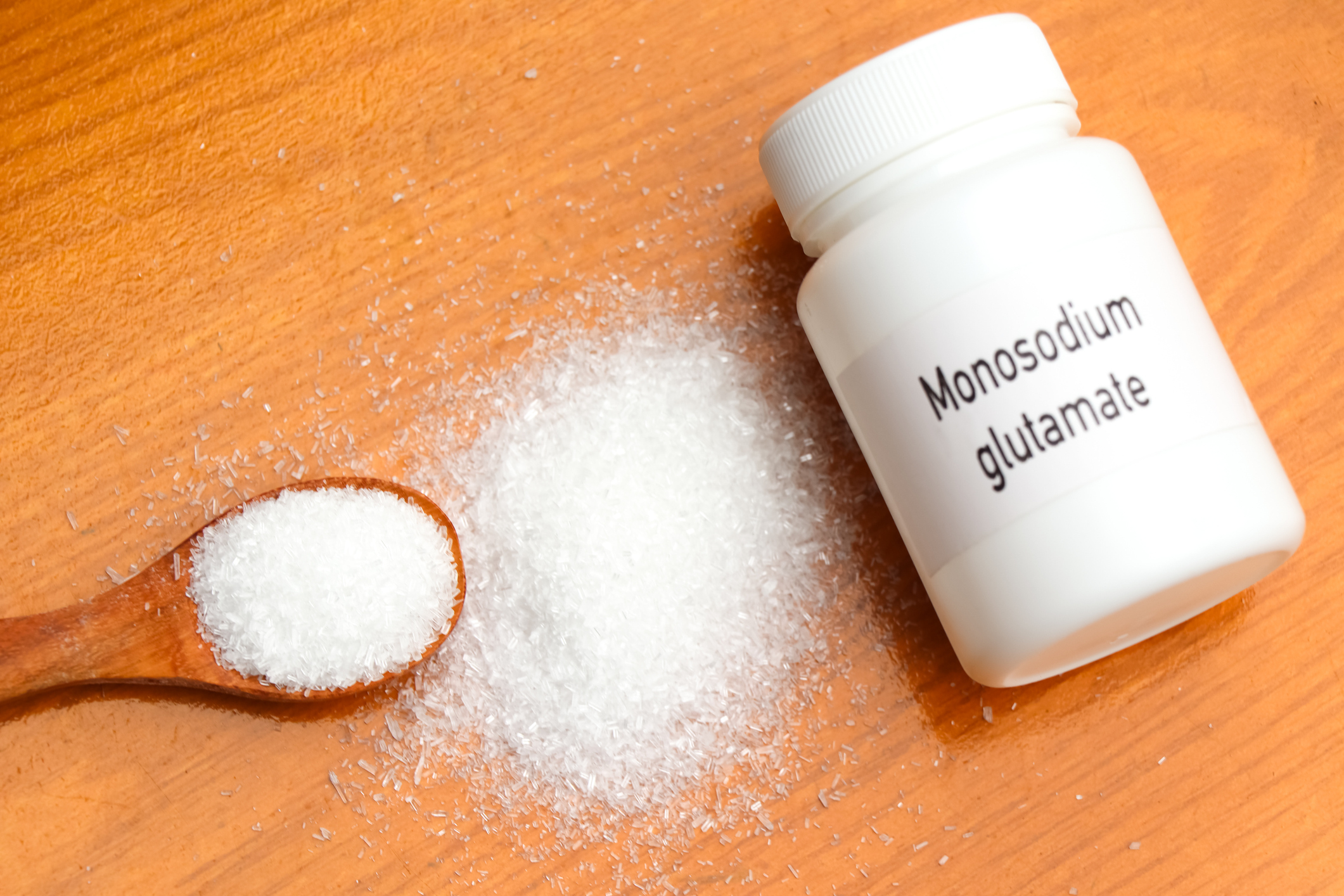
When you hear “MSG,” you probably think of Chinese restaurants and have a vague idea that it is unhealthy. Bottom Line Personal turned to Lisa R. Young, PhD, adjunct professor of nutrition at New York University, to find out exactly what is MSG made of…what MSG does…and why MSG may be bad for you.
MSG stands for “monosodium glutamate,” meaning one sodium ion and one glutamate (glutamic acid) ion. While the name sounds like something dreamed up in a chemistry lab, glutamic acid occurs naturally in proteins and in such foods as mushrooms, aged and hard cheeses and tomatoes. Just as table salt is the sodium salt of hydrochloric acid, MSG is the sodium salt of glutamic acid. It was first extracted from seaweed in 1908. Today, manufacturers produce it through fermentation (as they do with vinegar and yogurt), but it is chemically identical to the extracted version.
Just like table salt, MSG is added to food to improve flavor. It specifically unlocks taste-bud receptors for the “umami” flavor, one of the five basic tastes described as “pleasantly savory.” MSG gives foods a rich, meaty flavor.
What’s so bad about MSG?
MSG’s reputation tanked in 1968 after a doctor wrote to the New England Journal of Medicine describing his physical reaction to eating Chinese food. He speculated that MSG was the cause and coined the term “Chinese Restaurant Syndrome.” His symptoms of general weakness and palpitations were vague, but a hysteria followed, fueled by several small, poorly designed studies in which participants were given enormous amounts of pure MSG on an empty stomach. Beleaguered restaurateurs began hanging signs reassuring patrons that they did not use MSG.
Since then, multiple robust, double-blind, placebo-controlled studies from Albert Einstein College of Medicine and University of Western Sydney and other institutions have shown that MSG is essentially harmless.
While a few people may be sensitive to it, MSG sensitivity is hard to pin down scientifically. Medical consensus now holds that Chinese Restaurant Syndrome is a myth. The FDA still requires that MSG be listed as an ingredient on packaged foods but considers it “generally recognized as safe.”
The symptoms once attributed to Chinese Restaurant Syndrome and MSG sensitivity include tingling, flushing, palpitations and weakness…all transient and not related to long-term health. MSG-sensitive people are more likely to experience symptoms if they “know” a food contains MSG. Although MSG appears in chips, gravy, soups and other foods, you rarely hear about people having reactions to it outside the context of Chinese restaurants.
Is MSG okay to eat?
MSG is generally safe to consume. Ironically, there’s actually one way in which foods containing MSG might be better for you…a small amount of MSG makes food taste great, so usually dishes with MSG include less salt.
MSG’s main drawback: It is used primarily in processed foods and packaged foods, which we all should eat sparingly.