ORDER TODAY… AND BENEFIT RIGHT AWAY FROM SCIENCE-BACKED, HEALTH-ENHANCING NUTRITION INFORMATION!
Nutrition advice is tricky. Every day, social media serves up questionable hacks. Ubiquitous “influencers” push trendy fad diets. Countless websites put their spin on new nutrition research. And not all of it is accurate. Or even safe. Let the science-based information in Environmental Nutrition set you straight!
ENVIRONMENTAL NUTRITION: NOW MORE THAN EVER
You could spend hours on the Internet every day searching for medically sound diet and nutrition advice. But all too often, you’ll uncover confusing or contradictory material. Scientific data can be misreported or misleading. Opinions can masquerade as fact.
Now more than ever, you need trusted advice. On your behalf, and for your benefit, let the experts at Environmental Nutrition sift through mountains of material to help you differentiate between researched-backed information… and random misinformation. For some 50 years, this venerable publication has been the go-to resource for clear, practical, ad-free reporting on diet and nutrition.
Our mission is simple: to help you make smarter food decisions using accurate advice grounded in facts—not fads. Subscribe today and instantly begin receiving actionable, science-based insights.
Right now 70 percent of women over 50 are taking calcium supplements to strengthen their bones.
SMART EATING STARTS WITH TRUSTED INFORMATION
Inside Environmental Nutrition, there are no advertisements to color our coverage or sway our content. Our editors deliver authoritative content that links nutrition research and data to trends, tips, and advice regarding the best food choices for your health.
The result? Environmental Nutrition will help you eat a safe and sensible diet… get the nutrition you need… lose or manage weight… lower your risk of diseases linked to dietary choices… and enhance your overall health.
Our editors don’t simply regurgitate common food-and-nutrition facts. Environmental Nutrition also zeroes in on the connection between your diet and all kinds of lifestyle and environmental factors.
Example: In one recent feature, an exclusive Environmental Nutrition chart compared nutrient data of nearly 40 popular items on the menus at Arby’s, Panera Bread, Subway, and Taco Bell, among others. The calorie counts, sodium content, and saturated fats in selections you actually may have ordered might shock you! (PS: Our advertising-free policy facilitates such no-holds-barred features.)
DON’T SHORTCHANGE YOUR HEALTH!
In our younger years, we may have practiced an “anything goes” policy when it came to food. Over time, we began paying more attention to what we eat. How? By adjusting our diet to maximize health. By paying attention to ingredients. By continuing to learn which foods to add and which to avoid.
Environmental Nutrition keeps you on that healthy path. Through our incisive reports, you’ll learn about (or be reminded of) which foods have a positive impact on our health… and which can adversely affect us.
Don’t make the mistake of underestimating the power of proper food. Did you know…
- Certain foods may lower dementia risk? Easy and accessible ones are tea and berries.
- Fiber may lower the risk of osteoarthritis? In one important 19-year study, participants with the highest fiber intake had a 27 percent lower risk of developing osteoarthritis compared to those with the lowest intake.
- Anti-inflammatory foods can help reduce chronic pain in adults? On one hand, a diet high in processed sugars, refined carbohydrates, and saturated fats have been associated with increased inflammatory markers. On the other hand, diets rich in whole, plant-based foods appear to have the opposite effect. Choice selections include fatty fish, berries and cherries, leafy greens, and cruciferous vegetables.
- Probiotics do more than improve gut health? Probiotics also support your immune system and your metabolic health—critical in managing conditions like obesity and type 2 diabetes.
- Your protein needs change over time? Research suggests that older adults may need even more protein than younger people.
Subscribe to Environmental Nutrition now and enjoy the edge our legions of readers already get—diet and nutrition information that keeps you healthy today and into the future.
NUTRITION RESEARCH IS EVER-EXPANDING: DON’T GET LEFT BEHIND
Environmental Nutrition is your gateway to nutrition-based better health. Through our experts’ insightful reporting, you can stay up-to-date on ever-changing diet and nutrition recommendations.
Discover…
• Which foods can best “fuel” us to make the most of each day.
• How food preserves (or deteriorates) our health.
• Why raw foods are better—and how food packaging can affect nutrition.
• Which organic foods are worth the extra expense.
• What to look for on food labels.
• How to practice better portion control.
Subscribe now and in one year, you will have improved your health through our expert-sourced articles on nutrition… food safety… smart dietary choices… and much more!
In Environmental Nutrition, you’ll also discover tasty and healthy recipe ideas… profiles of underappreciated but always healthy foods… articles revealing the secrets of weight management… and our experts’ exclusive assessments of recommended diet plans.
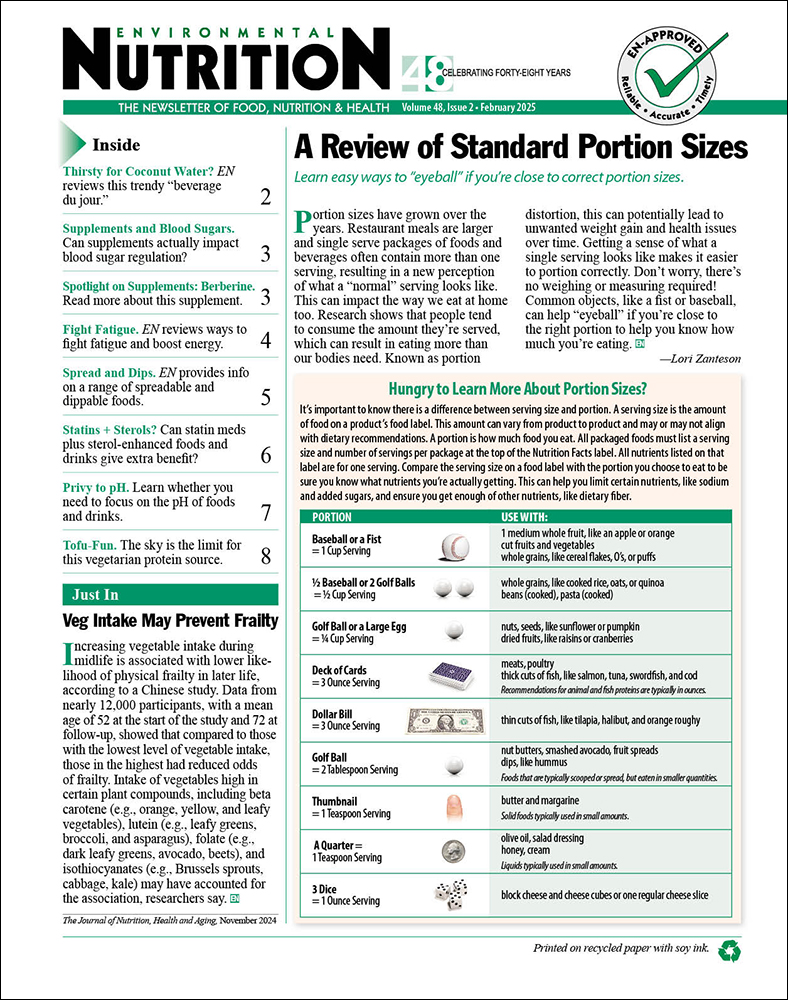
THE ENVIRONMENTAL NUTRITION EDGE
Discover the nutrition secrets longtime Environmental Nutrition readers already know—secrets that go well beyond typical nutrition reporting. You’ll find clear insights on how to optimize your health through informed food choices… on research-supported dietary habits… on meal-prepping… on the organics-foods debate… on food and fatigue… on smart lifestyle modifications… and much more!
In every issue, you’ll find depth and detail on these key aspects of diet and nutrition:
- Trends in Nutrition: Learn about gut health… the real effects of exercise on calories and hunger… plant-based, vegetarian, and vegan diets… flexitarian eating, which involves reduced (but not eliminated) meat-eating… the health benefits of probiotics, prebiotics, and fermented foods… and much more!
- Calories, Micronutrients, and Macronutrients: Our editorial team reveals the truth about calorie intake… squashes myths about protein… explains the truth behind fats… makes sense of omega-3s and how they affect longevity… and more!
- Weight Management and Wellness: Learn how to adopt safe and natural weight-loss strategies… monitor your metabolism… control hunger… and make smart choices for calorie management (hint: snack calories alone can add up to the recommended calories for a full meal!).
- Diet and Disease Prevention—and Good Health Promotion: Our feature coverage gets into proven dietary strategy that supports brain health… reduces your risk of diabetes, liver disease, and various cancers… keeps your heart healthy… and offers solutions for common deficiencies in iron, calcium, magnesium, folate, vitamin D, vitamin B12.
PUTTING THE “ENVIRONMENT” IN ENVIRONMENTAL NUTRITION
What’s in a name? Here’s how we put the “environment” in Environmental Nutrition: by keeping you up to speed on everyday diet-related issues like eco-friendly food choices… food swaps that benefit the environment… problems with fast-food eating… dangerous foods… and more!
Example: Our editors keep an eye on hot-button topics today—including the effects of microplastics in our food supply (and how to get around the problem!).
Microplastics are particles, often smaller than a sesame seed, that originate from plastic materials like water bottles and food wrappings. Microplastics form when plastics break down into progressively smaller pieces… and they enter our bodies mainly via ingestion and inhalation.
Research has shown microplastics and the chemicals they contain have been found in a variety of human tissues and organs, including blood, lungs, placenta, and breast milk. Microplastics also are suspected of being endocrine disruptors, raising the risk for cancer and heart disease. A New England Journal of Medicine report described a potential link between cardiovascular disease and microplastics found in blood vessels. Plus, the concentration of fecal microplastics was found to be higher in people with inflammatory bowel disease than in healthy people.
What can you do? Here are five strategies right out of our pages:
- Stop using takeaway cups. They can release microplastics when exposed to hot liquids.
- Drink tap water or from glass containers; microplastics can be abundant in plastic water bottles.
- Eat a varied diet so you’re not consuming a narrow range of foods that might be higher in microplastic contamination. For instance, you may not want to eat just one species of seafood.
- Don’t heat your food in plastic packaging—including storage containers.
- Eat fewer packaged selections and fast food items. Packaging can leach plastic materials into the food.
DON’T MISS AN ISSUE! ORDER BELOW!