When Wall Street investors hunt for attractive investments, they typically focus on a company’s earnings growth. But savvy long-term investors look at another metric that can be just as important—how much in marketable securities a company has on its balance sheet, says Bruce Kaser, CFA, president and CIO of Rohenth Capital Research.
What are marketable securities?
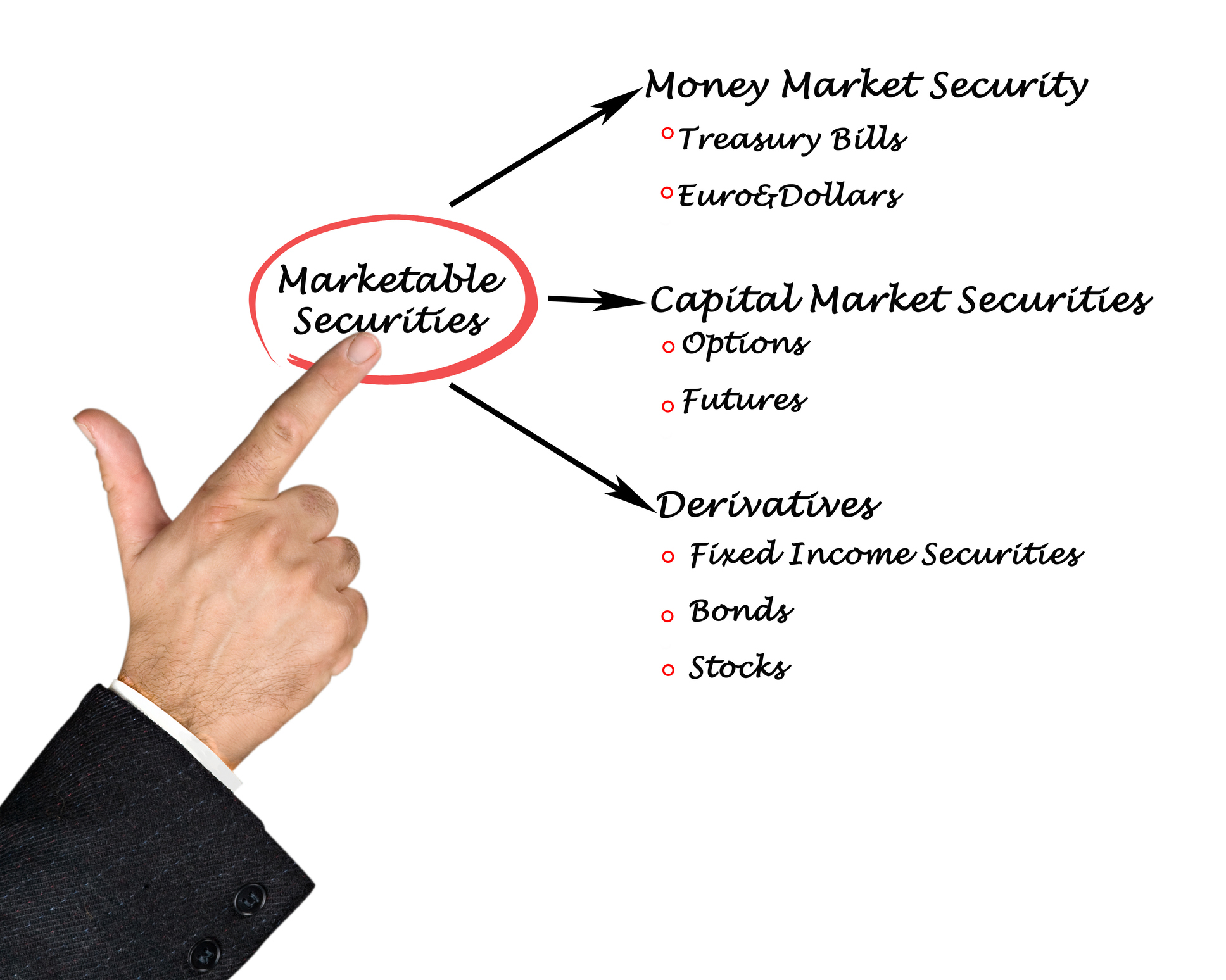
Marketable securities are purchased with excess cash that a company has on its balance sheet that can accumulate after paying for the company’s operations, capital improvements and dividends. Instead of letting that excess cash sit idle, companies invest it in marketable securities—easily tradable financial instruments that offer the potential for interest income and, on rare occasions, capital appreciation. Example: The most common definition of marketable securities is short-term, ultra-conservative investments such as commercial paper, money-market instruments and three-month US Treasury bills. These types of securities are virtually risk-free…can be sold quickly…and, in the meantime, can earn interest for the company.
Where can I see the amount of marketable securities?
You can find the marketable securities that a public company owns by looking under “current assets” on its balance sheet. Marketable securities also are sometimes listed as part of “cash and cash equivalents.”
A public company that has 5% or more of the value of its market capitalization in marketable securities may have substantial strengths including…
- Liquidity: The company can access cash rapidly if necessary for any reason.
- Shareholder friendliness: It is able to reward existing shareholders with cash dividend payouts and share buybacks, which can reduce the number of outstanding shares, increase earnings per share and boost the stock price.
- Flexibility: The company has the ability to pounce on new opportunities and be ready for potential mergers and acquisitions.
- Financial stability: The company has plenty of cash to continue to operate smoothly during uncertain economic periods when profits might weaken.
Important: Just because a company has a large horde of cash and marketable securities doesn’t necessarily make its stock a buy. You also should understand what management plans to do with all that money and whether it is finding ways to reinvest its capital back into its business at attractive rates of return.
Case Study #1: GameStop (GME). In the summer of 2025, the videogame retailer and meme darling had $8.7 billion in cash and marketable securities, which made up 95% of its market value. Management indicated that this cash pile likely will be used to fund ongoing purchases of digital assets such as Bitcoin. That’s a high-risk strategy dependent upon cryptocurrency prices going up—a strategy that has backfired recently. It also indicates that management is out of ideas about how to grow its core business.
Case study #2: Amphenol (APH) manufactures basic but essential components for the technology industry, including specialized electronic connectors, sensors and assemblies. By the end of the summer of 2025, Amphenol had about $3.9 billion in cash and marketable securities. It intends to use this for future acquisitions. For many years, Amphenol has employed a highly successful strategy of growth through acquisition, using its excess cash to buy smaller competitors in its highly fragmented industry and increase its market value.