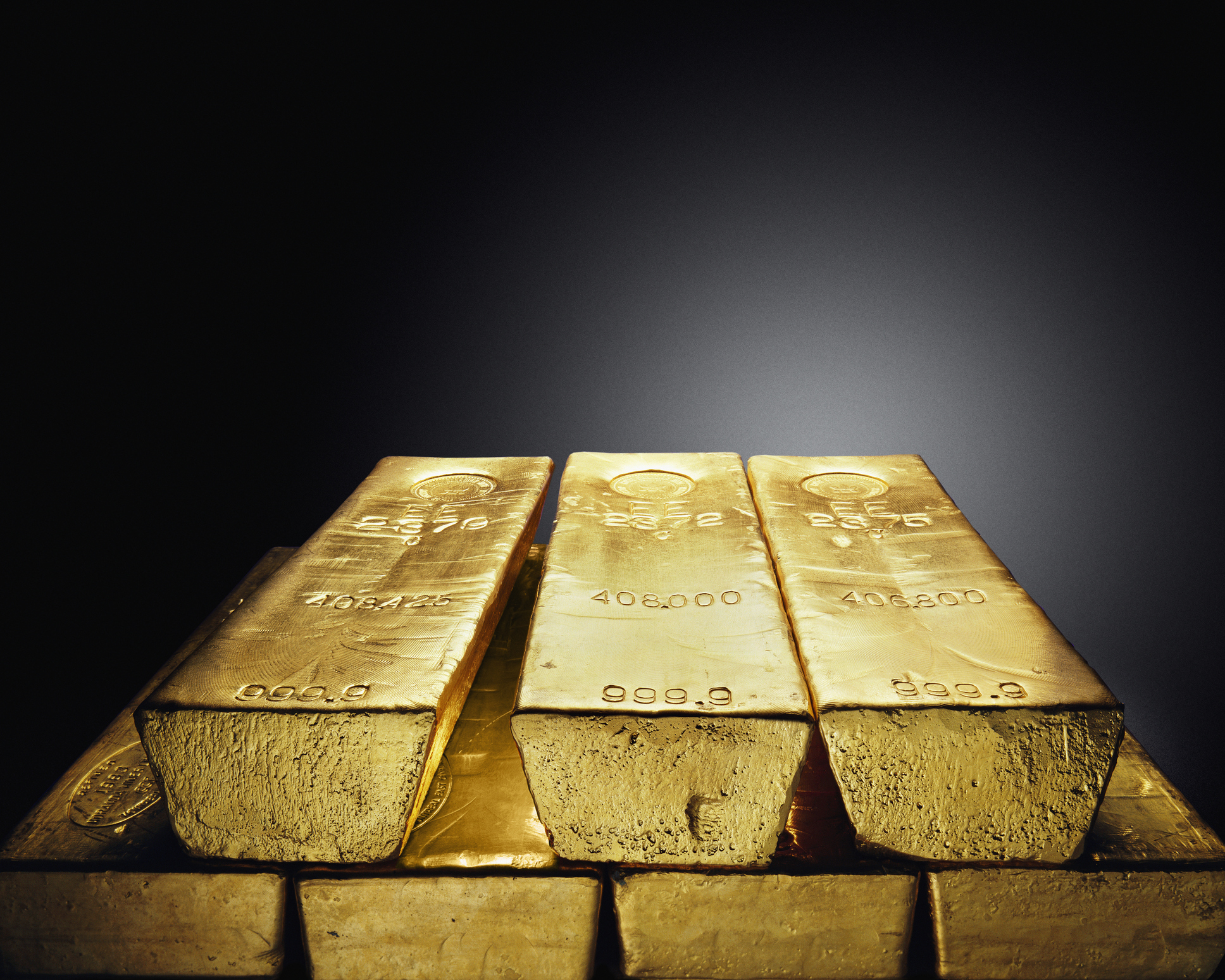
What was the best-performing asset class in 2025, beating the S&P 500 and all the Big Tech stocks? Gold! The precious metal has stunned seasoned market watchers, doubling in price over the past two years and topping $4,000 an ounce. With a gain of nearly 70% in 2025, gold had its best performance since 1979. Gold was up over 25% near the end of January 2026 while the S&P 500 was up just 2%, and market speculators started keeping an eye out for any catalyst to take profits on gold’s recent price surge. President Trump’s announcement about appointing Kevin Warsh as the next head of the Federal Reserve proved to be the triggering event.
But is gold a good investment now?
Many Wall Street analysts still think so. They see gold lifted by a perfect storm of catalysts—turmoil in global trade…stubbornly persistent inflation…out-of-control US debt…and geopolitical instability—all of which could drive gold prices much higher in the coming years.
Still, many small investors have ignored gold…and for good reason. It doesn’t generate income or cash flow, and its price can go nowhere for long periods. In fact, if you had purchased one ounce of gold in 1980 and held it, you would not have been able to sell it for the same inflation-adjusted price until just last year. As Warren Buffett famously said, “Gold just sits there and looks at you.”
To help you figure out what to do, Bottom Line Personal asked precious-metals investing expert Ralph Aldis, CFA, why gold is making such a historic run now…how much higher it could rise…and how to buy gold for your portfolio.
WHY GOLD PRICES HAVE SOARED
For thousands of years, gold has acted as a safe-haven investment during times of economic and political turmoil, thanks to its unique capacity to hold its value even as other assets fall. Current trends…
Central banks are buying record amounts of gold bullion
Foreign governments have traditionally leaned heavily on the US dollar as a reserve asset partly because of the size and strength of the US economy and the creditworthiness of US Treasuries. But that perception started shifting in 2022 when Western governments froze Russia’s foreign-exchange reserves after its invasion of Ukraine. Driven by geopolitical uncertainty, many central banks from China and Russia to India, Poland and Turkey are de-dollarizing their reserve assets to reduce exposure to US influence.
Elevated inflation
The structural forces that kept inflation below the Federal Reserve’s 2% target before 2020 have changed. US attempts to reorder global trade have buoyed inflation and scrambled economic forecasts. Investors’ ultimate fear is a mixture of high inflation and slow economic growth (known as “stagflation”) similar to what fueled the meteoric rise in the price of gold in the late 1970s and early 1980s.
The dollar tanking
The US Dollar Index—which tracks the dollar’s value relative to a basket of other major currencies— plunged 11% in 2025 and is starting the year down another one-half percent. That is a threat to its global standing as the world’s preferred currency. In previous eras, investors may have sought insurance from dollar-denominated assets like Treasuries. Some investors now view gold as a safer asset than the US dollar.
America’s inability to get its fiscal house in order
US government debt now stands at a jaw-dropping $38.5 trillion, and neither major political party has a credible plan to stop the rise. Worries over ballooning debts and deficits have cast a cloud over America’s creditworthiness, which no longer carries a top credit rating from any of the major credit-rating agencies. Washington’s fiscal irresponsibility could erode the dollar’s value and require the US to pay much higher interest rates to borrow money in the future.
SO…IS GOLD A GOOD INVESTMENT NOW?
The trends above are so entrenched and persistent that gold prices could potentially rise to $7,000 per ounce or more in the coming years. Most long-term small investors should consider owning the precious metal now—not as a speculative way to get rich but as a cushion to protect their stock-and-bond portfolios. The recent pullback in precious metal prices could be an opportunity to establish a position in your portfolio. Markets likely will be turbulent going forward, and gold has proven to be an effective diversifier because it does well in a variety of economic situations. Stress tests conducted by the World Gold Council found that adding gold to a diversified portfolio reduced declines by 50 to 90 basis points across various scenarios ranging from equity crashes to credit squeezes. If you don’t own any gold, consider building a position slowly by dollar-cost averaging (purchasing an equal dollar amount of gold every month over the next year or more).
HOW TO INVEST IN GOLD
To get the benefits of long-term diversification, investors should build a 10% weighting in gold in their overall portfolio and rebalance on a regular basis.
Conservative investors should consider purchasing an established exchange-traded fund (ETF) that simply tracks the price of gold. This avoids the hassles of owning physical gold, which include finding reputable dealers, storage and insurance. Example of a gold ETF now…
SPDR Gold Shares (GLD), which holds about $165 billion, invests in gold bullion that is kept in vaults in London, Zurich and elsewhere and is audited regularly. Each share represents one-tenth of one ounce of gold. Annual expense ratio: 0.4%. Recent share price: $455.46.
Another advantage of holding gold ETFs: The IRS allows you to own them in retirement accounts such as IRAs. If you want to own physical gold, you would have to open a specialty self-directed IRA.
Aggressive investors should look at the stocks of high-quality gold-mining companies. These investments tend to be more volatile than gold prices. When gold rises or falls, prices of mining stocks tend to rise or fall much faster because their costs are relatively fixed. Once you’ve paid to process the ore, the value of each extra ounce flows straight to the bottom line. Also, the price of gold is only one component in the underlying value of these companies. Factors like geopolitics, cost of energy and labor, and corporate governance impact the profitability of gold-mining firms. Two gold-mining stocks I like now…
Alamos Gold (AGI). Its northern Ontario mines are some of the largest operations in Canada. It also has gold-mining properties in northwestern Mexico. Recent share price: CA$54.88.
Barrick Mining Corp (B) is one of the world’s largest gold miners. In 2024, the Toronto-based firm produced nearly 3.9 million attributable ounces of gold. It has key mining operations in Nevada, Africa and South America. Recent share price: $45.16.
Moderately aggressive investors should look at gold-royalty stocks. These firms are a happy medium between owning bullion and owning gold-mining firms. Royalty companies don’t own or operate gold mines themselves. Instead, they provide upfront financing to miners in exchange for the right to purchase a portion of future production at a fixed and often heavily discounted price. Advantages: Royalty companies avoid huge operating expenses and other liabilities involved in mining gold, plus they pay a cash dividend. Two royalty companies I like now…
Royal Gold (RGLD) earns royalties from more than 40 mines worldwide, located in such mining-friendly jurisdictions as Mexico, Chile and the US. It has increased its dividend for 25 straight years. Recent yield: 0.71% Recent share price: $265.77.
Wheaton Precious Metals Corp. (WPM) owns royalty rights to major mines in Canada, Brazil, Peru and Mexico. It has higher exposure to the silver price. Recent yield: 0.49%. Recent share price: CA$185.90.
GOLD AND YOUR TAXES
Gold receives a more complicated tax treatment from the IRS than other asset classes. In taxable accounts, gold coins, gold bullion and gold ETFs all are considered “collectibles,” similar to fine wines and art. That means any long-term capital gains are taxed at ordinary income tax bracket rates up to 28%. But if you hold gold-mining or gold-royalty stocks in a taxable account, they’re treated just like any other stock with long-term capital-gains tax rates of 0%, 15% or 20% based on your income tax bracket.
In traditional tax-advantaged accounts, taxes on any appreciation of gold coins, bullion, ETFs or stocks are due only when you take a distribution from the account. Those distributions all are taxed as ordinary income. (Withdrawals from Roth accounts are tax-free.)