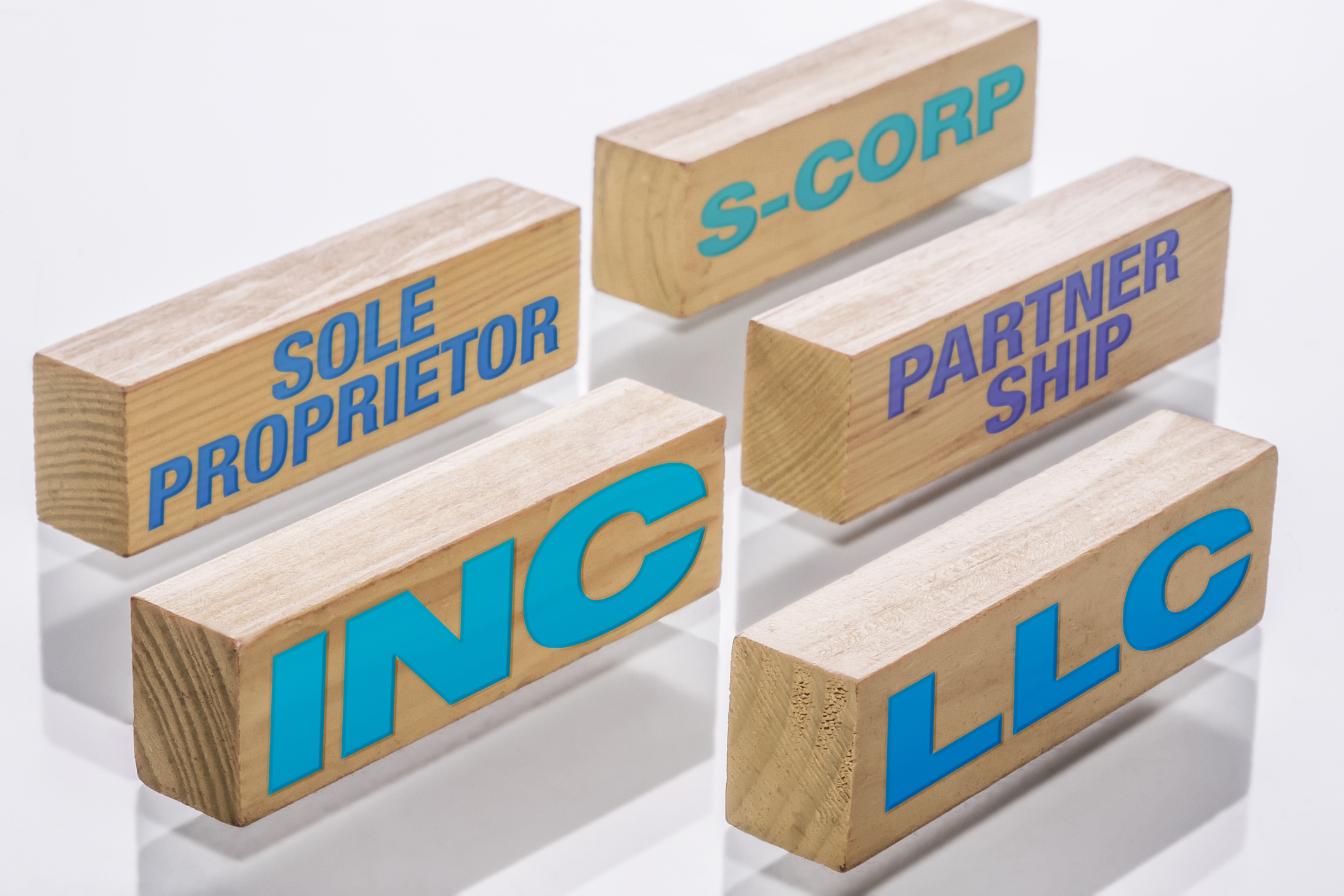
Many people who start a small business, run a family firm or work a side gig are considered “sole proprietors” in the eyes of the IRS. It’s the simplest way to be in business for yourself. You can keep all your business profits, report them on your individual income tax return and pay an additional 15.3% self-employment tax for Social Security and Medicare.
But if you start to earn more revenue…hire employees or take on partners…and/or anticipate borrowing significant capital to grow, it’s a smart idea to create a business entity that legally separates your business and your personal finances and can potentially save you money on taxes.
The two most popular business entities are Limited Liability Companies (LLCs) and S-Corporations (S-Corps). Main advantages of each…
Liability protection. Unlike a sole proprietorship, if the business incurs debt or you get sued, your personal assets such as your house and savings account generally are shielded from any financial judgments
Pass-through taxation. Your business does not have to pay federal income tax. Profits still pass directly to you (and other co-owners of your business) and are taxed at each owner’s personal income tax rate.
Helpful resource: For a guide to creating these types of business entities with your state and the IRS, go to SBA.gov/business-guide/launch-your-business.
LLC vs. S-Corp: Which Is Right for You?
What is an LLC Best for?
Small businesses in their early stages, making less than $50,000 annually in earnings…and for business owners who don’t foresee raising large amounts of capital from private investors or by going public.
Pros…
Easy and inexpensive to operate. You are required to file an annual report with your state (costs range from $0 to $800 or more), but there are few other reporting obligations. This report is essentially a confirmation of information regarding business names, address, shareholders, etc. It is typically very short and can be completed on the state website in under 30 minutes. The fees are due annually each time you file a required annual report of this type.
Provides significant flexibility in ownership and management. LLCs can have one or more owners (known as “members”). Members can hire managers or choose to appoint officers who make business decisions for the LLC. Profits from the company can be distributed to members any way they choose.
Cons…
Taxes. As with a sole proprietorship, you must pay both self-employment tax and income tax on any profits you take from the business.
No shareholders. LLCs typically cannot issue stock shares in the business and cannot have shareholders, which may limit options for attracting investment money.
Business restrictions. Depending upon your state, you may not be able to operate a business such as a certified public accountant (CPA) or medical practice as an LLC. Some states offer a related business entity know as a “professional LLC” (PLLC).
What is an S-Corp Best for?
Small and medium-sized businesses with more than $50,000 in profits annually. You expect profits and compensation to keep growing so you need savvier strategies for dealing with taxes. You plan to grow up your business by seeking large amounts of capital.
Pros…
Greater potential tax savings than an LLC. S-Corps are corporations that have elected to be taxed under subchapter S of the Internal Revenue Code. This allows you to reduce the burden of high self-employment tax. How it works: The S-Corp can pay you and other employees a salary out of its profits. The salary is subject to payroll taxes, similar to self-employment tax, but any remaining profits can be taken as a shareholder distribution and avoid self-employment tax. Example: You have an S-Corp that generates $100,000 in profits. You could draw a salary of $60,000, but the remaining $40,000 will be subject to only income tax, not self-employment tax.
Wider options for raising capital. S-Corps can issue stock, making it easier to attract investors. Investors and banks often prefer to invest in corporations rather than LLCs because corporations are generally better for recapitalizing and reorganizing over time as a business grows.
Cons…
The IRS requires that the owners’ salaries be “reasonable.” That means the salaries must be comparable to what other businesses in the same industry and geographic location pay for similar services. The IRS closely scrutinizes this, and if your salary is deemed too low, you face penalties and additional taxes.
Strict compliance requirements. An S-Corp must have a board of directors, designated officers, hold regular board and shareholder meetings, and provide extensive recordkeeping. Example: S-Corps must distribute profits strictly according to each shareholder’s percentage of ownership in the business. If you own half the company with someone else, and you draw $5,000 as a distribution, you must distribute $5,000 to the other owner as well.
Greater costs to meet compliance requirements. Expect to pay a minimum of several thousand dollars a year to your tax profession. You may need to hire professionals to help with bookkeeping and annual reporting. It’s also recommended that S-Corps use an independent payroll service—payroll requirements and reporting are the most common ways S-Corps make mistakes, and those mistakes can carry steep fines and penalties from states and the IRS.