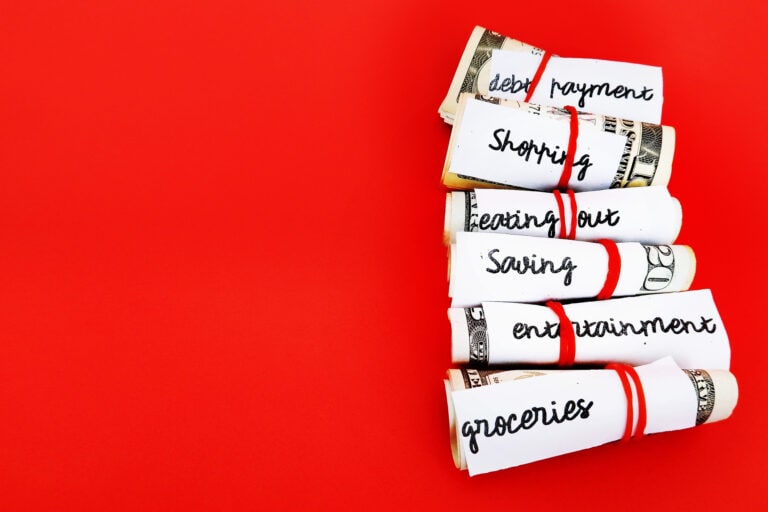
Many of us worry about becoming better earners, savers and investors, but we rarely pay much attention to how we can improve our spending habits. Reason: Spending is the one area of personal finance that’s supposed to be easy and fun. You get to indulge yourself and enjoy the rewards of your hard work.
Money can buy happiness, says behavioral finance expert and best-selling author Morgan Housel, author of the new book The Art of Spending Money. But spending money the right way is surprisingly complicated, and it is easy to get it wrong.
The average credit card debt per household is about $6,500, and many of us can’t explain what all that money was for or even whether those purchases improved our lives. We often overestimate how much enjoyment we will derive from an expensive purchase and how long that excitement will last…or we spend just to impress others. Just having more money to spend doesn’t solve the problem—millionaires are as discontent with what they buy as the rest of us.
Bottom Line Personal spoke to Morgan Housel, partner at venture-capital firm The Collaborative Fund, to find out why spending is so complicated and the steps you need to take to feel more satisfied with what you buy…
Why we spend: People think of spending money in simplistic terms—This is what I want…this is how much it costs…and this is what I can afford. But if you want to improve your spending habits and decisions, you need to act less impulsively and change those habits, and instead, examine the psychological and physiological drivers, as well as immense social pressures that accompany spending. Some of the underlying drivers to be aware of…
Our brains are hardwired to want more…more…more. More stimulation…more surprise. We crave what we don’t have. And once we get it, the goalposts move, and we immediately ask, What’s next?
It is difficult to imagine our lives and feelings in the medium- and long-term future. This is the same weakness that makes personal-finance skills such as saving money and investing so challenging. We’re addicted to the instant gratification we derive from spending. It’s harder to make choices that provide more durable and subtle joy. Example: We opt for the $7 lattes and the big-screen TVs even if we realize spending on a vacation with our children will create wonderful memories that we all will enjoy years later.
Strategies to Change Your Spending Habits
The following six strategies will allow you to use money as a tool for a better life rather than letting it control you…
Consider the “all-in” costs when you make a purchase
We often fool ourselves and compromise our enjoyment of purchases by focusing on the initial price and either underestimate or ignore embedded future costs. Example: You strive to get a vacation home but don’t weigh the aggravation of spending tens of thousands of dollars to replace something mundane like gutters or getting sued by the neighbors because your trees are encroaching their property.
Minimize future regret
One of the major conflicts with money that most people struggle with is whether to spend today or save for the future. The Nobel Prize–winning psychologist Daniel Kahneman once said the key to effectively using money is having a well-calibrated sense of future regret. In other words, you need to accurately understand how you will feel about your current decisions at various points in the future. This is a handy framework for addressing spend-or-save issues.
Ways to minimize future regret: View saving as actively purchasing something that will be extremely valuable to you in the future—financial independence and control over your schedule. At the same time, there likely are certain choices that you know you will deeply regret not spending money on. Most of them revolve around spending time and vacations with your family.
Before you make luxury purchases, take the “Desert Island” test
How it works: If you and your family were stranded on an island with no one else around to notice you…and you could have any material goods you desire…what would you own? This instantly illuminates how much you are influenced by internal benchmarks (Will this purchase feed my soul or make my life more pleasant, comfortable, interesting or fulfilling?) versus external benchmarks (Am I spending money on status and brand to project an image of wealth or lifestyle so that strangers and acquaintances will like me more?) On a desert island, you would readily value comfort over appearance, the right fabric over the right logo…function more than brand…durability more than prestige…the view over a prestigious zip code…and social interaction more than social hierarchy.
Why external benchmarks are so problematic: You might think that displaying your success to strangers brings you attention and admiration. But often it just stirs up envy and jealousy that makes other people’s tolerance for us shrink. And it is impossible to win the social-comparison game because no matter how much you spend to impress, there’s always someone showing off more elaborately. Once you stop using spending as a yardstick of status, it is much easier to enjoy your money, regardless of how you choose to spend it. Plus, your satisfaction with what you already have tends to grow.
Spend more money to save time
We often resist paying for time-saving services such as grocery shopping and running errands. Yet even for people with minimal discretionary income, studies show that spending money to save time increases our sense of well-being significantly more than buying material items of similar value.
Align your spending with your personal values
This is the single biggest transformation to make. You’ll create a longer-lasting sense of satisfaction and contentedness if you tether your money choices that reflect what matters deeply to you and how you want to live rather than conform to other people’s identities. Example: Many folks say their goal is to spend more time traveling and doing activities with the family or the grandkids—but then they go out and purchase something like a BMW Z4 two-seat roadster. Your entire life doesn’t need to be composed of practical or utilitarian purchases and you still can spend on non-essentials, but look for balance and strive to live a more authentic financial life. A nice, big house can make you happier—but mostly because you get to spend time with friends and family there.
Write your reverse obituary
To help you pinpoint your underlying values and goals, write down what you want your obituary to say, then look at your spending habits in that context. Most of us want our obituaries to say, She was loved…He was a good parent and spouse…she was admired and respected in her community and profession for her achievements and caring. No one wants their obituary to mention the type of Italian marble he used for his kitchen counter—we inherently know those things don’t really matter the most.