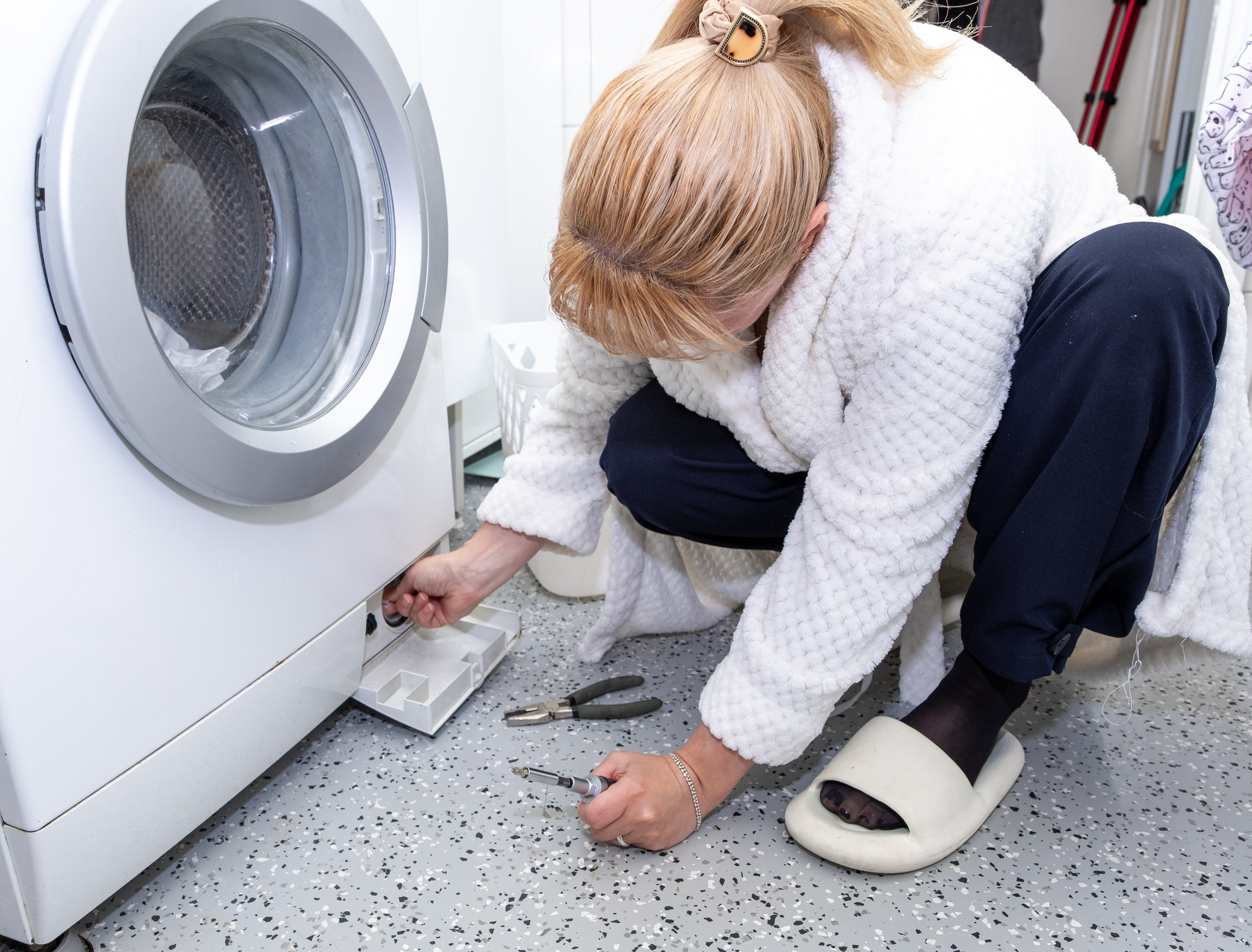
Hiring a pro to repair a washing machine can cost $200 to $300 or even more. Fortunately, many handy homeowners can handle their own washing machine repairs, according to appliance repair pro Ben Schlichter of Ben’s Appliances. Bottom Line Personal asked Schlichter how appliance owners can diagnose and fix washing machines’ most common problems.
Before you start: Ease of repair, replacement part availability and prices vary from washer to washer. Before attempting any repair, enter the make and model of your washer plus keywords related to the problem or part into YouTube to see if anyone has posted step-by-step videos that show how to access the interior of the unit and complete the repair. Also enter relevant terms into a search engine to locate replacement parts for sale.
Problem: Washer won’t start
If the washer has no power at all, the problem could be something as simple as a loose plug or a tripped circuit breaker. If the machine has power but won’t start, look for an error code on the display when you press the start button. These codes vary by manufacturer but typically are two or three letters and/or numerals, although some units express codes with blinking lights, such as two blinks, pause, four blinks. Enter the code, the washer’s manufacturer and the terms “washing machine” and “error code” into a search engine to determine what it means…or refer to the troubleshooting section of your washer’s user manual.
Sometimes the solution is straightforward—if the code indicates the front-load washer’s door isn’t closed, for example, close it. Other codes point to problems with specific components. If someone has posted a YouTube video showing how to deal with your machine’s particular problem, DIY repairs will be far more feasible. “YouTube is a great resource for this,” says Schlichter.
DIY repairs will be much more difficult if there isn’t a code or troubleshooting video.
Problem: Washer is loud and bouncing around
This often is caused by an unbalanced laundry load. Pause the wash cycle, look in the drum, and check to see if much of the load—or at least most of the heavy items—are on the same side of the drum. If so, redistribute the laundry or remove heavy items like blankets and wash those separately.
Bouncing around also could mean the washer is sitting on an uneven floor. If you can rock the unit noticeably when it’s not in use, adjust the unit’s feet until it is stable.
If neither of those are the issue, the problem is probably with the unit’s suspension rods if it’s a top-loader…or its shock absorbers if it’s a front-loader. What to do: With the unit powered off, firmly push the inner tub down or to one side—if it feels loose and/or bounces around for a few seconds before returning to its proper position, the suspension rods or shock absorbers are likely the issue. Replacing suspension rods or shock absorbers is a straightforward DIY project with most washers—you can find instructions on YouTube for your particular machine. A set of replacement rods or shock absorbers could cost anywhere from under $30 to more than $200, depending on the unit. Helpful: Before buying replacement parts, unscrew the access panel (check your owner’s manual to find out where it is) and look behind the panel to see if any screws, bolts or other parts are loose—tightening these might do the trick.
Less frequently, bouncing around can be caused by a damaged drive hub at the base of the tub. What to do: With the unit off, spin the inner tub as fast as possible by hand, then watch the gap between the edge of this inner tub and the adjacent edge of the outer tub that surrounds it. If this gap varies noticeably in width as the tub spins, the hub is probably the problem. Replacing the hub tends to be within a homeowner’s abilities, with replacement hubs often costing under $50.
Problem: Washer isn’t draining
Draining problems often are caused by an obstructed drain line or a failed drain pump. What to do: Unplug the unit, and remove as much water from the drum as possible. Scoop out the water with a bowl or use a wet/dry shop vac. You also might be able to drain the water by lowering the washer’s drain hose so that it can escape via gravity alone—be ready with lots of buckets.
Once drained, check the drain line (from the drain pump to and from the tub, then to and from the standpipe) for obstructions. Access will vary based on the machine, but drain pumps are always located at the front and bottom. If there’s an access panel for the filter, this will help resolve some problems. Some units will have access holes directly under the machine for easier access of the pump, but due to the weight of machines, it may not be advisable to tilt back the machine to diagnose and repair.
If you don’t find an obstruction in the drain line, there might be an obstruction in the line leading to the drain pump…or that pump might have to be replaced. Accessing, assessing, and replacing a washer’s pump is an achievable DIY project with most washers. Replacement pump prices vary but can be under $50 for an aftermarket pump. Example: Choice Manufactured Parts’ DP1 Universal Drain Pump, which fits many GE, LG and Whirlpool washers, sells for around $35.
Helpful: If there’s no humming noise when the unit should be draining, the problem might be with the electrical connection between the control panel and the pump. “Look for loose or damaged wires,” says Schlichter.
Problem: Washer isn’t spinning
If the washer makes an effort to spin but gives up before reaching full speed, the issue likely is an unbalanced load or suspension issue—refer to the section on bouncing around above. If the washer is making no effort to spin, there could be a problem with its shift actuator, the component that allows the washer to switch from agitating to spinning. Replacing this part is an achievable DIY project with most washers, and replacement part prices range from under $20 to more than $100.