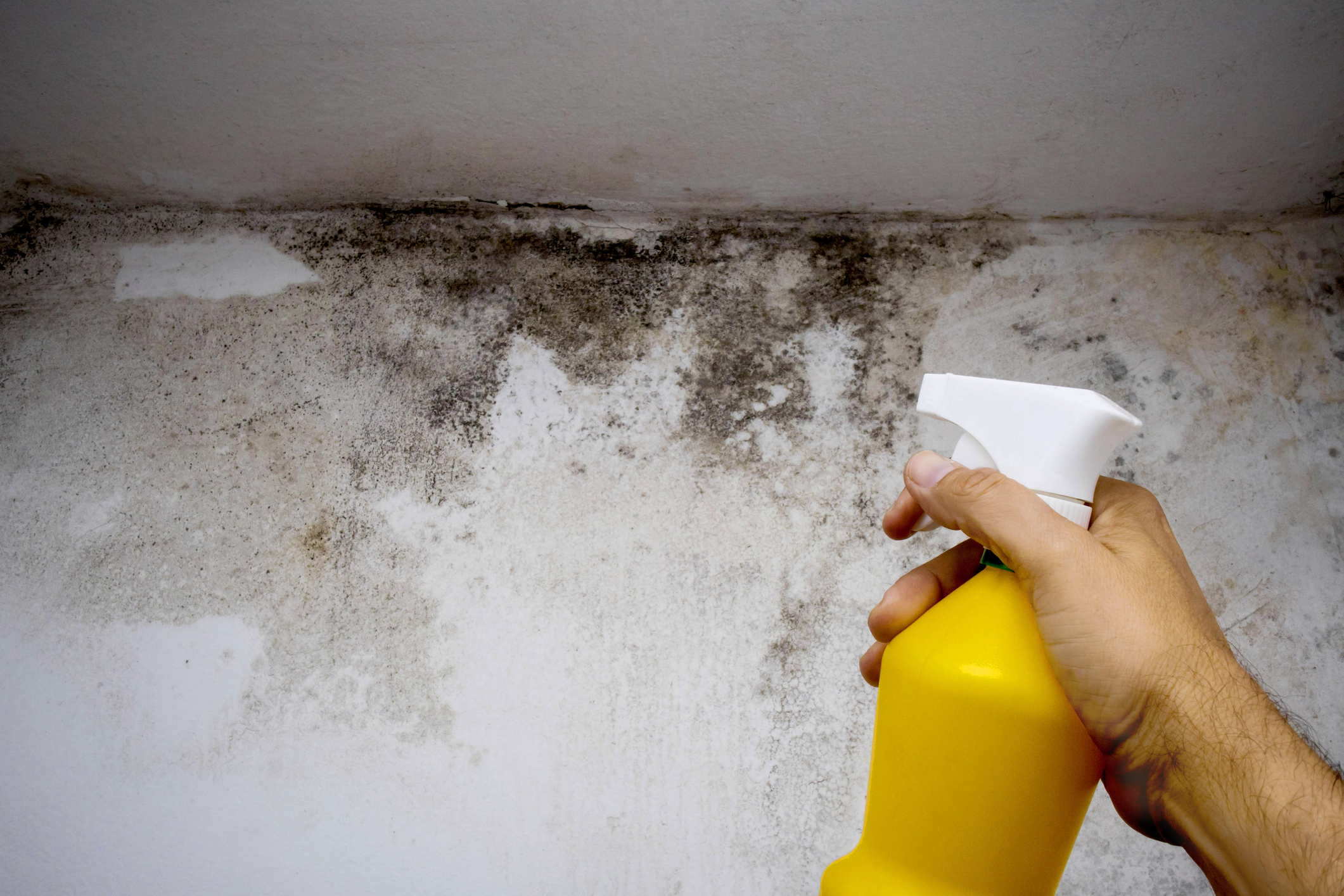
Mold is a frightening four-letter word for homeowners. It conjures up images of serious respiratory symptoms and massive mold-removal bills. Good news: Most household mold is neither a major health concern nor expensive to eliminate, according to indoor air-quality expert Jeffrey May. Bottom Line Personal asked May what homeowners need to know about mold remediation…
Not all Black Mold Is Bad Black Mold
Homeowners often hear that “black mold” is the type of mold they need to worry about. Officially known as Stachybotrys chartarum—S. chartarum for short—the mold commonly called “toxic black mold” can cause allergic reactions when some people inhale its spores. Exposure symptoms tend to be similar to those of other allergic reactions, including sneezing, coughing, congestion and/or eye irritation, according to the Cleveland Clinic.
But just because you see mold in your home that appears black doesn’t mean you have the black mold that homeowners fear. S. chartarum is only one of many types of mold that’s black in color. Mold that’s black in color sometimes appears on window frames, rubber gaskets of refrigerator and washing machine doors, and on bathroom tiles—but these black molds almost certainly are not S. chartarum, nor are they likely to cause significant health problems for homeowners unless they are allergic to any of these molds. Remedy: Spray a little hydrogen peroxide or bleach on this mold, then wipe it away.
Also: The “black mold” that appears on the walls or ceiling of homes sometimes isn’t mold at all. If a member of the household is fond of burning jar candles, it might be soot—“Candles emit a surprising amount of soot,” says May, who has over the years examined many apparent mold problems that have turned out to be candle soot.
Similarly, if black mold seems to be growing on the walls or ceiling of a garage, it actually might be vehicle emissions—diesel engines in particular produce lots of soot.
To determine if a black stain is mold: Apply a dab of bleach to it, suggests May. Bleach makes mold lose most of its color, so if it remains black, it’s likely soot or something else.
Another clue whether you’re dealing with S. chartarum is where it’s growing. S. chartarum grows almost exclusively on materials that have high cellulose content, such as the paper backing of drywall, fiberboard, gypsum board, cardboard and—somewhat less commonly—solid wood.
Unlike many other molds, S. chartarum requires a significant amount of moisture to thrive, which means it’s most likely to appear in parts of the home that have had flooding or ongoing leakage problems. In most homes, that puts basements and cabinets under kitchen sinks at particular risk. But a leaky pipe could potentially create a moisture problem in a wall elsewhere in a home.
Helpful: Attics can develop mold problems as well. Attic mold usually is due to humid air from the home escaping upward into the attic, although a leaky roof could potentially cause a mold problem, too. But it is not common for mold in an unfinished attic to cause health issues for household members. In most homes, there’s little or no airflow from the unfinished attic back down into the living space of the house—unless the home’s HVAC components are located in the attic and not airtight.
Mold Identification and Analysis
When homes develop mold problems, the mold often is hidden inside walls or otherwise out of sight. So how can you even know it’s there?
Caution: Homeowners and mold-remediation companies often use something called the ERMI test to determine whether homes have mold problems—ERMI is short for “Environmental Relative Moldiness Index.” While this is a legitimate test created by the US Environmental Protection Agency, it’s not an appropriate test for this purpose. The EPA itself warns against using the ERMI test to sample for mold in a home—among other issues, the numerical results of an ERMI test are meaningless if sample collection isn’t conducted according to the very precise protocols. And the ERMI test will find mold because there are mold spores everywhere—but the mere presence of mold does not mean that a home has a mold problem…and a high score on an ERMI test doesn’t necessarily mean there’s a problematic amount of mold.
The best type of testing involves a thorough inspection and some air and/or dust testing for mold spores. Better ways to gauge whether a home has a mold problem include…
Got Mold? Test Kits test household air samples for mold spores and produce results that are more reliable and meaningful than those of the ERMI test. $199 for a one-room kit…$249 for a two-room kit…or $299 for a three-room kit. Prices include lab fees. GotMold.com
A local air-quality professional could be called in to conduct testing —but choose one who holds a Certified Microbial Consultant (CMC) certification from the American Council for Accredited Certification (ACAC.org). The same organization certifies mold remediators—Council-Certified Microbial Remediator (CMR)…Council-Certified Microbial Remediation Supervisor (CMRS)…and Council-Certified Residential Microbial Remediator (CRMR). You can also refer to the Find-a-Pro Directory of the Indoor Air Quality Association.
Caution: Be sure to first have your home tested by an indoor air quality (IAQ) investigator. Don’t start with the remediation company to avoid committing to expansive (and expensive) mold-remediation services that you may not need. Identify the problem first, before throwing solutions at it.
Take a sniff. Musty odors are a sign of mold, though not necessarily of S. chartarum. But a lack of a musty odor does not a guarantee there’s no mold at all growing in the vicinity—not all molds emit obvious odors.
Evaluate symptom patterns. If one or more members of the household chronically suffer from symptoms that could potentially suggest mold exposure—sneezing, coughing, congestion, eye irritation, fatigue, headaches and/or asthma flare-ups—keep track of when those symptoms are at their worst and when they abate. If household mold exposure is truly to blame, those symptoms should clear up when the person experiencing the symptoms is away from the home for a day or more and then the symptoms return soon after he/she returns home.
Mold Remediation
Mold remediation often can be handled by the homeowner. According to EPA guidance, it’s safe and reasonable for homeowners to tackle mold removal when the mold covers no more than about 10 square feet. What to do…
Wear rubber gloves and an N95 face mask when you do mold remediation, and hang plastic sheeting as needed to isolate the affected room or area from the rest of the home.
Position a fan facing outward in a nearby window or exterior doorway to draw air out of the affected area to the outdoors. Do not position this fan in a way that allows it to instead spread mold spores around the interior of the home.
If the moldy area is small, scrub it with diluted bleach or 10% hydrogen peroxide—these are both effective mold killers. Clorox wipes can be sufficient for small spots of mold.
If the mold is on drywall, the affected drywall and an additional foot around the affected area might have to be cut out. Surfaces in the wall or ceiling cavity should be cleaned and sealed. Then the drywall replaced. This work is best done by professionals who can set up containment to isolate the space.
Eliminate the source of moisture that triggered the mold problem to reduce the odds that the mold returns. This might involve fixing a dripping pipe or running a dehumidifier in the room in the future, for example.
See EPA.gov/mold/mold-cleanup-your-home for additional mold-remediation tips.
If you pay a mold-remediation company to deal with a mold problem: Expect the bill to climb into four figures. How high will depend in no small part in how difficult it is to get from the location where the mold is growing to the outdoors. Example: If the remediation company must create a contained path from a basement wall up the basement stairs and down the hall to an exterior door, that’s likely to add up to a big bill. Get quotes in advance, and ask for references, certifications and licenses to be sure you are hiring a reputable and experienced company.
If drywall must be ripped out, hiring a contractor to clean and seal surfaces within the wall or ceiling cavity and replace that drywall and repaint will add to costs.
When the mold-remediation work is complete, confirm that the home now has a “normal fungal ecology” based on a test such as the Got Mold? test mentioned above.
Wondering “who pays for mold remediation?” the answer is usually the homeowner—homeowner’s insurance generally does not cover mold remediation. Potential exceptions: A policy might provide some coverage for mold remediation if the mold is the result of an event that is covered by the policy. Example: If a hurricane rips off the home’s roof allowing rain to get in, leading to mold growth. Also, some insurance companies offer policyholders riders for an additional premium that will cover mold remediation up to a preset dollar limit.