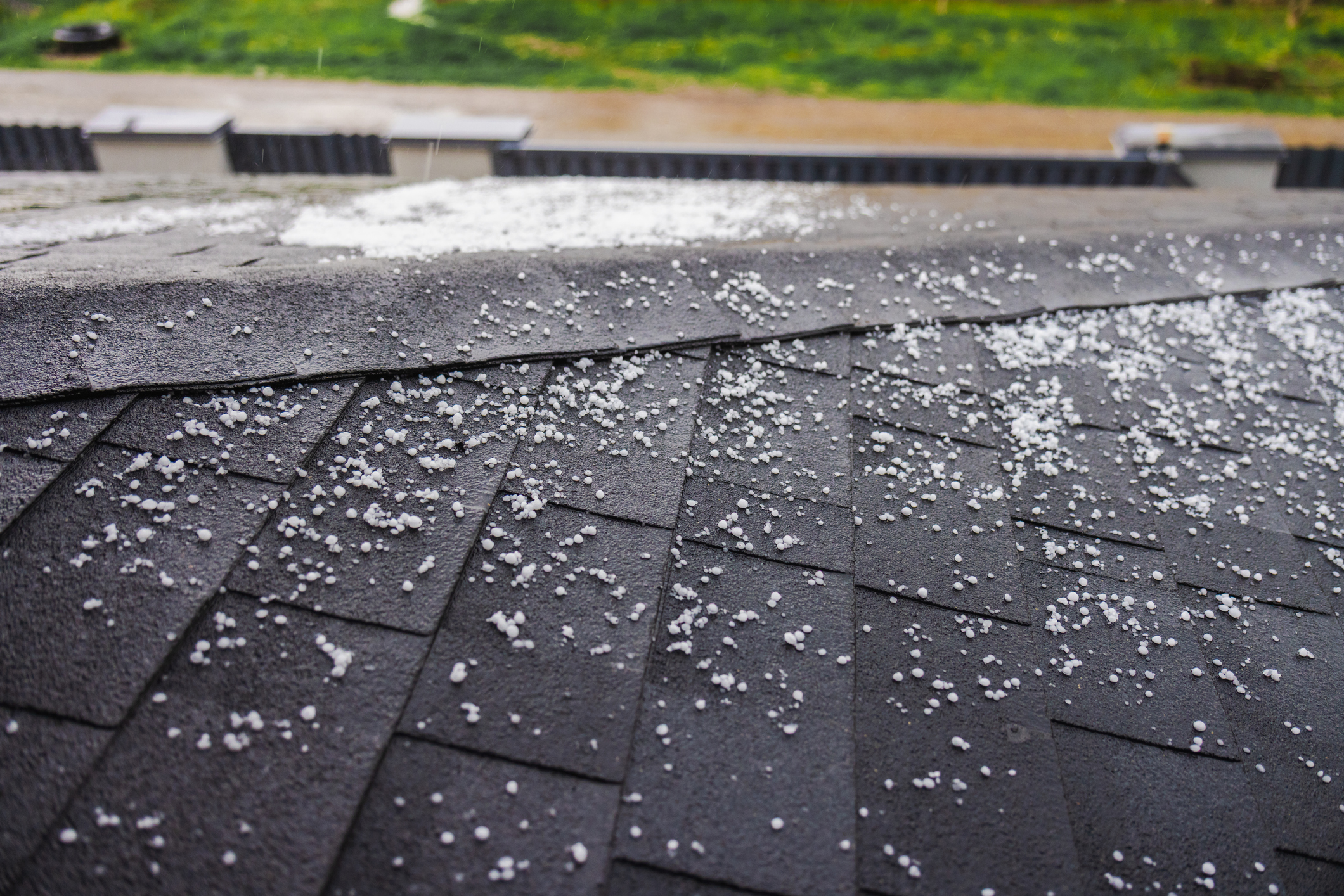
Hail causes between $8 billion and $14 billion in losses each year in the US and accounts for 50% to 80% of all losses attributed to thunderstorms. In 2025 alone, there were 5,432 hail incidents across the country.
Hail can make homeowners feel defenseless. Once Mother Nature decides to send it your way, there’s little you can do to prevent damage. But while you might not have control over the storm itself, the more you know about hail damage, the better prepared you’ll be to deal with it.
Bottom Line Personal spoke with Brad Strawbridge, CEO of Capital City Roofing, to help you learn how to prepare for hail and then identify the damage…and what you can expect from the insurance and repair process.
How to Identify Hail Damage
After a hailstorm, many homeowners rush to check their homes’ roofing and siding. But Strawbridge says the signs of hail damage start at the street. “The first thing to look for is collateral damage on soft metals,” he says. Where to look…
Electrical boxes and mailboxes
It is pretty easy to identify dents on these.
Air-conditioner covers
If you have an outdoor unit or a heat pump, the plastic cover can break or the metal coil fins can bend.
Vehicles
Strawbridge trains his staff to look for hail damage to vehicles when they’re doing the initial inspection after a hailstorm. Look for dents on the roof and hood…run your hand over surfaces to feel for indentations…and check for cracks in the windshield and windows.
Plants
Vegetation with large leaves might have tears, and small branches and stems might be broken.
After that, “walk the elevations,” says Strawbridge. Walk the perimeter around your property and start looking for signs of damage to your home’s exterior. Three places to look…
Siding
Hail doesn’t just fall straight down. It often moves laterally because of wind, so damage to the home’s siding is quite common. Vinyl siding is particularly vulnerable, says Strawbridge. “If you think about any hailstone bigger than an inch and three-quarters or two inches, if it’s moving laterally at any type of velocity and that vinyl is brittle, it’s going to crack.” Look for large broken pieces, smaller fractures and dents spread throughout the entire side of the home.
Windows
Hail damage to windows is more common in some parts of the country than others. Example: Texas hail is quite large and could completely break window glass. Other regions have more minor hailstorms, so you’re more likely to notice damage to window screens, but even screen damage can substantiate an insurance claim, Strawbridge says.
Roofing
The roof is the last piece of the puzzle. Look for strike damage and wind damage, since most hailstorms have strong winds. Look for wind-creased shingles (when the wind lifts a roof shingle and bends it, creating a crease) or shingles that have been displaced from their original location. Displacement is very common with hip and ridge asphalt shingles because they are held on by only two to four nails, instead of four to six nails like a field shingle, Strawbridge explains. Field shingles are the main shingles that cover the large, flat areas of the roof—where the majority of the roof system is installed and where most hail damage typically occurs.
Note: Performance and durability of field shingles are extremely important because they make up the bulk of the roof’s surface area and take the most direct impact from hail. Higher-quality architectural or impact-resistant shingles in the field area can significantly improve a roof’s ability to withstand storm damage.
Hail strikes are very easy to spot on asphalt shingles—you’ll notice a bruise or crater where the hailstone struck, accompanied by embedded granules. When the stone impacts, it causes an outward motion that expels granules from the shingles.
Metal, clay, concrete and wood roofing materials all respond to hail differently, so the inspection process has to be tailored to the material.
Metal roofing: Look for dents, dings, displaced seams, punctures and/or damage to protective coatings. Cosmetic damage is common, but the key question is whether the hail affected the roof’s ability to shed water or shortened its service life.
Clay and concrete tile: Look for cracked tiles, chipped edges, fractures, broken corners and any damage that may not be immediately obvious from the ground. Even a small crack can allow water intrusion over time, so close inspection is critical.
Wood shingles or shakes: Look for splits, cracks, impact marks, crushed fibers and displaced pieces. Hail can weaken the wood surface and accelerate deterioration, even when the damage does not look dramatic at first glance.
In every case, the evaluation starts with the same principle—determining whether the hail caused functional damage, not just visible marks. That includes checking whether the material’s water-shedding capability, structural integrity or expected life span have been compromised. “We also look at related components such as flashing, ridge caps, vents, gutters and soft metals, because they often help confirm the severity and direction of the hail event,” explains Strawbridge.
Assessing the Severity of Hail Damage
Hailstorms tend to be localized, so the extent of damage can be quite different among homes in the same city and even the same neighborhood. According to the NOAA National Severe Storms Laboratory, hail falls in paths called “hail swaths” that can be as narrow as a few acres or as wide as 100 miles. Don’t assume your home is fine just because other people’s homes are fine—do a thorough check after every hailstorm to determine if you need to call a professional.
Unless you have experience with storm restoration, it can be difficult to differentiate between minor and major damage. Superficial cosmetic dents can be ignored, but if there’s any risk for water intrusion, contact a professional. Many storm-restoration companies offer free hail damage inspections after storms but be sure to hire a reputable company (see below).
Steps to Take After a Hailstorm
Document the storm and the damage
As a homeowner, one of the most important things you can do during and after a hailstorm is document the event and the results. This documentation can help substantiate your insurance claim. Strawbridge recommends taking videos of the hail falling (be sure to stand safely on your porch or inside near a window). Once the hail has stopped, go outside and take photographs of the size of the hail. Without this evidence, Strawbridge says, “Insurance carriers can argue, How do we know this all happened that day?”
Do what you can…safely
If there is obvious damage, there are some things you can do before your storm-restoration company arrives. Mitigate leaks by placing tarps on the affected areas of the roof, but only if you can safely reach them by standing on a ladder. The roof is often slippery after a hailstorm, so avoid stepping on it. For broken windows, consider taping plastic sheeting around them to stop the weather from getting in.
Repairing Hail Damage
Most repairs from hail damage are covered by homeowners’ insurance. This means that the home will be repaired to “pre-loss condition.” But as Strawbridge explains, repairing to pre-loss condition usually entails more than just a simple repair. “A lot of times, that vinyl isn’t technically repairable because you can’t match it. It is the insurance carrier’s responsibility to bring the home back to its pre-loss condition, so if there was matching vinyl siding on the home before the damage, the insurer has to pay to bring that siding back to that same condition…and that could mean doing a full replacement.”
Most homeowners insurance plans have deductibles, so it won’t necessarily cost you more to do a full replacement. If you have a $1,000 deductible, that’s what you’ll pay regardless of whether you need a $2,000 repair or a $15,000 roof replacement.
Hail Damage and Insurance
Insurance protects you from the expensive costs associated with repair. Your home’s exterior will be covered by your homeowners insurance, and your vehicles will be covered by your auto insurance. Most people have a deductible on their plans, which means that you’ll pay everything up to that dollar amount and then the insurer covers the rest.
Important advice about insurance plans: Review your homeowner insurance policy annually, because it can change. “I’ve had customers tell me that their policy changed without them knowing it because their carriers sent a letter via normal mail to their mailboxes, which qualifies as doing their due diligence,” says Strawbridge. He has seen customers’ deductibles go from $1,000 to $5,000, with added exclusions and roof-replacement contingencies. This can be a huge shock after experiencing hail damage, because now, all of a sudden, the roof replacement costs five times as much as it should. “At that point, it doesn’t even really make sense for the homeowner to file a claim,” Strawbridge said.
How to Prevent or Minimize Hail Damage
Sometimes you know when a hailstorm is expected and can prepare to protect some of your property. It might not be possible to prevent hail damage to the roofing, siding and gutters, but you can protect personal possessions. If you have a garage or carport, park your vehicles under it before the storm. Cover barbecue grills and move fragile items inside the home.
If a catastrophic-level storm is expected, Strawbridge recommends boarding up the windows with oriented strand board (OSB), a type of compressed wood, as you may have seen people do when preparing for a hurricane. High-velocity hail can break multiple windows in a home. “While insurance will most likely cover that, who wants to go through the hassle and headache and rigamarole when you could just board them up and protect them?” he says.
Unfortunately, there’s very little you can do to fully protect trees and landscaping from hail, especially during severe storms. Hail events typically are sudden and unpredictable, so most damage prevention comes down to preparation rather than real-time action.
For smaller plants, homeowners can use breathable covers, tarps or even buckets or planters to shield them if there’s advance warning. Moving potted plants under covered areas like porches or garages is also effective.
For trees and larger landscaping, protection is more limited. Proper pruning and overall plant health can help reduce the risk of breakage, but mature trees are largely exposed during a hailstorm.
Assess the damage quickly after the storm. Removing broken limbs, trimming damaged area, and supporting stressed plants can help promote recovery and prevent further issues.
Finding a Qualified Company to Repair Hail Damage
Be cautious about who you hire
Look for an experienced and vetted storm-restoration company. Don’t just go with the first guy who knocks on your door, because there will be a lot of them. Unfortunately, many companies prey on these types of situations and commit fraud to both the homeowner and the insurance companies.
Do your due diligence
Research what the hail damage repair process looks like, so you won’t be taken advantage of. “Partner with a roofing company that has good Google reviews and a good reputation in the community and whose spokesman speaks intelligently about how they’re going to handle your claim,” Strawbridge says.