
When most of us hear the words “home renovations,” we immediately start thinking big—fancy new master bathroom, entirely new kitchen, maybe even a whole new wing added onto the house. With such big dreams come big price tags—$80,000, $90,000, even $100,000 or more.
But there are plenty of affordable home renovations that can immediately make your home more livable or saleable without busting your budget. Bottom Line Personal asked architect and remodeling coach Jim Molinelli, PhD, for some smaller-scale home-remodeling ideas that can have a big impact.
First Things First
What do you consider a “renovation”? In its broadest sense, a renovation is any physical update to the home, from installing new showerheads to adding a third floor.
As you consider any home-remodeling project, reflect upon your motivations. Broadly speaking, any renovation should accomplish two things—It should solve a problem or meet a need that exists…and it should bring you joy every time you step into that new shower, work in that new kitchen or just pull into your driveway at the end of a long day. If a project doesn’t tick both of those boxes, then it might not be worth doing.
Also consider the financial side of things. In the US, we tend to think of our homes as financial assets, and maintaining and improving them as a way to grow the value of that investment. There’s nothing wrong with wanting to modify a home so that you’ll get more for it when you go to sell it, but you have to be selective when it comes to these more “mercenary” improvements. Many owners make the mistake of sinking tens of thousands of dollars into complete overhauls of their kitchens or master baths because they’re planning on selling soon. To be sure, every penny you put into your home will produce some yield. But what often happens with those major projects is that, yes, the buyers will pay more but not enough for you to recoup your entire investment…and then it is entirely possible that they will rip out the whole thing to redo it according to their tastes. Rule of thumb: Don’t perform major renovations unless you’re planning on staying in the home for at least five more years.
There is a great resource that can tell you which projects pay the greatest financial dividends in terms of the value of your home. Each year, The Journal of Light Construction publishes its Cost vs. Value report, which describes more than two dozen home projects and compares their average costs with the average value they retain in 119 US markets. Visit JLConline.com to see which projects offer the best return on investment in your area. Perhaps some of the most modest projects will give you the biggest bang for your buck.
Fix What’s Broken
If you live in a place for long enough, there inevitably will be little things that stop working, and if they’re not fixed right away, you grow blind to them. You have to jiggle the bathroom doorknob to open the door…that light switch doesn’t work… careful on the walkway where the concrete is heaved.
Do a walk-through of your home (indoors and out) with fresh eyes, and write down every little thing that needs to be fixed. Make those your priority before embarking on other renovations. Why? Because no one sees our homes as forgivingly as we do and because prospective buyers are immediately turned off by little things that indicate neglect. Example: A broken window blind could make or break a prospective buyer’s interest. And even if you’re planning on staying there, you’ll be happier living in a place that doesn’t feel like it’s falling down around you.
Start at the Mailbox
Modifications to a home’s exterior and grounds can have a greater impact on its desirability to prospective buyers than major interior renovations. Someone shopping for a home is unlikely to be swayed by a new kitchen if they were put off by weeds and unkempt shrubbery as they drove up.
Mailbox
A rusty, dented old mailbox makes a poor first impression. At only about $100 to $200 and part of a weekend, it doesn’t get much quicker, easier or cheaper when it comes to a DIY home renovation.
Driveway
A new asphalt driveway can be costly, at $4 to $10 per square foot plus the additional costs of hauling away your old one. But if the driveway is still salvageable, you can make a big difference by applying liquid patch and sealer to make it look black and shiny again, at a fraction of that cost.
Steps and handrails
Broken stairs and loose handrails give the subconscious impression that a place is not just rundown but dangerously so. Repairing or replacing them will make your home feel safe and welcoming.
Gutters, shutters, windows, siding
An obviously leaking gutter doesn’t just look bad, it indicates a potential threat to the house’s foundation. You may not need to replace your entire gutter system and could get away with simply reconnecting a broken-off downspout or replacing one section of gutter.
Leaning, broken, or peeling shutters are highly visible eyesores but usually cheap and easy to remedy. Putting them right again has an enormous payoff in restoring your house’s curb appeal.
Even if your windows and siding are old, simply cleaning them can transform the place. Pay particular attention to the north side of the house, which almost never sees the sun, so it is prone to more cases of algae and mold and basic discoloration. Home-improvement stores sell multiple cleaning products for your house’s exterior. Caked-on grime might require power-washing, for which a professional might charge you between $200 and $1,200 or more. If that’s too steep, you can rent a machine for between $50 and $250 per day…and for a similar price, you could buy your own machine, used, on Marketplace or a similar platform.
Doors
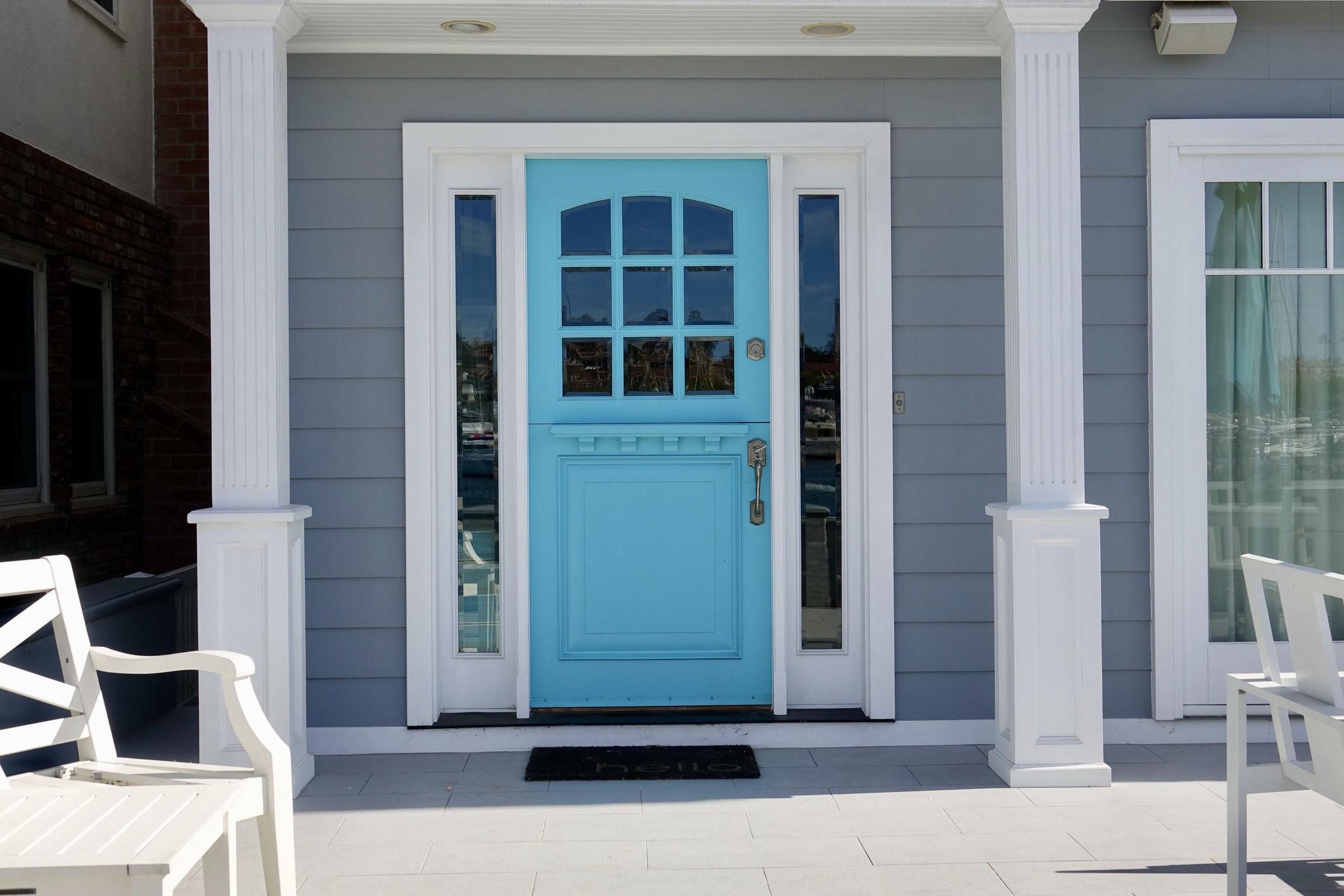
A colorful, modern, sturdy front door signals that you care about your home. According to the Cost vs. Value report for 2025, a steel entry door replacement is among the best investments you can make in your home. On average, it will cost $2,435, including installation, but will boost the house’s value by $5,270, a 216% return.
Replacing an old garage door makes even more financial sense. The national average for a garage-door replacement is $4,672, including installation, but increases your home’s value by $12,507, a whopping 268% cost return, making it the number-one renovation when it comes to return on investment.
The Interior
If the outside of the home is already modern and well-maintained and the interior has no obvious deficiencies that need to be corrected, there are some cheap improvements you can make whether you’re planning on staying in the place or selling it.
Second and third bathrooms
Redoing a master bath is a big, expensive undertaking, and one that rarely pays off for people about to sell. But buyers are much less picky about powder rooms and bathrooms used by guests and children, so they’re often pleased to find them move-in ready. You don’t have to go overboard, either. Choose neutral colors and simple, functional fixtures.
Kitchen touch-ups
If your budget is tight, change your thinking from I need a new kitchen to What about this kitchen needs to change? It’s a lot cheaper to put in a new backsplash or even install new countertops than it is to gut the whole room.
Sometimes all a kitchen needs is a fresh coat of paint, which shouldn’t take more than an afternoon and $100. If the cabinets are outdated, consider painting them rather than tearing them out. Yes, it’s tedious work, but it doesn’t require much expertise, and it can have an outsized visual effect with a low price tag. For an even easier transformation, just install new hardware on the cabinets.
If you’re looking to sell and honestly feel like the kitchen is dragging you down, you still might not have to do a complete overhaul. Instead, just replace the major appliances with basic but new and shiny models. Prospective buyers likely will be inclined to keep them even if they plan on personalizing the rest of the room after purchase.
