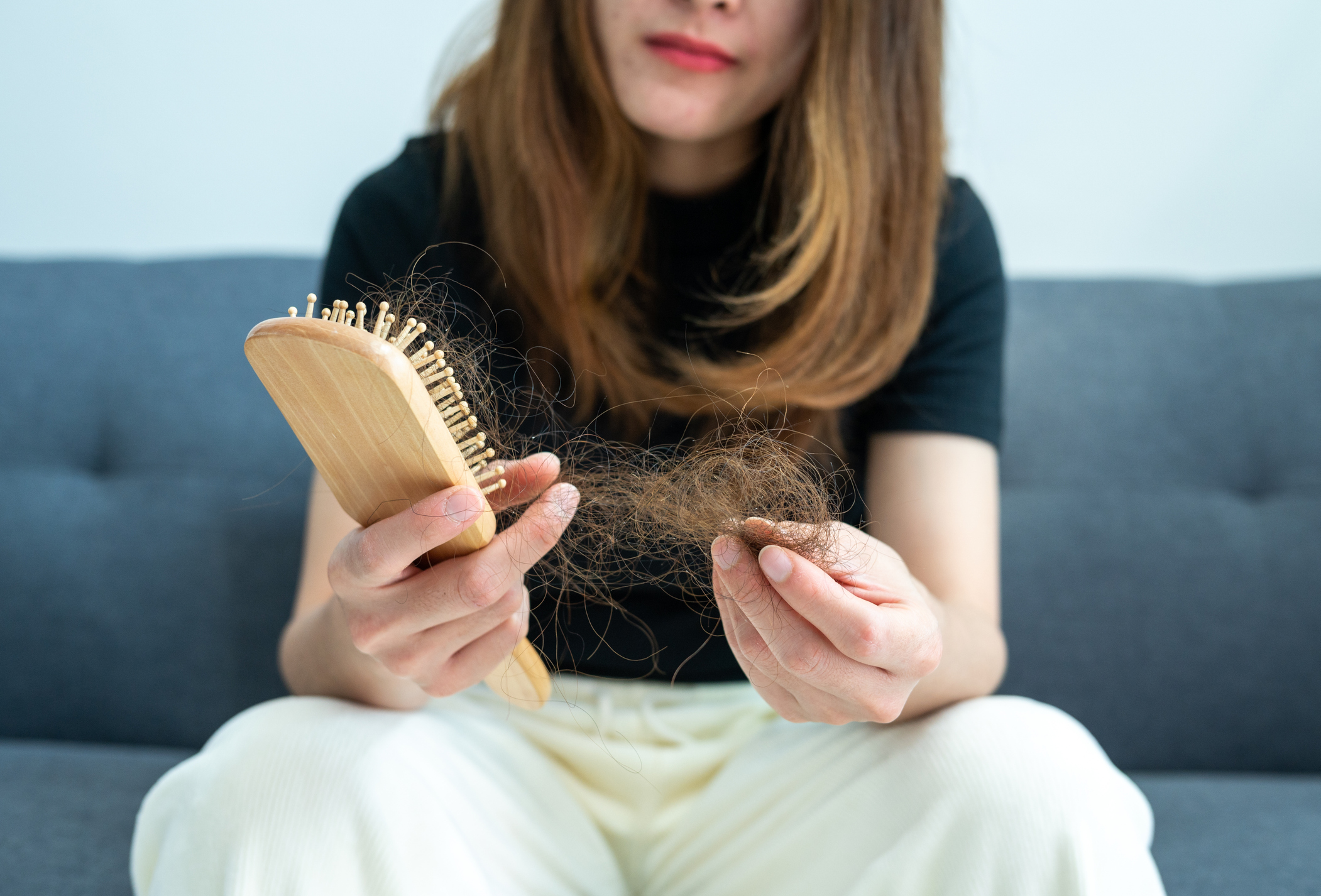
Each of the 100,000 hairs on your head goes through a three-phase cycle that repeats over and over. The anagen phase is when hair grows…the catagen phase is the transitional period …and the telogen phase is when hairs rest and shed. Because each hair follicle follows its own cycle, they don’t all grow or shed at the same time, so even though you might lose 100 hairs a day from normal shedding, you won’t notice that when you look in the mirror.
But there are various circumstances that can lead to noticeable hair loss, or alopecia, among women. “Pattern loss can be caused by different factors, including genetics, hormonal components, inflammation and aging changes,” says Brian J. Abittan, MD, director of Skin and Hair Rejuvenation and Hair Transplantation at Mount Sinai in New York City. Pattern hair loss is a genetically driven condition causing predictable hair thinning and loss, typically receding hairlines and crown thinning in men and diffuse scalp thinning in women Here, he details five reasons for thinning hair in women…
- Stress
- Menopausal changes
- Autoimmune Disorders—lupus, Hashimoto’s thyroiditis and psoriasis
- Inflammatory condition—scarring alopecia
- Traction alopecia—hair pulling
Stress
Telogen effluvium is hair shedding caused by physical or emotional stress. The source of the stress could be a recent surgery, an illness, giving birth, weight loss, COVID, a medication or a mental stressor. In response to the stressor, up to 70% of your hair follicles prematurely shift into the resting phase with rapid shedding, primarily on the top or crown of your head.
Solution: This type of hair loss usually is temporary, but identifying the trigger is helpful. For many women, hair will grow back in three to six months. Some people may require topicals such as minoxidil or oral medications. Your hairstylist might suggest a new hairstyle to minimize the appearance of hair loss while you’re waiting for it to grow back.
Menopausal changes
Hair thinning and hair loss can be a result of shifting levels of the hormone estrogen during menopause. Among its many other functions, estrogen is involved in hair growth. When levels drop, hair follicles shrink…the growth phase shortens…and hair may become thinner and shed more. The effect is intensified due to the often-simultaneous slower decline in levels of male hormones that occurs during menopause. If you’re also genetically inclined to experience androgenetic alopecia, or female pattern hair loss, the amount of hair loss can be devastating.
Solution: Correcting any vitamin deficiencies along with topical, oral and/or regenerative treatments can be helpful, but they must be patient-specific. It also may help to use nourishing shampoos and deep conditioners and limit the use of hair appliances and chemical processes.
Autoimmune disorders
Autoimmune disorders cause inflammation around the hair follicles that can lead to patchy or extensive losses. Alopecia areata is an autoimmune disease that primarily attacks the scalp but can affect hair anywhere on the body. Though known for their many other symptoms, autoimmune conditions such as lupus, Hashimoto’s thyroiditis and psoriasis also can affect hair growth and cause hair thinning or loss. In fact, hair loss affects about half of all people with lupus, and for some it’s the first lupus symptom they notice.
Solution: These diseases should be identified early and treated appropriately with steroid injections, topical creams and sometimes more advanced medications such as JAK inhibitors, immune-modulating drugs that block specific enzymes.
Scarring alopecia
This group of inflammatory conditions can cause the skin to “fibrose,” which means to thicken and harden because of an excess of fibrous connective tissue. Hair follicles are destroyed and replaced with scar tissue, resulting in permanent hair loss. There are many types of scarring alopecia, including central centrifugal cicatricial alopecia with thinning at the crown that gradually spreads and frontal fibrosing alopecia with hair loss affecting the hairline and eyebrows.
Solution: It’s essential to get the correct diagnosis as soon as possible so that the correct anti-inflammatory treatment can be started. You may require topical and oral medications such as steroids, antibiotics or immunosuppressant drugs as well as restorative treatments to encourage hair regrowth.
Traction alopecia
This hair loss results from chronic pulling on the hair, often from tight hairstyles such as braiding, ponytails or weaves.
Solution: If caught early, traction alopecia can be reversed by forgoing these styles and letting hair regrow. Traction alopecia often can lead to scarring, making regrowth difficult. Topical and oral therapies can be tried. Sometimes hair transplants are needed. The best treatment is prevention.
With all these types of hair loss, it is important to have a clear diagnosis of the cause. Then a treatment plan can be developed to address your specific type of hair loss and your overall medical history.
Treatments may include topicals such as minoxidil, including over-the-counter products…doctor-prescribed oral medications such as spironolactone, minoxidil and finasteride…platelet-rich plasma (PRP) injections into the scalp of your own blood’s growth factors…and hair transplantation that surgically moves hair follicles from a healthy area of your scalp to problem areas. Results can be transformative, but it’s essential to work with an experienced, board-certified dermatologist trained in hair-loss disorders who can assess your hair thinning, recommend helpful approaches and set realistic expectations. Resource to find a qualified dermatologist: American Academy of Dermatology Association (AAD.org).