
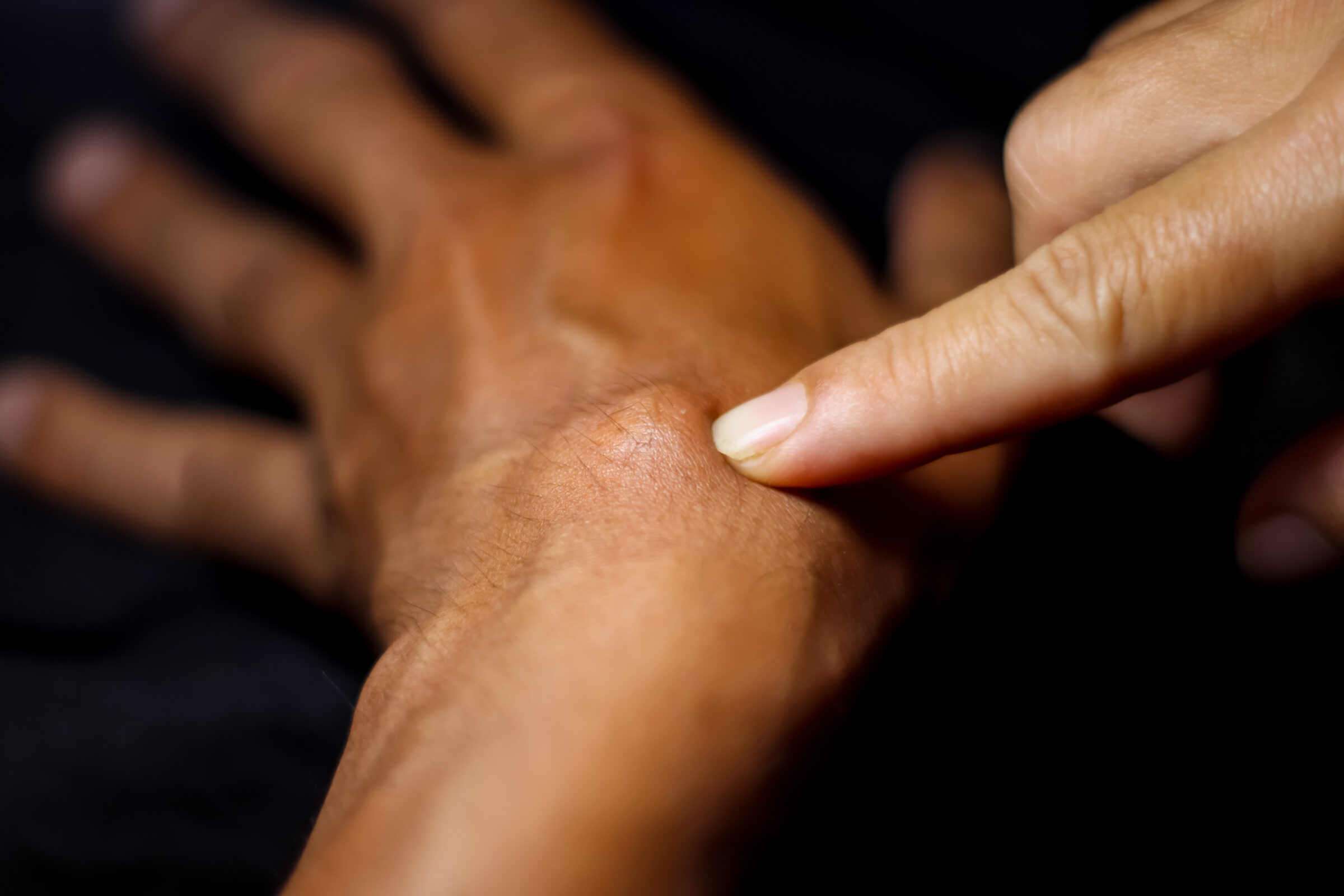
There are many causes of lumps and bumps that can appear on your skin. One of the most common is a cyst. The word cyst comes from the Greek word for a pouch or sac, kystis.
Unlike solid skin bumps, cysts tend to be smooth and soft. When you touch a cyst, you can usually feel it move or roll under your skin. They can range from small cysts that don’t cause any problems to large and unsightly cysts the size of a baseball. There are many types of cysts, but among the most common are epidermal and pilar cysts.
Can cysts be cancerous?
Skin cysts are not cancer, and they are not contagious, but rarely a growth that appears to be a cyst can be a skin cancer. So always see a health-care provider if you have a new skin bump that grows quickly or does not go away.
Epidermal cysts
Epidermal cysts are the most common type of skin cyst. These are also called inclusion cysts. Although the terms sebaceous and epidermal are often used interchangeably, sebaceous cysts are not the same. Epidermal cysts are caused by a blocked hair follicle and they fill with a type of hair protein called keratin. Sebaceous cysts are caused by a blocked skin gland that secretes a skin oil called sebum, and they only occur in a rare inherited type of skin disease.
Epidermal cysts can occur anywhere hair grows, but they are most common on the scalp, face, neck, back, and genital area. They are usually flesh-colored, painless, round lumps, that are freely movable beneath the skin. There is often a central pit or dot that can be seen, called a punctum.
Do cysts go away?
Epidermal cysts can stay small, go away, or grow to about two inches. They usually occur in people between the ages of 20 and 40, and men are twice as likely to get them. People with long-term sun-damaged skin and those with a history of acne are at higher risk. A type of tiny epidermal cysts that occurs in infants is called milia.
Epidermal cysts don’t need to be treated unless they become large or infected. A large cyst may rupture and become infected, or a cyst may become infected if it is popped or squeezed. An infected cyst becomes swollen, red, and painful. When this happens, a health-care provider may open and drain the cyst and may prescribe an antibiotic.
As long as part of the cyst sac remains, the cyst is likely to come back. Cysts that get infected, get too big, or come back may need to be surgically removed, including the entire cyst wall. It is best to treat the infection first before removing the entire cyst. Both draining and removing the cyst can usually be done with a local anesthetic in an office or outpatient clinic.
Pilar cysts
Pilar cysts may occur in up to 10 percent of adults. They are also called trichilemmal cysts and they are very similar to epidermal cysts with a few important differences. An older term for this type of cyst is a wen. Like epidermal cysts, pilar cysts form in hair follicles and fill with keratin. They feel similar, grow slowly, and are treated similarly.
Unlike epidermal cysts, pilar cysts occur more commonly in women. Because they occur in densely growing hair follicles, 90 percent are in the scalp, and there are often more than one. Pilar cysts can become larger than epidermal cysts and reach the size of a baseball. Also, unlike epidermal cysts, pilar cysts tend to run strongly in families. If one of your parents has pilar cysts there is about a 50 percent chance you will get them, even higher if both parents have them.
Finaly, in about 3 percent of people who develop pilar cysts, the cyst or cysts can become more aggressive and start to grow quickly, called proliferating trichilemmal tumors. In these cases, complete surgical removal is recommended.
Bartholin and meibomian cyst
Two other common cysts of the skin are caused by the blocked glands they are named after. Bartholin cysts occur in women of child-bearing age. They are uncommon before puberty and after menopause. These cysts are caused by blocked mucous-secreting Bartholin glands located at the entrance to the vagina for moisture and lubrication. If one of the glands becomes blocked, mucus builds up and fills the gland causing a cyst. Small Bartholin cysts may not cause any symptoms, or even be noticed, but if the cyst become large or infected, there may be pain and irritation. An infected cyst may become a Bartholin abscess and require drainage by a health care provider along with antibiotics. Bartholin cyst or abscess accounts for about 2 percent of gynecology visits.
Meibomian cysts are named after a gland that provides moisture and lubrication to the eyelids. Another name for this cyst is a chalazion. Oily fluid backs up into the gland causing a cyst that appears on the eyelid, usually the upper lid. Like all the other common cysts, chalazions are usually painless unless they get very large or infected.
In many cases, this cyst will go away on its own, warm compresses and avoiding contact lenses or eye makeup that may irritate the cyst help. If the cyst becomes large, painful, or inflamed, treatment from an eye health provider is recommended, which may include draining the cyst with minor eye surgery.
