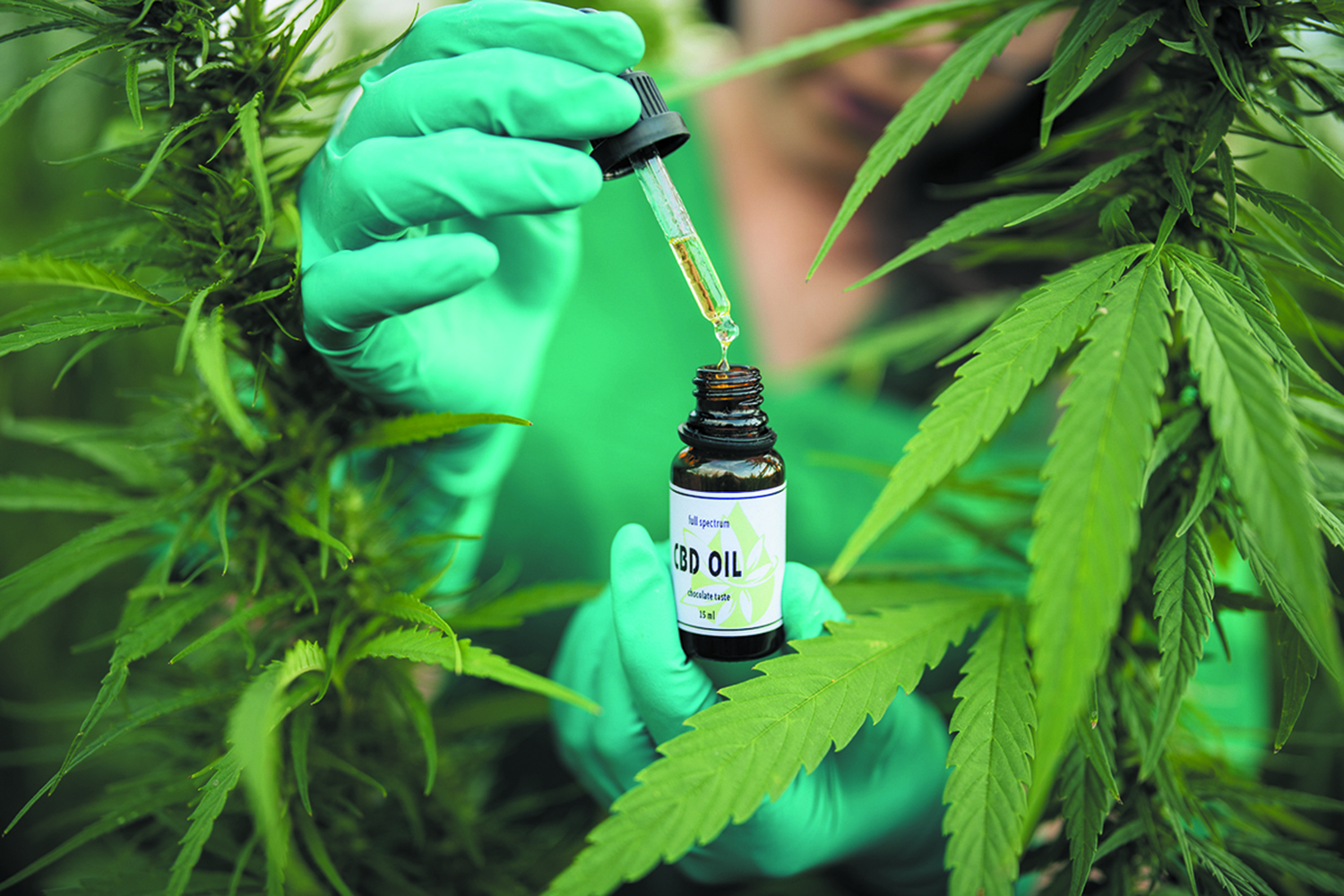
Since the 2018 Farm Bill federally legalized the sale of CBD in the United States, use of these products has soared.
But the question remains: What does CBD do? Initially, CBD’s popularity was fueled largely by anecdotal reports about its ability to reduce pain and improve other aspects of health. Now, researchers are investigating whether the science supports these CBD benefits.
While evidence from studies using pure forms of CBD suggests it may be helpful, it remains unclear whether the largely unregulated products available in stores or online will produce the same results.
“I think this is still very much a newborn industry, and it’s going to take a while for it to become more reliable,” says Cleveland Clinic’s David Streem, MD. “I hope that a combination of competition and regulatory assurances will improve the safety and consistency of CBD, because the reality is that it’s not going away.”
What Does CBD Stand For?
CBD stands for cannabidiol and, along with tetrahydrocannabinol (THC), is one of the two major cannabinoids (chemical compounds) out of the more than 500 found in cannabis. While THC is a psychoactive compound that produces the high in marijuana, CBD usually is derived from hemp, a type of cannabis that contains little THC, so it does not have this effect.
All but three states allow the use of cannabis in some form, including CBD and marijuana. CBD is sold widely over the counter (see “Types of CBD”), and the U.S. Food and Drug Administration (FDA) has approved a prescription-strength form (Epidiolex®) specifically for treating rare seizure disorders in children.
CBD Benefits
Your endocannabinoid system helps to regulate a variety of functions in the body. For instance, if something is out of balance, such as increased inflammation due to an injury, the endocannabinoid system kicks in and works with the immune system to help regulate that inflammatory response. Some evidence suggests CBD may have anti-inflammatory potential to help in this process.
Some research and anecdotal reports suggest CBD may be useful in managing symptoms of neurologic disorders like dementia, peripheral neuropathy, Parkinson’s disease and multiple sclerosis. Other data suggest CBD benefits such as relieving stress, improving sleep, helping with mood disorders and side effects of cancer chemotherapy, and also easing pain.
“Beyond the pediatric seizure conditions, I think the other area that the data on CBD is best for is for managing pain,” Dr. Streem says. “The studies are all over the place on that, but they do seem to suggest there is often some benefit for pain.
“The tricky thing is that a lot of those studies involved fairly reliable sources of CBD,” he continues. “If you go to a grocery store or dispensary and you ask for a product, particularly an oral product that is supposed to be CBD only, there’s a pretty good chance that you will get a product that also contains THC, even if it’s labeled as not containing THC.”
Is CBD Addictive?
For the most part, CBD lacks the potential risks of marijuana, such as addiction or psychiatric issues. However, there are a number of CBD side effects that you should keep in mind.
CBD can be sedating and may increase the risk of falls in susceptible individuals. Inhaling vaporized CBD can be harmful to the lungs. Also, CBD may interact with or affect the action of certain medications, including certain antidepressants, opioid painkillers and the anticoagulant warfarin, among others. The potential for CBD side effects may be higher with oral or inhaled forms versus topical forms, Dr. Streem notes.
Moreover, some data suggest CBD may be associated with liver toxicity. In a study involving 201 healthy individuals, eight of 151 participants (5.6%) receiving an oral CBD solution (in doses of 5 milligrams per kilogram of weight per day) for 28 days had elevated liver enzyme levels greater than three times the upper limit of normal, as well as increases in certain immune cells, compared with zero of the participants who received a placebo. These elevations normalized within a week or two of discontinuing CBD, the study found (JAMA Internal Medicine, September 2025).
An Unreliable Supply
Like over-the-counter herbal supplements, CBD does not undergo the level of regulatory scrutiny that the FDA applies to conventional pharmaceuticals. Consequently, there’s no standardized dosing of over-the-counter CBD products, and there’s no guarantee that the product you purchase contains the amount of CBD listed on the label or doesn’t contain THC.
In one study, researchers tested 84 CBD products from 31 companies and found that only about 31% were accurately labeled. About 43% contained significantly more CBD than the label indicated, 26% contained less and THC was detected in more than one in five of the products.
Even though a CBD product is labeled as THC-free, the trace amounts in these products can accumulate in your system, which could cause you to test positive if you undergo a drug test, Dr. Streem cautions. This likelihood is even greater considering the potential variability in quality and purity of CBD products due to limited oversight.
“One of the biggest risks that people take is the potential for unintentionally exposing themselves to THC or that they might unintentionally fail a drug test,” Dr. Streem says. “The next step has to be to ensure that the supply chain of CBD is reliable and that when the public purchases a product that says it contains a certain amount of CBD and that it does not contain THC, that those two statements are reliable. Right now, unfortunately, they’re not.”
In addition, he says more rigorous studies involving larger populations of people are needed to fully determine CBD benefits and its potential risks.
“For pain, I might try a topical product,” he adds. “But, if you’re not using CBD for pain or a seizure disorder, I think the data on it are so poor that I would question whether the money you spent on a product would be better used for something else.”
CBD products can generally be categorized into three types:
- Full-spectrum CBD includes small amounts of other cannabinoids (including THC) and terpenes (compounds that give cannabis its unique smell and flavor). To be sold in the U.S., a CBD product’s THC content must not exceed 0.3%.
- Broad-spectrum CBD contains trace amounts of other cannabinoids, but the THC has been removed completely or to undetectable levels.
- CBD isolate contains only pure CBD and no other compounds.
Over-the-counter CBD is available in a variety of forms, including tinctures, capsules, gummies and other edibles, topical creams, CBD-infused beverages and vaping solutions. Oral or inhaled forms of CBD tend to be absorbed more significantly by the body, compared with topical forms.