At first you barely notice the impact of sleep apnea—that extra cup of coffee you need in the morning to get moving, the way ordinary errands feel just a bit more taxing, or how you seem to forget names more often. As nights go by, you start waking up several times, sometimes to use the bathroom, sometimes without any clear reason. You chalk it up to getting older, never suspecting that sleep apnea is the culprit robbing you of rest, clarity, and energy.
Sleep apnea is characterized by repeated interruptions in breathing during sleep, most often due to collapsed tissues in the back of the throat that block your airway. According to Ravi Aysola, MD, director of the UCLA Sleep Disorder Center, many people fail to recognize that they have the condition because it happens so gradually.
“It’s not like breaking your leg, where you immediately know something’s wrong,” he explains. “With sleep apnea, you simply adapt to worsening sleep, never realizing how much it’s affecting your quality of life.”
What Is Sleep Apnea?
By far, the most common form of sleep apnea is obstructive sleep apnea (OSA), in which the muscles and other tissues in the throat relax during sleep, leading to partial or complete blockage of the airway. These blockages can trigger pauses in breathing (known as apneas) or episodes of shallow/slow breathing (hypopneas) that can last several seconds, causing blood oxygen to drop until the brain signals the sleeper to partially awaken and resume breathing. Most people don’t remember these awakenings, but they fragment the sleep cycle, robbing it of deep, restorative phases. (In a less common form, central sleep apnea, interruptions in breathing occur because the brain fails to send signals to breathe. Central sleep apnea is often associated with other medical conditions, such as heart failure, and it also may occur in people who take medications that depress breathing, such as opioid pain medicines.)
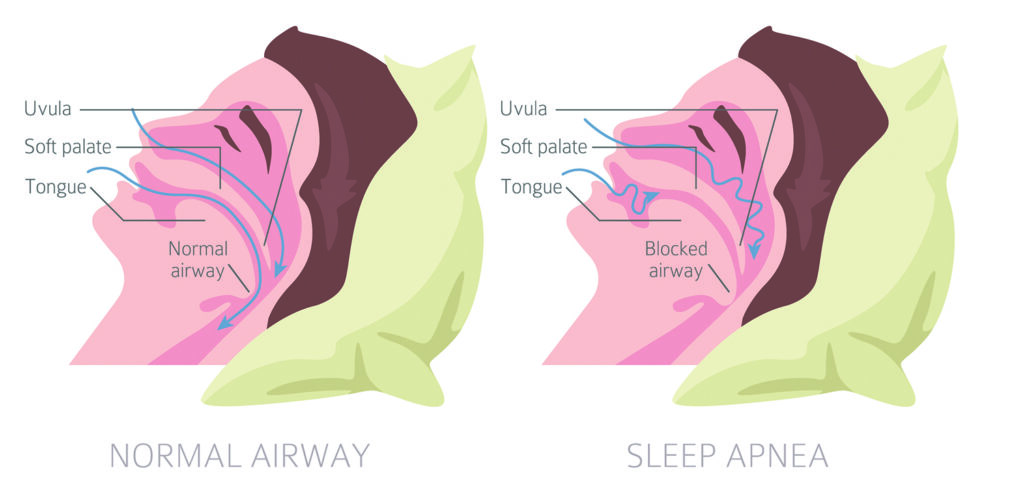
Sleep Apnea diseases. Otorhinolaryngology. Sleep related breathing disorder. Medical infographic design. Vector illustration
In older adults, sleep apnea risk rises due to multiple factors. The airway’s natural tendency to collapse is worsened by age-related changes in muscle tone, weight gain, or anatomical differences in jaw or tongue structure. While obesity is a chief OSA risk factor, about a third of people with sleep apnea are not overweight—factors like neck structure, tongue position, and even certain medications can raise risk.
“There’s an assumption you must be an overweight, middle-aged man to have sleep apnea,” Dr. Aysola points out. “This misconception often prevents people from seeking help. Men of all body types can be affected, as can older women and petite individuals.”
While sleep apnea is more common in men, the prevalence rises sharply in postmenopausal women, approaching the rates seen in men of similar age. The reason lies partly in hormonal changes. Declining estrogen and progesterone after menopause make the airway more likely to collapse during sleep and lessen the body’s ability to subconsciously keep the airway open.
Studies show that over half of postmenopausal women have sleep apnea symptoms, compared with just over one-third of premenopausal women. However, women’s symptoms are more likely to go unrecognized. Rather than presenting with loud snoring or choking, women often experience fatigue, fragmented sleep, waking to go to the bathroom, mood swings, or new-onset hypertension or memory lapses.
“Women may not realize fatigue or nighttime awakenings are linked to sleep apnea, especially if there’s no partner to notice snoring,” Dr. Aysola says. “It’s important they mention these symptoms to their doctors, especially after menopause.” He adds that research suggests women with sleep apnea face a greater risk of stroke than men, so early recognition and treatment are crucial.
A Medical Disorder
Sleep apnea is more than bothersome snoring, and it does more than just make you feel tired. It disrupts your rest with repeated drops in oxygen, triggering a “fight or flight” reaction that raises your blood pressure and blood sugar. This kind of stress can damage organs, including the heart and the brain.
“Sleep apnea injures vital organs by persistently denying them adequate oxygen and restful sleep,” explains Dr. Aysola. “What’s especially insidious is that the damage builds up quietly, amplifying risks for conditions like hypertension, stroke, arrhythmia, and memory decline, especially in older adults.”
A 2025 study published in Neurology found a critical link between OSA during the rapid-eye-movement stage of sleep and early signs of brain changes associated with cognitive decline. The study suggests that low oxygen levels (hypoxemia) during REM sleep may contribute to injury in brain regions vital to memory, even in older adults without cognitive impairment.
Sleep Apnea Treatment
It’s easy to become accustomed to poor sleep due to sleep apnea. “Many older adults have no frame of reference for what restorative sleep even feels like anymore,” Dr. Aysola says. “I’ve had patients in their 80s and 90s who have spent decades tolerating poor sleep and assuming it’s simply part of aging. That’s why when we diagnose sleep apnea, the first conversation is always about improving your quality of life.”
Modern treatments can dramatically reverse the toll of sleep apnea. The most established therapy is continuous positive airway pressure (CPAP). A CPAP machine gently delivers a constant stream of air through a mask worn over your nose and/or mouth to keep your airway open throughout the night.
If you’re like many people, starting treatment—often with a CPAP machine—reveals just how much you’ve lost to poor sleep. “It’s not that you’re going to love CPAP, but you’ll love how you feel when you actually get real, restorative sleep,” explains Dr. Aysola “Some people wake up after their first night and say it’s the best they’ve felt in years. …Many don’t realize what true, deep sleep feels like until they use CPAP.”
For people who cannot tolerate CPAP, oral appliances to reposition the jaw, surgically implanted devices that stimulate airway muscles during sleep, and lifestyle changes such as weight loss or sleeping on the side can help. A tailored approach, with support and follow-up, is crucial for long-term success. Sleep medicine specialists often involve respiratory therapists and dentists to troubleshoot problems with CPAP mask fitting or jaw pain, and they encourage ongoing support—especially in the first few weeks, when getting used to new devices can be difficult.
Recognize, Test, and Reclaim Your Sleep
Deciding on CPAP or non-CPAP treatment involves striking a balance between knowing the severity of your sleep-disordered breathing, your individual symptoms and the pattern or specific characteristics that contribute to your having sleep apnea. If persistent fatigue, memory issues, or middle-of-the-night awakenings are affecting your daily life, it’s worth talking to a doctor.
Overnight sleep studies can be used to diagnose sleep apnea, and portable home tests make the process easy for most people. Timely diagnosis and treatment can be life-changing.
“Older people in their 60s, 70s, and 80s who have likely had sleep apnea for a decade-plus are often in my office because a partner has noticed something,” Dr. Aysola says. “The majority of people we treat sleep fine, and most didn’t realize they could sleep so well.”