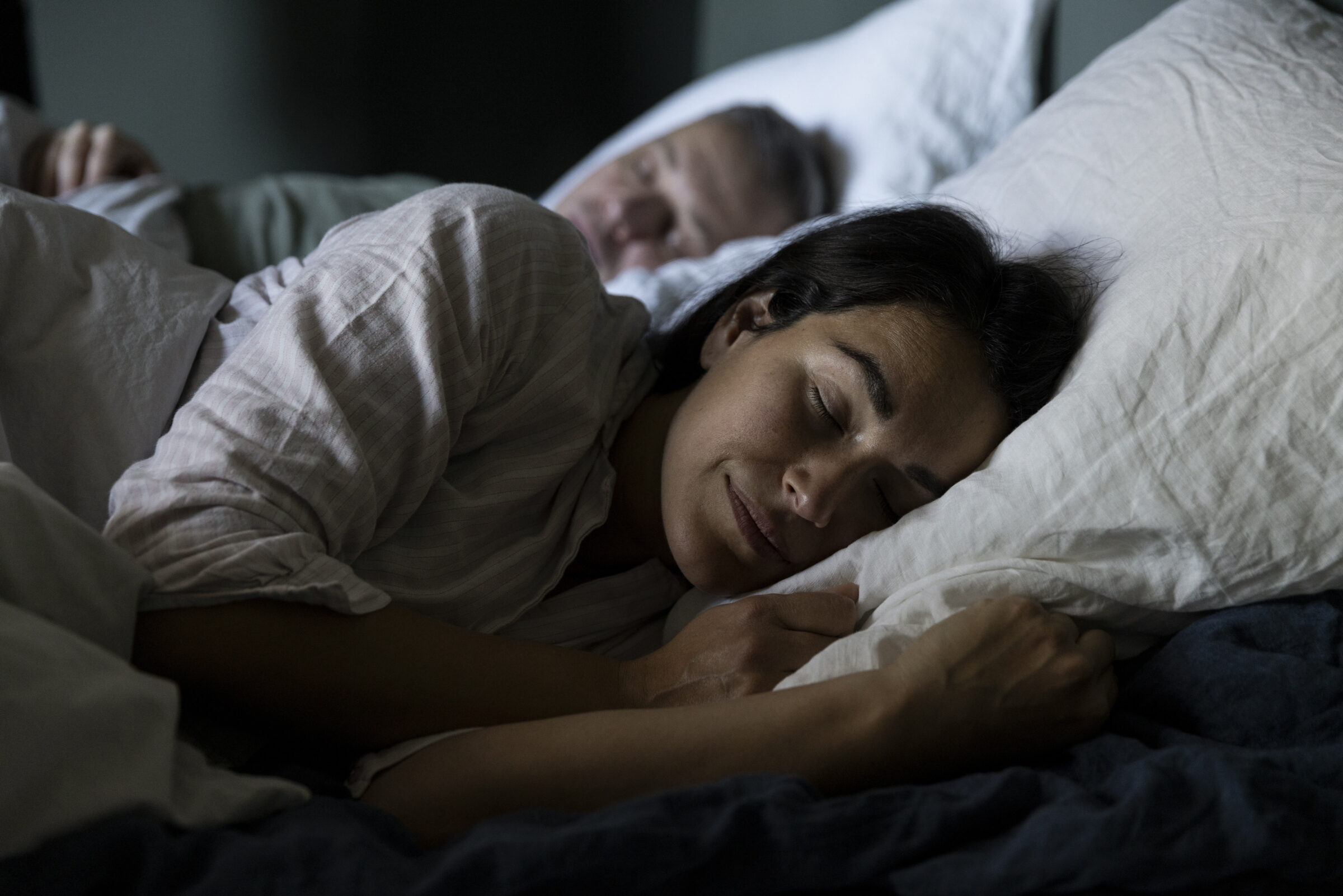
Sleep needs are very individualized, and you might wonder how much deep sleep you need to feel your best? For optimal health, on average, older adults need about seven to eight hours every night, but the truth is that many fail to get even seven hours because of a variety of factors. Here’s what you need to know and how to get that elusive restorative shuteye.
REM sleep and the other types and stages of sleep
There are two types of sleep: rapid-eye movement (REM) and nonREM sleep. NonREM sleep is further delineated into three stages: N1, N2, and N3. N1 and N2 are superficial stages of sleep while N3 and REM are the deep stages.
N1 is the shallow sleep that occurs as you transition out of waking consciousness toward sleep. It represents between 2% and 5% of your total sleep time.
N2 is when your body relaxes, your heart rate and breathing slow, and your body temperature drops; it represents about 50% of your total sleep time.
N3 is when your brain slips into unconsciousness and your body starts the process of repairing daily damage; it represents between 15% and 25% of your total sleep time.
REM sleep is characterized by eye movement and heightened brain activity. This is when you dream, experience memory consolidation and body restoration and have muscular paralysis below the chin. It represents about 25% of your total sleep time.
Your body cycles through these stages in a pattern that repeats through the night. Each round of N1, N2, N3 and REM sleep at night makes up one sleep cycle. People who get good quality sleep typically go through through or five cycles of sleep each night.
Your sleep stages and cycles make up what’s called your sleep architecture—think of it as your personal sleep map.
Sleep difficulties
Getting good sleep often becomes more of a challenge with advancing age. Older people tend to have less deep sleep and fewer sleep cycles. That could turn you into a light sleeper who is more easily aroused during the night. Some people get into bed early, but don’t go to sleep for some time then wake up early. This pattern means their sleep efficiency—the amount of time spent asleep compared to the amount of time in bed—isn’t as good as it was.
Some retired people are very early risers because they trained themselves to get up early during their working years and find it hard to retrain their brain. Many find they’re now getting up even earlier, especially during seasonal shifts when sunrise is early.
Health issues can also get in the way of good sleep if, for instance, you need to get up in the middle of the night to go to the bathroom whether because of incontinence, an enlarged prostate or medications that encourage voiding.
Sleep extremes
One or two percent of people are short sleepers. They wake refreshed and function well after just six hours of sleep. But most of us need more than that, and anyone who gets less than six hours is considered sleep deprived. That’s a serious problem for older people. Chronic sleep deprivation reduces short-term memory and increases the risk of cognitive difficulties, including dementia, later in life. It can also lead to multiple metabolic and cardiovascular health issues, among others.
About 4% to 6% of adults are hypersomniacs, meaning they sleep more than 10 hours a day (this doesn’t count people who have excessive sleepiness caused by medications they take). Often the cause is a brain-related sleep disorder such as narcolepsy or idiopathic hypersomnia. These conditions tend to start early in life and can continue with advancing age. Getting too much sleep, especially if you’re older, can be as dangerous as not getting enough. There’s a U-shaped curve for cardiovascular risk, for instance. It’s elevated if you’re sleeping less than 6 hours and more than 8 to 9 hours.
Sleep hygiene
Practicing sleep hygiene—a group of lifestyle habits that promote sleep—can help improve the length and quality of your sleep:
Avoid naps
Napping during the daytime can prevent you from sleep well at night.
Delay bedtime
If you tend to turn in at 7 p.m. or earlier, try to push your sleep time ahead by keeping bright lights on at home starting in the late afternoon and continuing into the evening. This helps delay the melatonin surge that makes us sleepy.
Avoid heavy, fatty food before your sleep time
These can cause indigestion and trouble sleeping.
Stop all vigorous activities two to three hours before you plan on going to sleep
Turn off electronic gadgets, including your phone. If you read, go old-fashioned with a book or magazine, not with a Kindle or iPad. If you’re easily excitable, make it a boring book, not a thriller. A half-hour before you go to sleep, wind down with a form of relaxation, such as meditation or very gentle yoga.
Go to bed when you feel sleepy at night
Too often people get in bed not because they’re tired but because they’re bored. Find light activities to do in the evening, like reading or drawing, but don’t do them in bed.
Make your room dark, close the shades, and wear a sleep mask if that helps. Turn your alarm clock away from you, so that if you wake up in the middle of the night, you don’t see its light or the time, which can lead to increased arousals and make you give up trying to go back to sleep. If you do wake up in the middle of the night, resist turning on a light—that can cause a decrease in melatonin, which makes it hard or even impossible to fall back asleep.
Avoid all over-the-counter sleep medications
It’s unclear how much of these medications actually get absorbed, they can further erode your sleep architecture, and you might experience a hangover effect on the next day.
Fix your wake-up time in the morning and stick to it
Whether it’s a workday, off-day or vacation day, keeping your wake-up time stable helps promote a more regular sleep pattern.
When to see a doctor
If you find that you can’t get enough solid sleep with these steps, consult your doctor or a sleep specialist to see if any underlying conditions could be causing it. For instance, high blood pressure or diabetes and their treatments can contribute to frequent arousals: You might have to get up to urinate because of diuretics you take for high blood pressure or if you have diabetes, a drop in blood sugar could rouse you.
Many sleep disorders develop with age. Most common is obstructive sleep apnea, which can cause you to wake up frequently choking or gasping and lead to the irregular rhythm atrial fibrillation if not treated. Another is restless leg syndrome, which keeps you from going to sleep or staying asleep because of crawling sensations in the legs that force you to get up and move around for relief. Once health issues are diagnosed and treated, you should be able to sleep more soundly.