Osteoarthritis causes issues for many older adults, as does another common problem: bursitis. But what is bursitis?
While osteoarthritis is a wear and tear of the cartilage within the knee, hip or other joints, bursitis is inflammation of the fluid-filled sacs (officially called bursae) that provide a protective cushion for the bones, muscles and tendons in your joints. There are more than 150 bursae throughout the body, but bursitis is more likely to affect larger joints, with hip bursitis particularly common. Fortunately, there are things you can do to avoid bursitis and prevent recurrence if you’ve already been affected by the condition.
What Is Bursitis in the Hip?
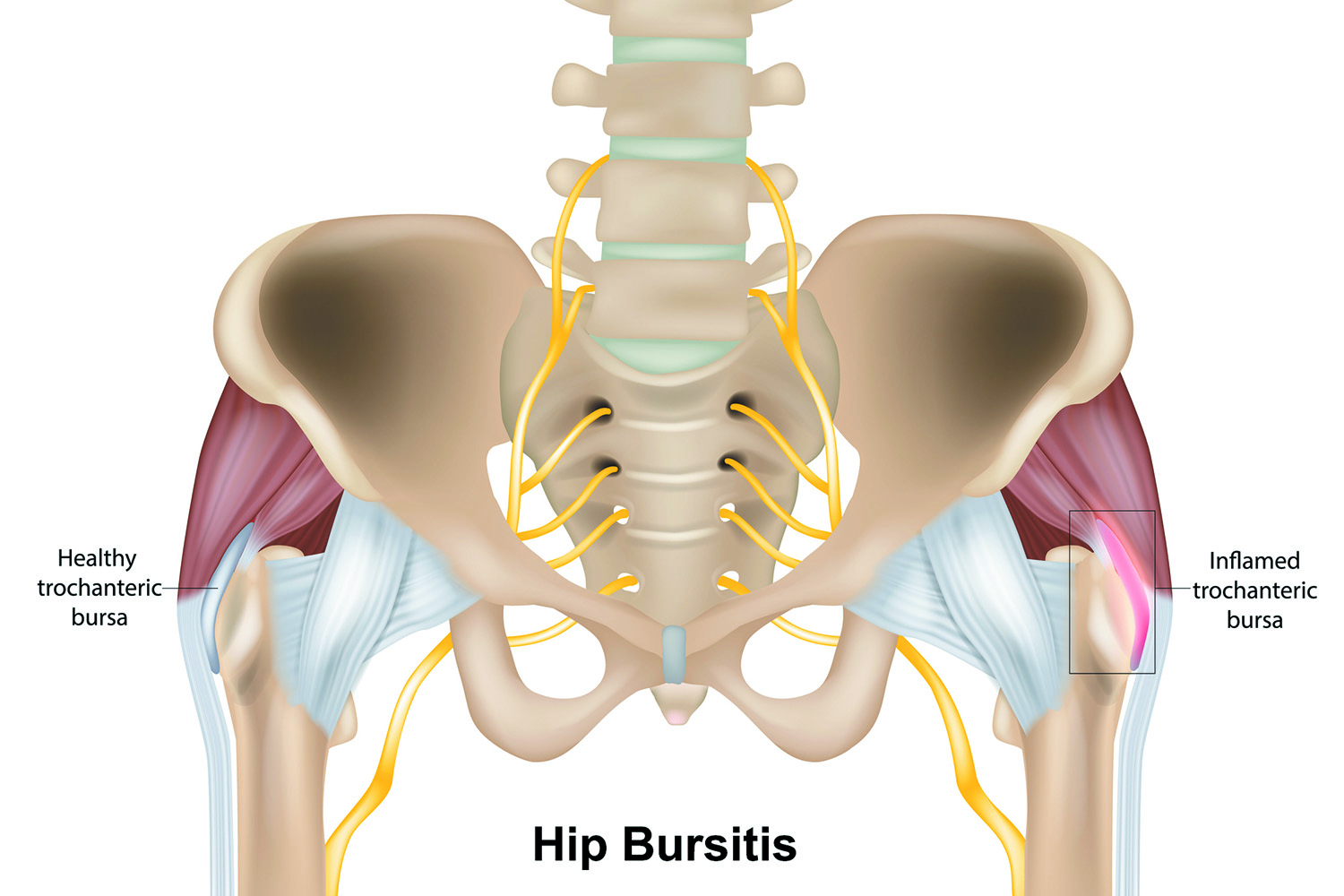
Hip bursitis is a problem for many people. Each hip contains two major bursae. One is located toward the inside of the hip and is less likely to become inflamed than the second, which covers the greater trochanter (the bony point of the lateral, or outside, aspect of the hip).
“Inflammation occurring in this area is referred to as trochanteric bursitis,” says David C. Thomas, MD, MS, MHPE, professor of rehabilitation and physical medicine at Mount Sinai. “This tends to affect people who overuse their hip joints—for example, those who jog or cycle every day.”
Obesity and previous injury or surgery to your hip also raise the risk of bursitis in the joint, along with arthritis in your spine, scoliosis (curvature of the spine), bone spurs (bony protrusions that are associated with arthritis), and having one leg shorter than the other. “Rheumatoid arthritis is another risk factor, given it is an inflammatory condition,” Dr. Thomas adds.
Bursitis in Other Joints
Other joints that often develop bursitis include the shoulders, elbows, and knees. As with the hips, you are more susceptible to bursitis in these joints if you engage in work or hobbies that require repetitive motion or place pressure and friction on the joints.
“For example, if you spend long periods kneeling down to do gardening, you may develop knee bursitis, while a daily game of tennis or golf may cause bursitis in your shoulder,” Dr. Thomas says. “People who spend long periods lying flat can develop bursitis in their heels.”
Bursitis Symptoms
Bursitis is characterized by pain and stiffness that tends to radiate out from the affected joint. “The pain worsens at night if you’re lying on the affected joint, and it also will worsen if you spend extended periods of time sitting down or walking,” Dr. Thomas says. “Using the joint or pressing on it with your fingers also results in discomfort, and the joint may appear swollen.”
Your doctor will be guided by these obvious bursitis symptoms in diagnosing the condition, but he or she may refer you for imaging tests to rule out other possible causes, such as bone spurs or an underlying injury due to a fall.
Bursitis Treatment
If you are told you have bursitis, try to avoid activities that worsen the symptoms. If the condition is affecting your hip or knee, temporarily using a cane can help relieve pressure on the joint; however, you should avoid using a cane as a long-term solution, since you may cause atrophy to the leg muscles on the affected side and place your other leg under greater pressure.
Bursitis treatment entails applying ice packs at regular intervals to help relieve common bursitis symptoms like pain and inflammation, along with a short course of nonsteroidal anti-inflammatory drugs (NSAIDs), like ibuprofen (Advil, Motrin) and naproxen (Aleve).
Always check with your doctor before taking these drugs, since they place older adults at increased risk of potentially harmful side effects, including bleeding. “If your doctor clears you to take them, be sure to carefully follow dosage instructions,” Dr. Thomas advises.
Strategies for Stubborn Bursitis
If your bursitis doesn’t ease within a couple of weeks, your doctor may refer you for physical therapy to help strengthen your muscles and increase flexibility in the affected joint. Hip bursitis or bursitis in the shoulder that isn’t helped by conservative measures may respond to a steroid injection into the inflamed bursa.
“These injections are administered under ultrasound or x-ray guidance,” Dr. Thomas explains. “The goal is to introduce anti-inflammatory steroid medication and a local anesthetic at the source of the bursitis in order to decrease pain, increase mobility, and allow for better physical therapy sessions.”