
The neck and shoulder are closely linked by shared muscles, nerves, and more.
When a person has neck and shoulder pain, “Sometimes it is hard to know exactly what is causing the pain. The location that you feel pain in isn’t always where the problem is,” says Cleveland Clinic physical therapist Scott Robertson, DPT.
A clinical exam and imaging can often identify the problem, but even if the exact cause is unclear, treatment focused on restoring function can produce good results.
Why Neck and Shoulder Pain Often Go Together
An injury in one place can be painful in another spot in the body due to referred pain or compensatory movements. Pain from joints in the neck can sometimes be felt in the shoulder. Or, when an injury happens, the body may compensate for that injury, causing pain in another area.
Robertson says the body sometimes recruits help from a muscle group in one area to cover loss of normal function in another. For example, a rotator cuff injury in the shoulder might result in the body relying on muscle groups near the shoulder blade to lift the arm, creating pain in the side of the neck.
Some pain develops slowly over time, and other pain comes on quickly after an injury. A fall or car crash can cause pain in the neck or shoulder from fractures or soft tissue tears that require timely repair and are more likely to require surgery than injuries that develop slowly over time.
X-rays, magnetic resonance imaging (MRI) or computed tomography (CT) scans can sometimes help identify the cause of the pain, but imaging is not always necessary to initiate treatment and get relief.
“If the pain is coming on slowly and happened over many years, it’s probably not a serious pathology that requires immediate intervention,” Robertson says.
Finding the Cause of Neck and Shoulder Pain
“The general consensus in orthopedics is you start with diagnosing the spine first. For neck and shoulder pain, your clinician will rule out problems in the cervical or thoracic spine and then consider other problems in the area,” says Robertson.
Muscle spasms, also known as trigger points, are often a result of poor posture and can cause pain. Muscles or nerves can get pinched. Arthritis or problems with tendons are also common culprits of neck and shoulder pain.
A physical therapist can perform tests that provide clues about the source of the pain and assess for loss of function. The physical therapist will use a series of provocative tests to find the specific movements that cause the pain to find the source of the pain. Even if the cause of the pain is not fully understood, physical therapy focusing on improving function can help.
How to Relieve Neck and Shoulder Pain
Insurance companies sometimes require physical therapy before authorizing advanced imaging for shoulder or neck pain. Many people can recover with a few weeks or months of physical therapy, Robertson says. Injections, medications, or surgery are options for some injuries.
Stretching and strengthening exercises can help you to recover function. Stretches for neck and shoulder pain include the seated chair stretch and standing shoulder rows (see images and instructions for guidance about how to perform these exercises).
Robertson advises that recovery often can take several weeks to months. He recognizes it is hard to be patient with a slow recovery, but “people can influence their body for the better by sticking with their physical therapy program, applying stress to the body to increase and enhance the body with strength and stretching. Recovery is a biological process that takes time.”
Standing Shoulder Row
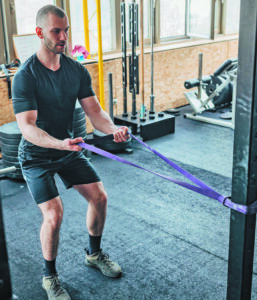
Stand upright holding a resistance band in both hands. The resistance band should be anchored at the other end at chest height. Pull your arms back, with your elbows tucked at your sides. Squeeze your shoulder blades together as you pull on the band. Hold for three seconds, and repeat two sets of 15.
Seated Chair Stretch

Sit upright on a chair with a short back, with your hands behind your head and your elbows pointing forward. Arch your back and open your elbows. Hold for three seconds and repeat two sets of 10.