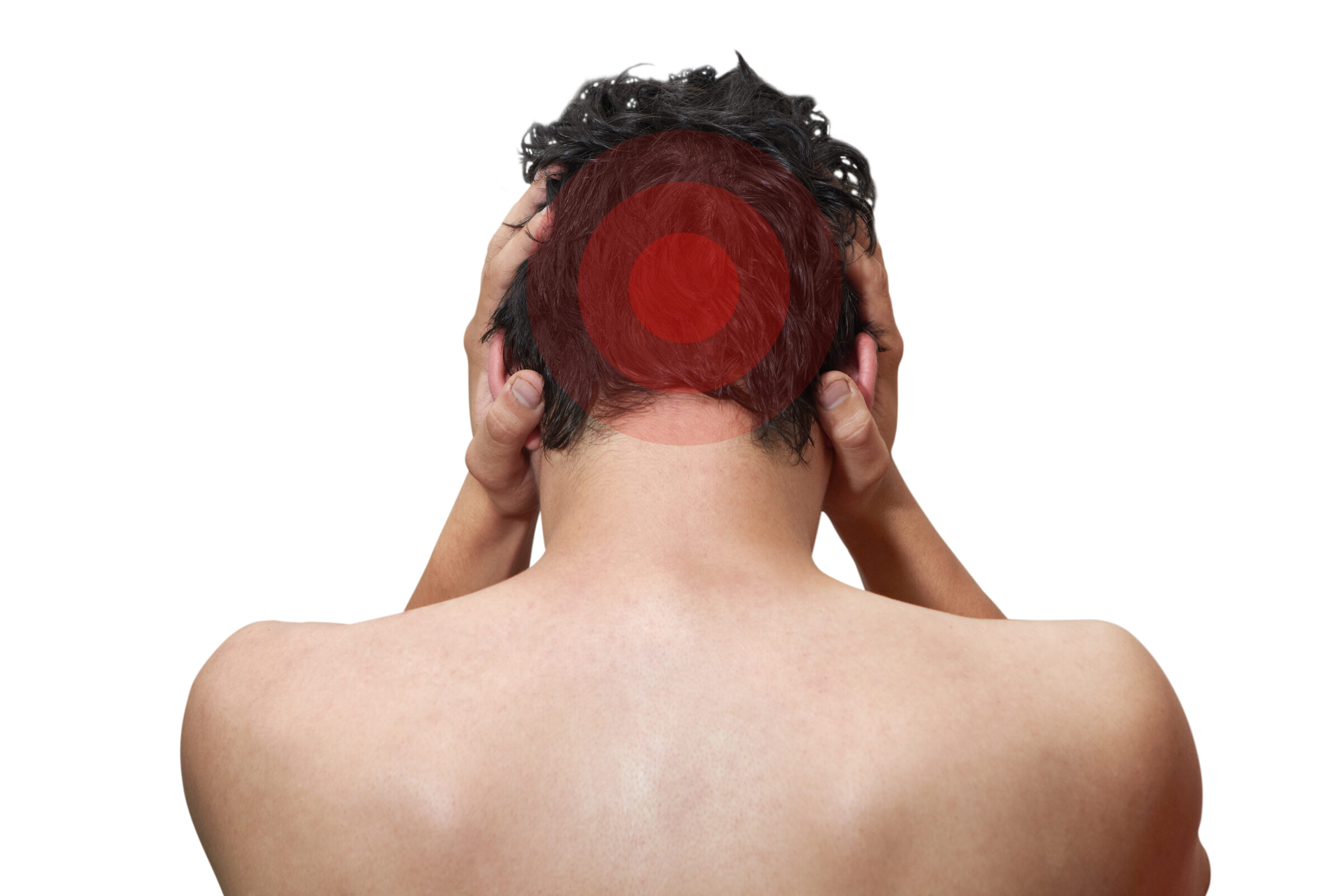
“My head hurts” is a common complaint, but it is worth being a bit more precise. While some headaches are “generalized”—that is, felt throughout the head—others are focused in or radiate from a particular area. Bottom Line Heath asked headache specialist Paul G. Mathew, MD, DNBPAS, FAAN, FAHS, what causes back of head (occipital) headaches and how to relieve them.
The neck connection
It is not unusual for a tension headache or migraine headache to involve pain that seems concentrated in the back of the head, but when someone chronically experiences back-of-the-head headaches, it is worth looking a bit beyond the head for the potential explanation. The underlying problem or trigger is often located in the neck.
The occipital nerves run from the upper neck (cervical spine) up the back of the head and into the scalp. When one or more of these nerves is injured or inflamed, it can be experienced as a back-of-head headache that if often accompanied by neck pain. There is a trio of disorders that commonly link headaches with neck issues. They are similar in some ways, but they can point to different treatment options.
Occipital neuralgia
This is an underdiagnosed condition in which a pinched/irritated nerve in the upper neck causes flares of pain that seem to originate near the base of the skull. These flares might radiate up towards the top of the head or towards the area behind one or both ears, depending on the specific occipital nerve or nerves affected. The scalp itself might also become tender.
It is similar to sciatica, a condition in which a pinched/irritated nerve in the lower back (lumbar spine) causes low back pain, but when it flares, can send pain down one or both legs . Occipital neuralgia typically produce quick jolts of intense shooting or stabbing pain lasting seconds at a time, which can be provoked by certain neck movements or contact to the back of the head.
The pinched nerve that causes this condition might itself have been caused by a specific event, such as whiplash from a car accident or a sports injury to the neck, but not necessarily. The pinched nerve also could be the result of years or decades of poor posture while holding the head in an ergonomically unfavorable position, such as hunched over a computer keyboard or guitar.
Some patients reason that their neck injuries cannot be the cause of their headaches because they from tension headaches or migraine headaches even before incurring the neck injury. That conclusion is not necessarily correct. Occipital neuralgia can serve as a trigger that causes an existing headache issue to occur with greater frequency and/or intensity. Occipital neuralgia should be considered a possibility if the headaches now frequently begin near the back of their head but previously began elsewhere in the head.
What to do: Occipital nerve blocks are the gold standard treatment, as they can be both diagnostic (a good response confirms the diagnosis) and therapeutic. These injections can provide relief from occipital neuralgia headaches for weeks, months, years, or even indefinitely. A physical therapist might be able to recommend stretches, exercises, and/or posture modifications that reduce the pressure on the pinched nerve in your neck sufficiently to reduce or eliminate your occipital neuralgia headaches. Nerve blocks and physical therapy can be complimented by medications that can help reduce the sensitivity of these nerves, and prevent attacks. If best medical management fails, occipital nerve decompression surgery could be considered.
Cervicogenic headaches
These headaches can be triggered by slipped disks, fractured vertebrae, arthritis, tumors, or other injuries or lesions in the cervical spine or the soft tissue of the neck. The pain from these headaches can feel like they are radiating from the back of the head towards the front. Like occipital neuralgia, they can often trigger the underlying tension headache or migraine headaches the patient experienced before developing these structural neck issues. Similarly, neck movements and contact to the area can trigger headache, but it does not manifest as stabbing pains lasting seconds at a time like occipital neuralgia.
It is not uncommon for patients suffering from cervicogenic headaches to be unaware they have an underlying neck issue, which can make diagnosis challenging. Also, if the structural problem involves the lower parts of the cervical spine, they may also experience pain, tingling, numbness, and even weakness in the arms.
What to do: If back-of-head headaches persist and do not respond to other treatments, ask your doctor whether it’s worth having an MRI of your neck and perhaps your head as well, if only to rule out these potential underlying structural problems. MRI is preferred over CT scans because they generally provide greater detail. CT scans are faster to perform, and can be considered in urgent/emergency situations or if the patient cannot have an MRI for reasons such as having a pacemaker. If a neck or spine issue is the cause of your headaches, treatment of that issue is likely to result in a reduction or near resolution of these headaches.
Migrainous cervicalgia
This is neck pain that occurs exclusively during a migraine headache. Migraine involves sensory amplification, which is when normal stimuli are perceived as uncomfortable or even painful. For example, a modest amount of normal lighting can be perceived as blinding or a modest amount of background noise can be perceived as deafening. During a migraine, normal muscle and joint signals from the neck that are barely noticeable can be amplified during a migraine to neck and back of the head discomfort or even pain. As a result, someone with the very early stages of arthritis with no significant pain between migraine headaches, might suddenly experience disabling neck pain during a migraine. Patients with migrainous cervicalgia will often attend massage therapy, chiropractic sessions, and acupuncture without significant improvement of this neck pain, because it is not primarily caused by a musculoskeletal issue.
What to do: Find a migraine treatment that works for you. Do not give up if the first medication that is prescribed is not effective. There are numerous pharmaceutical options, and determining which works best for a particular patient can take some trial and error. One size does not fit all when it comes to migraine treatment. If a medication can reduce the frequency and intensity of migraine, it will likely reduce any neck pain or occipital pain due to migrainous cervicalgia.