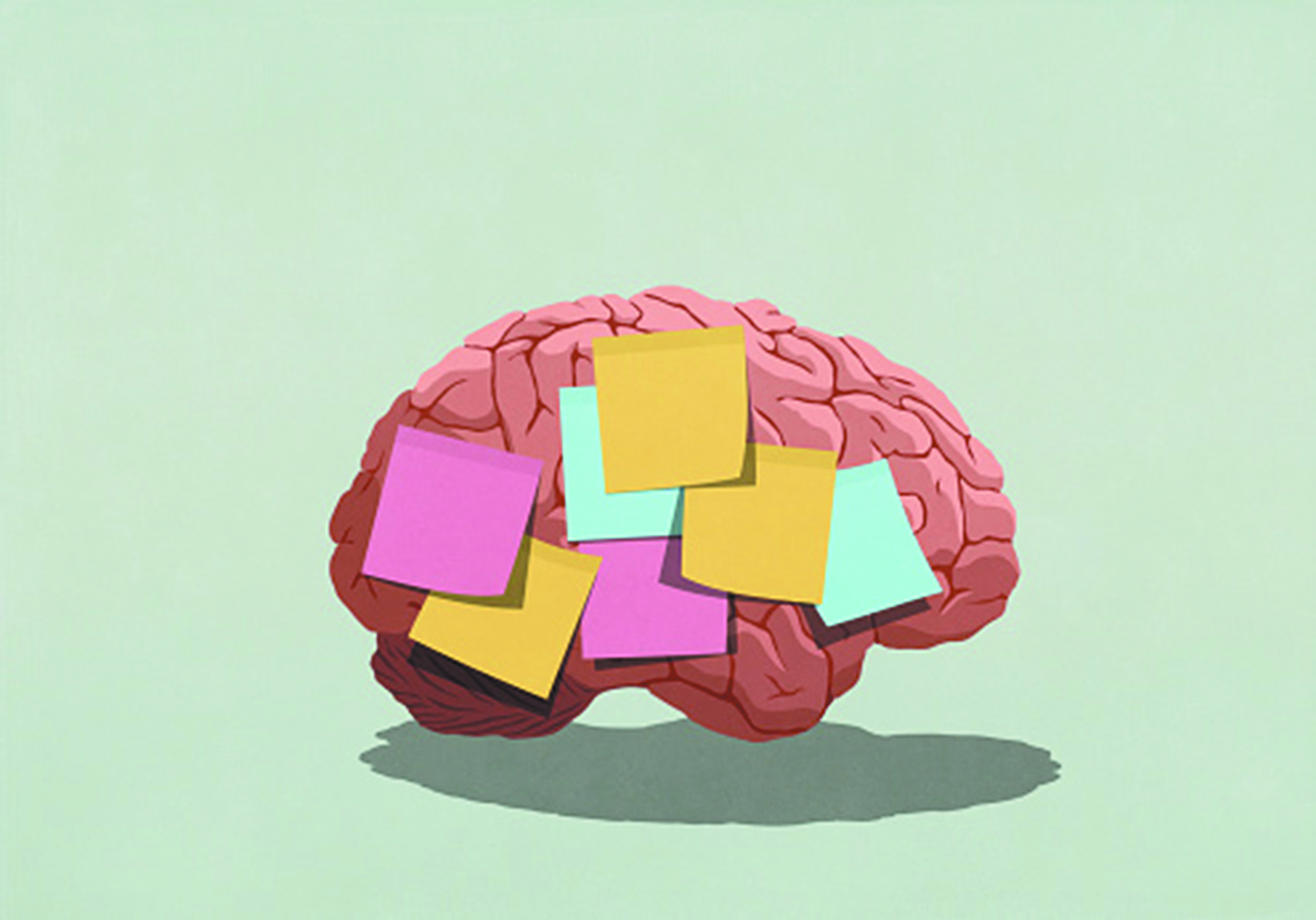
Memory is a complex system by which you learn, store and recall information. You employ several different types of memory, each responsible for handling different kinds of information over varying lengths of time. Understanding how memory works can help you learn some tools that support cognitive health and can foster a deeper awareness of the brain’s complex and remarkable capabilities, explains Janet Sherman, PhD, a Massachusetts General Hospital psychologist.
“Having some understanding of different types of memory and how memory works can be a very helpful first step when you are trying to learn strategies that can strengthen your memory,” she says. “When you understand how memory works, memory strategies can make more sense.”
She adds that learning about how memory works is often a first step in classes and programs focused on improving memory.
Short-Term vs. Working Memory
Dr. Sherman says that when patients come in to her office, they often complain of difficulty with “short-term memory,” meaning that they are forgetting things, such as conversations, that happened recently (e.g., they might forget what someone told them earlier that day or the day before).
But, she adds, “psychologists define short-term memory as the ability to remember information for a very brief time—seconds or minutes.” An example of short-term memory is remembering a phone number long enough to place the call. Short-term memory capacity is limited; individuals can typically hold seven (plus or minus two) numbers (referred to as “the magic number”) for a brief time.
Though they are sometimes used interchangeably, the terms “short-term memory” and “working memory” don’t mean the same thing. While working memory is a form of short-term memory, “working memory requires an additional demand,” Dr. Sherman says. “Specifically, you’re working on the information that is being held in short-term memory. An example might be holding onto numbers to mentally calculate a tip. Psychologists often test short-term memory by asking individuals to repeat orally presented digits, increasing the length of the sequence, and assess working memory by asking individuals to reverse the numbers.”
Another type of memory that is short-lived is sensory memory. Dr. Sherman explains that sensory memory is a brief (lasting only a few seconds) registration of information from your senses—auditory, visual, tactile, gustatory, olfactory—before it moves to short-term memory. Sensory memories can also move into your long-term memory. The smell of a favorite childhood meal and the melody of a song from your youth are examples of sensory memories that can last a lifetime.
Long-Term Memory
Long-term memory refers to information that is held in memory for more than a few minutes and later retrieved. “Unlike short-term memory, the capacity for long-term memory is not constrained,” Dr. Sherman says. “Individuals hold a lot of information in their long-term memory, including facts we have learned, events we have experienced, and skills we have learned.”
Some of the information we hold in long-term memory is referred to as declarative memory, and other information is referred to as procedural memory. “These two types of memory differ in both the types of information and in our conscious awareness of it, with declarative memory a form of explicit memory and procedural memory a form of implicit memory,” Dr. Sherman adds.
Declarative memory includes two types of memory: episodic and semantic. Episodic memory, as its name suggests, is memory for episodes that occurred at a certain time and place. “When you recall this information, such as a trip you took, you recall when you took the trip and where you went,” Dr. Sherman explains. “The other type of declarative memory is semantic memory, or memory for factual information that you learned, such as the meanings of words, facts that you learned in school, your address, etc.” For this type of declarative memory, when or where you were when you learned those facts isn’t important.
You may also have heard the term “autobiographical memory,” which is essentially a form of declarative memory. “It includes your memories of personal information, some of which is episodic and some semantic,” Dr. Sherman says, noting that the more emotionally charged events in your life are more likely to be remembered.
One other type of long-term memory is procedural, or implicit, memory. As its name suggests, procedural memory refers to remembering the procedures required to perform a task, like driving a car, riding a bike, or playing the piano. “Once you are skilled at these tasks, you can perform them in a fairly automatic fashion without explicit awareness of each of the steps required,” Dr. Sherman says.
Memory and Aging
These types of memory are differentially sensitive to the effects of aging, Dr. Sherman notes. “Within the category of declarative memory, our memory for facts we have learned—semantic memory (e.g., the name of the first U.S. president, meanings of words)—tends to hold up better than our memory for specific events—episodic memory, such as remembering a wedding you attended 30 years ago. While both of these types of declarative memory depend on the hippocampus [an important memory center in the brain], we tend to access information from semantic memory more often than we do specific episodes,” Dr. Sherman says, adding that “this repeated accessing of the information makes it more durable.”
But for both types of declarative memory, it becomes more difficult to form new declarative memories as we age. Aging also impacts working memory.
“These abilities, to form new memories, rely heavily on the hippocampus, which is especially vulnerable to the effects of aging. In contrast, our ability to remember memories from a long time ago has the benefit of involving a more complex, distributed network of brain regions, making it a little more resilient to advancing years.
Attention and Memory
Creating a memory, whether it lives briefly in your short-term memory or moves on to your long-term memory, starts by attending to the information. This first step of the memory process is called “encoding,” and without it, there is nothing to store or recall later.
“As I often tell my patients, this first step of memory is critical and is modifiable,” Dr. Sherman says. “The more attention you pay when you first see or hear information, the more likely you are to remember it later on.”
The next step of memory is storage or consolidation of information in memory. During this stage of memory, structural and chemical changes strengthen the initial neuronal changes that occurred during the initial learning.
Finally, you engage in recall, or retrieval, when someone asks you about the information or you need it for a specific reason. “This requires you to access the information,” Dr. Sherman says. “As we all experience, this sometimes can happen quite quickly, and other times it can take longer. As we age, retrieving information, like someone’s name, can take longer to recall, though in time or with a hint, the information generally comes back.”