
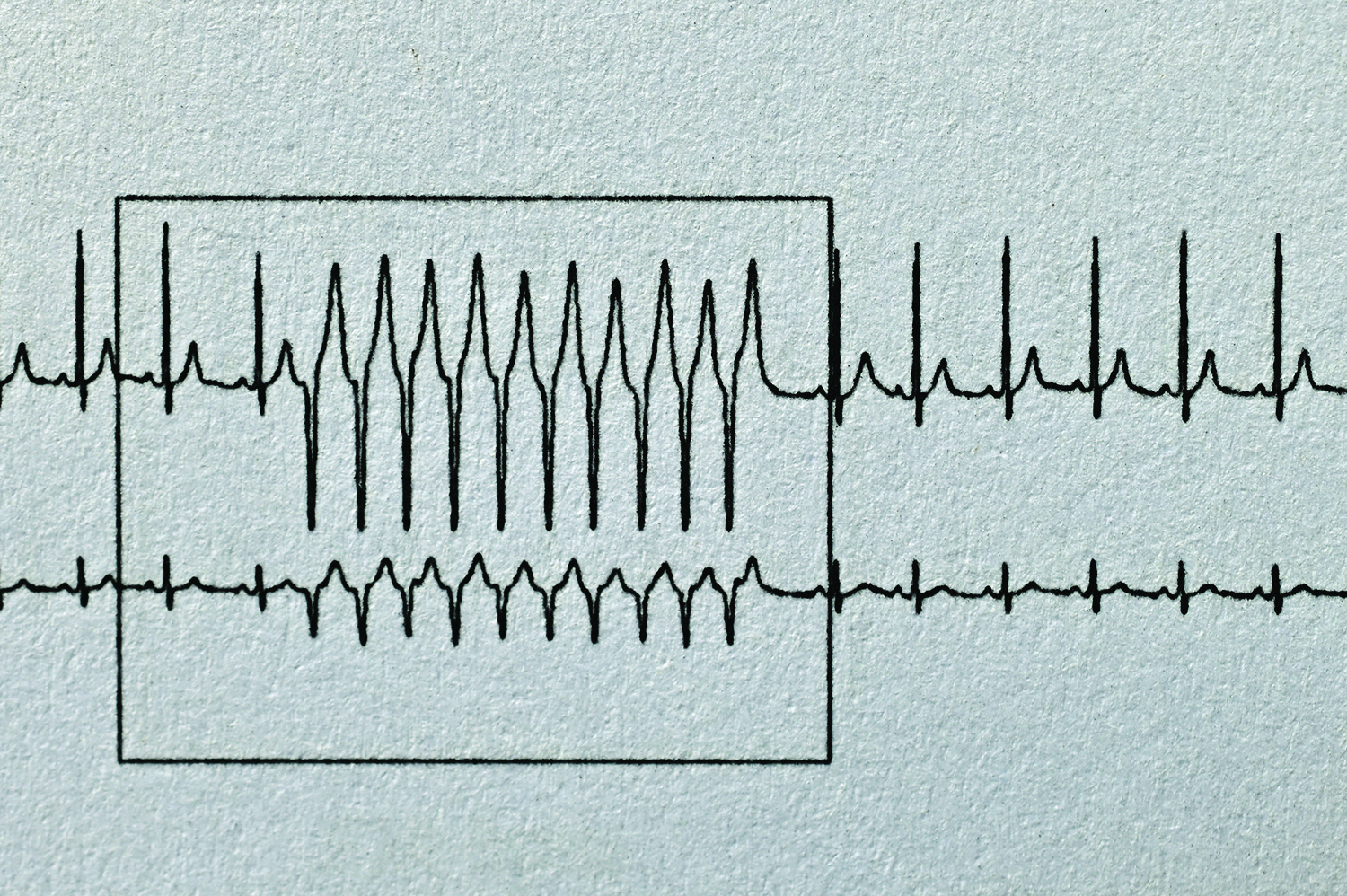
It is normal for your heart rate to soar in the presence of danger, exertion or certain forms of stress, including pain. In these cases, your heart rate should drop to normal after the cause is resolved.
However, if you experience a sudden spike in heart rate while resting, or your fast heart rate fails to slow down, you may become concerned. Should you worry?
“Short bursts of tachycardia lasting five to 15 seconds are common. If they happen rarely, you probably don’t need medical attention. But if they occur relatively frequently or last longer, let your doctor know,” says Cleveland Clinic electrophysiologist Thomas Callahan, MD.
What Is Tachycardia?
Technically, “tachycardia” refers to a heart rate that is faster than normal. Normal heart rates vary widely. Children’s hearts beat faster than adults’, and a normal resting heart rate in adults ranges from 60 to 100 beats per minute (BPM).
“A resting heart rate of 100 BPM or higher as averaged over one minute is typically abnormal for an adult. That being said, it’s very hard to nail down the number of beats per minute when someone needs to be concerned,” says Dr. Callahan.
Episodes of tachycardia may or may not cause symptoms. As it turns out, symptoms are important in determining whether it is time to take action.
“If you experience a heart rate of 100 BPM or higher at rest, plus the sensation of a racing heart, dizziness or shortness of breath, we recommend you call your primary care physician or cardiologist. You may need an investigation to identify the source of the arrhythmia and get treatment,” he says.
Diagnosing and Treating Tachycardia
Blood tests for underlying metabolic or endocrine issues may be performed, along with an electrocardiogram (ECG) or ambulatory monitoring to obtain a recording of the heart rhythm and an echocardiogram to look for a structural cause of tachycardia.
Some fast heart rates respond to beta-blockers, calcium channel blockers or antiarrhythmic medications. Others can be treated with catheter-based interventions.
Unfortunately, pacemakers are not an option. “They can speed up a slow heart rate, but they can’t slow down a fast heart rate,” says Dr. Callahan.
What Is a Dangerous Heart Rate?
Fast heart rhythms that originate in the bottom chambers of the heart (ventricles) are called ventricular tachycardias. Rapid rhythms that start in the top chambers (atria) or the junction where the atria and ventricles meet are known as supraventricular tachycardias, meaning “above the ventricles.”
Ventricular tachycardia (VT) can be lethal. A heart in VT can beat so fast that it is unable to refill with blood. Blood pressure plummets, and the person collapses. Unless shock paddles are available to restore a normal heart rhythm, the person succumbs to sudden cardiac death. Survivors of VT may be offered an implantable defibrillator, which acts like internal shock paddles.
In contrast to VT, supraventricular tachycardias are typically not dangerous.
“While treatment can be offered for many forms of supraventricular tachycardia to help alleviate symptoms, many individuals simply need reassurance that their arrythmia will not have a negative impact and doesn’t need treatment. We can leave it alone,” says Dr. Callahan.
