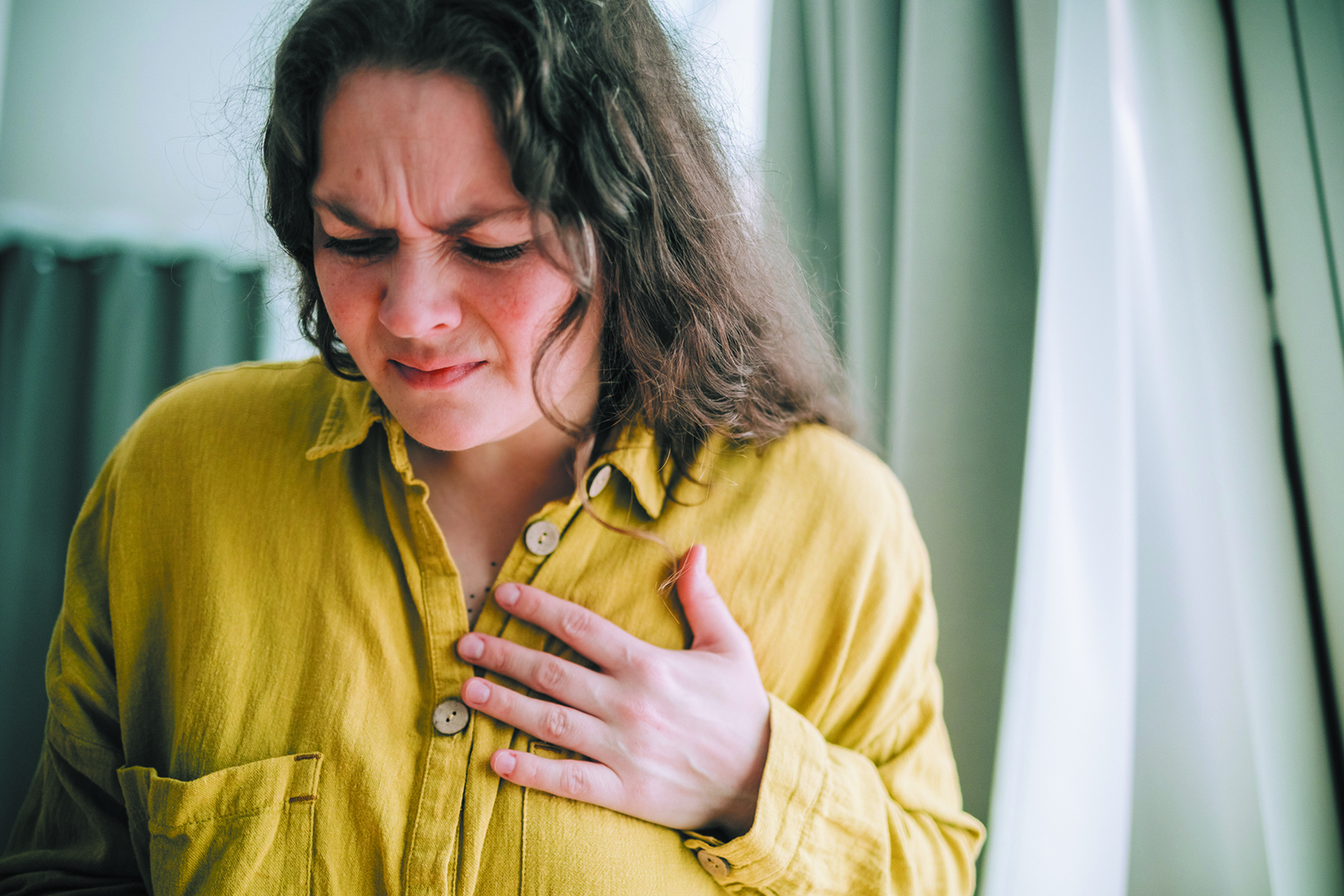
Not all heart attacks occur out of the blue. Some lucky individuals get an advance warning when symptoms or signs of heart attack occur up to a month before the event happens.
“These signs or symptoms don’t necessarily mean a heart attack will happen, but you should tell your doctor, particularly if you have any risk factors for heart disease,” says Cleveland Clinic preventive cardiologist Luke J. Laffin, MD.
About Myocardial Infarction
Referred to in medical terms as myocardial infarction, a heart attack is an interruption of blood flow to the heart muscle, or myocardium, and is a serious consequence of coronary artery disease. This disease results from atherosclerosis, in which cholesterol and other blood fats, or lipids, and white blood cells accumulate and form plaques in the walls of your arteries—including the coronary arteries, which supply blood to the myocardium.
These plaques can grow large enough to restrict blood flow through an artery. However, the vast majority of heart attacks occur when a plaque ruptures, triggering the formation of blood clots that can block a coronary artery.
Signs of Heart Attack
Be alert for these advance heart attack symptoms:
Chest discomfort
The term “chest pain” is misleading, because it is unusual for a heart attack to cause intense or sharp pain. The discomfort caused by restricted blood flow to the heart—known clinically as angina—is generally described as an unrelenting sensation of pressure, like an elephant sitting on your chest.
“You are at high risk and may ultimately have a heart attack,” Dr. Laffin says.
Pain or pressure in your upper body
The discomfort caused by insufficient blood flow to the heart may spread to the jaw, throat, upper back, arm or upper abdomen. It is especially common in women. When it occurs in advance of heart attack, it should be taken seriously.
“You should call 911 and be taken to the emergency department to prevent a heart attack,” Dr. Laffin cautions.
Nausea
Sudden onset of nausea that occurs without an explanation can be a predictor of future heart attack, particularly in women.
“Anyone who develops nausea, with or without vomiting, for unexplained reasons should not ignore it, especially if they have any cardiovascular risk factors,” Dr. Laffin advises.
Change in fitness endurance
Let’s say that you typically run on a treadmill for 30 minutes five days a week. One day you become short of breath and have to quit after 15 minutes. This experience should prompt you to get checked out.
“We don’t usually lose endurance suddenly, so when it happens, it could be a sign of reduced blood flow to your heart,” Dr. Laffin says.
Less Common Heart Attack Symptoms
The following symptoms can occur for a variety of reasons. If you experience several of these symptoms simultaneously, particularly if you also feel chest discomfort, a heart attack may be happening or about to happen:
- Shortness of breath
- Dizziness
- Anxiety
- Sleep disturbances
- Swelling in the legs and feet
- Profuse sweating
- Rapid or irregular heart rhythm
- Extreme fatigue
- Burning sensation in the chest or stomach
Note: When one of these symptoms occurs alone, it is more likely to be associated with a different, possibly less serious, condition than heart attack.
Heart Attack Symptoms in Women
Both men and women are likely to feel chest discomfort during a heart attack. It is more common for women to sense this discomfort in their jaw, shoulders, neck, upper back or arms that may be accompanied by shortness of breath, sweating or nausea. Women also tend to experience unusually severe fatigue, anxiety or a sense of doom. Elderly patients of either sex may become disoriented.
“There are no absolutes. Some symptoms are simply more common than others,” Dr. Laffin explains.
“I tell patients who are at high risk for a heart attack that if they start having symptoms, they should call 911. It’s not the time to wait and see what happens,” he continues. “Even if you are not at high risk, but your symptoms frighten or worry you, call 911. It’s never wrong to get checked out.”