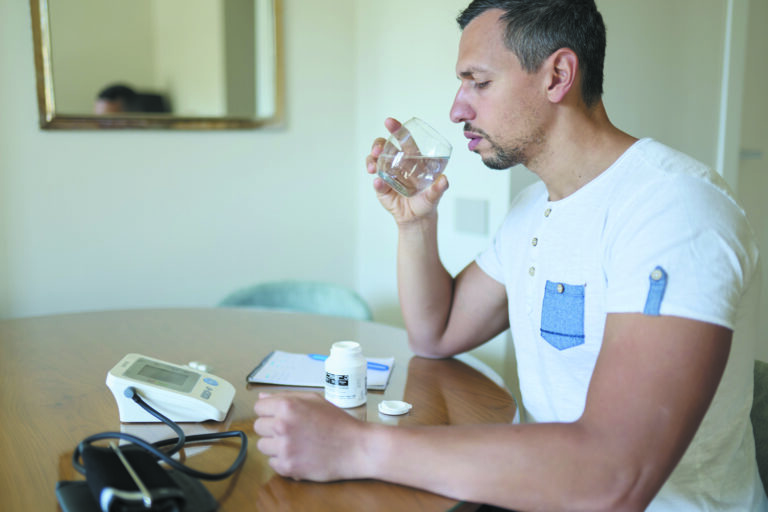
Luke Laffin, MD, describes a 49-year-old male patient who had resistant hypertension, uncontrolled blood pressure despite taking multiple classes of antihypertensive medications.
After some investigation, Dr. Laffin diagnosed the man with primary aldosteronism, which is characterized by excessive levels of the hormone aldosterone in the blood. He prescribed the man appropriate therapy, and now his blood pressure is controlled on one medication.
Also known as Conn’s syndrome, primary aldosteronism is more common than once believed, affecting an estimated 10% to 20% of people with hypertension and an even larger percentage of those with resistant hypertension. It’s also associated with increased cardiovascular risk.
“As a clinical finding, it still is grossly underdiagnosed and undertreated,” says Dr. Laffin, Co-Director of Cleveland Clinic’s Center for Blood Pressure Disorders. “I come across this condition at least a couple of times a month in my clinic. It’s oftentimes been treated incorrectly for years.”
Guidelines from several medical organizations now recommend screening for excessive aldosterone for hypertensive individuals. If you have hypertension, and especially resistant hypertension, ask your physician if primary aldosteronism could be the underlying cause.
How Aldosterone Affects Blood Pressure
The renin-angiotensin-aldosterone system plays a key role in blood pressure regulation. Renin, an enzyme created by the kidneys, helps in the production of hormones that trigger the adrenal glands to produce the steroid hormone aldosterone. This hormone signals the kidneys to retain or excrete sodium and water into the bloodstream, thereby regulating blood volume and blood pressure. Aldosterone also helps to balance sodium and potassium in the body.
Normally, renin and aldosterone levels rise and fall in unison, but in primary aldosteronism, the adrenal glands produce too much aldosterone or secrete it autonomously, independent of renin levels, leading to elevated aldosterone in the blood.
Primary aldosteronism is most often diagnosed in people who have high blood pressure in their 30s or 40s. “But you can develop this later in life, as well,” Dr. Laffin says. “It’s just that people often chalk it up to primary hypertension rather than a secondary cause, which is what primary aldosteronism is.”
In about 60% to 70% of instances, primary aldosteronism occurs due to adrenal hyperplasia, an overgrowth of cells that cause adrenal overactivity. Sometimes, an isolated noncancerous tumor (adenoma) on an adrenal gland is to blame. Rarely, primary aldosteronism results from an inherited disorder or adrenal cancer.
Detecting Primary Aldosteronism
Excessive aldosterone levels can contribute to kidney damage and increase the risk of heart failure, heart attack, and abnormal heart rhythms, like atrial fibrillation. Aside from increased blood pressure and, in some people, reduced potassium levels (hypokalemia), primary aldosteronism usually offers no warning signs.
So, several expert medical organizations now recommend screening for primary aldosteronism in people with hypertension—systolic blood pressure of 130 millimeters of mercury (mmHg) or higher or diastolic pressure of 80 mmHg or higher. For instance, a guideline from the Endocrine Society advocates primary aldosteronism screening for all people with hypertension (Journal of Clinical Endocrinology & Metabolism, September 2025).
The latest blood pressure guidelines from the American College of Cardiology and American Heart Association recommend primary aldosteronism screening for people with resistant hypertension and hypertensive individuals with hypokalemia, obstructive sleep apnea, an adrenal mass, and those with a family history of early-onset hypertension or a history of stroke before age 40. Screening may be considered for people with stage 2 hypertension—systolic blood pressure over 140 mmHg or diastolic pressure above 90 mmHg—the guidelines advise (Journal of the American College of Cardiology, Nov. 4, 2025).
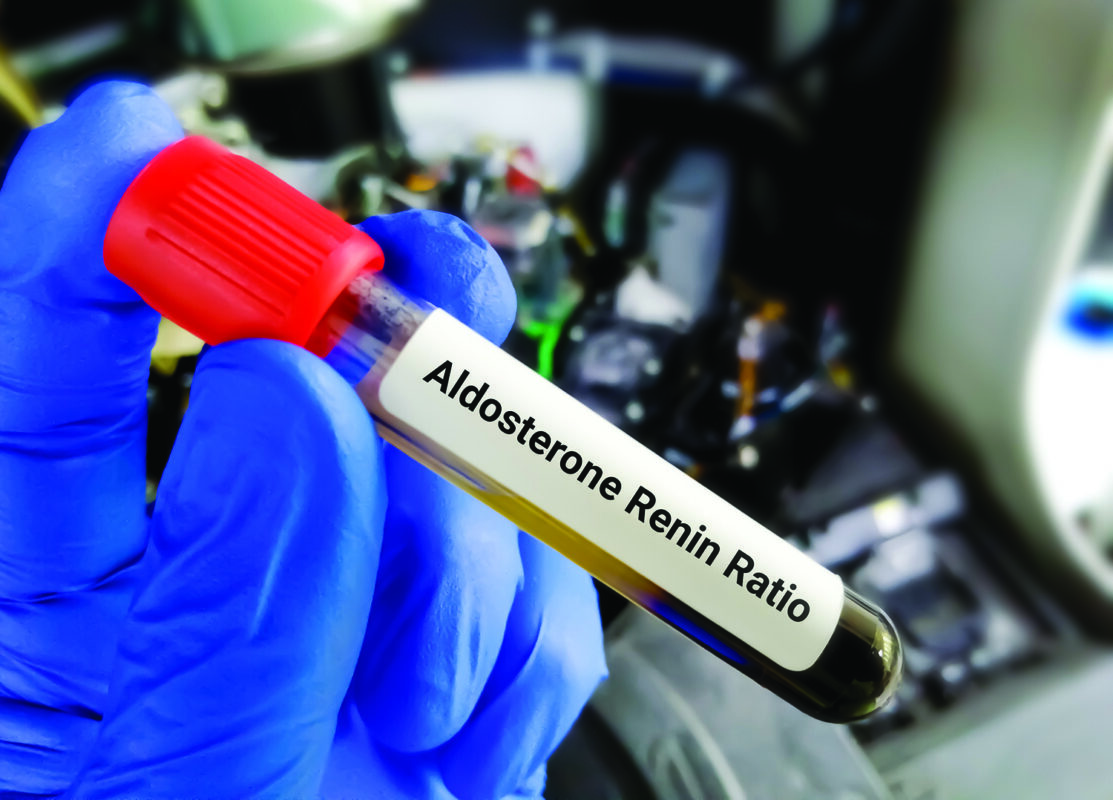
Primary aldosteronism screening entails a combination of blood tests that measure aldosterone, renin activity, and the ratio of aldosterone to renin activity. A low/suppressed renin level and high aldosterone level (with hypokalemia) is indicative of primary aldosteronism. If the screening results are equivocal, further evaluation becomes necessary.
“I test all my hypertensive patients for primary aldosteronism,” Dr. Laffin says. “If you have hypertension and haven’t been screened, particularly if your blood pressure is still uncontrolled, it’s probably worthwhile getting checked.”
Treating Primary Aldosteronism
For younger adults diagnosed early with primary aldosteronism originating in one adrenal gland, surgery to remove the gland (adrenalectomy) can provide a cure. For surgical noncandidates, physicians prescribe the medications spironolactone (Aldactone) or eplerenone (Inspra), which block the effects of aldosterone.
The drugs are highly effective, but they each have advantages and tradeoffs. They both can increase potassium, so those levels should be monitored two weeks after starting treatment and twice a year afterward, Dr. Laffin recommends. Taken once daily, spironolactone is more effective at lowering blood pressure, but it’s more likely to cause side effects such as breast enlargement (gynecomastia), breast tenderness, and erectile dysfunction in men. These side effects occur to a lesser degree with eplerenone, but it’s less potent than spironolactone and it’s taken twice daily.
“We have lots of drugs that can lower blood pressure, but we always want to treat the root source of the problem,” Dr. Laffin says. “Primary aldosteronism is a very treatable cause of hypertension.”
- Should I be screened for primary aldosteronism?
- Do I need to stop any medications before the testing?
- What do my test results mean, and how will you interpret them?
- What follow-up testing, if any, will I require?
- Are there other potential secondary causes of resistant hypertension that we need to investigate?
If you have primary aldosteronism:
- Should I see a hypertension specialist or endocrinologist?
- Which treatment option is best for me?
- What can we do if I experience side effects from medical therapy?
- How will treatment for primary aldosteronism change my current antihypertensive medication regimen?
Sources: Endocrine Society | Luke J. Laffin, MD, Cleveland Clinic