Pulmonary embolism (PE) is the third-most common cause of cardiovascular death, behind only heart attack and stroke.
This potentially life-threatening condition occurs more commonly in men and increases with advancing age. Yet, many people are unaware of PE, how it develops and the symptoms and complications it can cause, according to a Cleveland Clinic expert.
“Pulmonary embolism is very common,” says Leben Tefera, Director of the Pulmonary Embolism Response Team at Cleveland Clinic. “A lot of people have heard about heart attacks and strokes, but considering that pulmonary embolism is the third-leading cause of cardiovascular death, a lot of people don’t even know what it is.”
What Is a Pulmonary Embolism?
A PE is a blood clot that becomes lodged in a blood vessel of the lung. Whereas the clots that cause heart attacks and strokes develop in the arteries, those that trigger a PE form in the deep veins of the arms or, more commonly, the legs—a phenomenon known as deep-vein thrombosis (DVT). Known collectively as venous thromboembolism, PE and DVT affect as many as 900,000 people in the United States each year and are responsible for 60,000 to 100,000 deaths annually, according to the Centers for Disease Control and Prevention (CDC).
A DVT can break free and travel through the venous circulation to the lungs, causing pulmonary embolism. Compared with DVTs that develop below the knee, those that form higher in the legs and near the pelvis are more likely to cause PE, Dr. Tefera says. He adds that clots that originate in superficial veins (e.g., varicose veins) are far less likely to travel to the lungs.
A PE can reduce blood flow and oxygen levels in the lungs and raise blood pressure in the pulmonary arteries. It also can cause permanent heart and lung tissue damage and, in about 50% of cases, result in post-pulmonary embolism syndrome, characterized by persistent shortness of breath and cardiorespiratory impairment. About 1% to 3% of people with PE (especially large clots) develop chronic thromboembolic pulmonary hypertension, which can impair blood from reaching the lungs, lead to a form of heart failure and be fatal if left untreated, Dr. Tefera says.
Pulmonary Embolism Symptoms
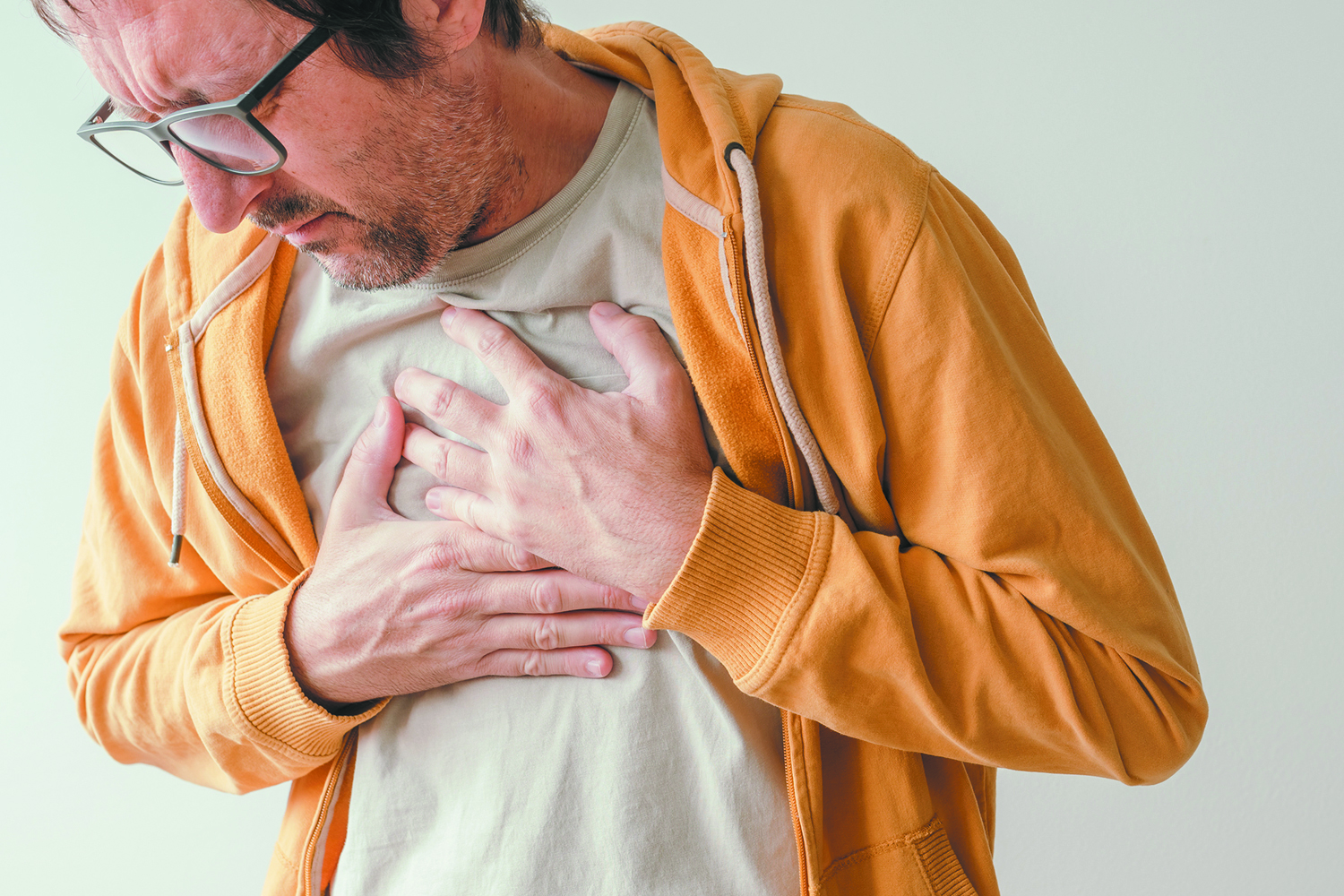
PE can cause shortness of breath (during activity and at rest) and sudden unexplained chest pain that worsens when you take a breath. Other potential PE symptoms include rapid breathing and heartbeat, coughing or wheezing, pale or clammy skin and excessive sweating.
In some cases, PE causes mild symptoms that develop gradually and worsen over days to weeks, while in other people the symptoms occur within minutes. Unfortunately, in about a quarter of cases, the first PE warning sign is death, according to the CDC.
“A lot of times, especially in older men, they dismiss those symptoms and wait to see if they go away,” Dr. Tefera says. “If you’ve had shortness of breath and chest pain over the last few days, that’s definitely something you want to address with your doctor and not just wait to see if it passes, which can be deadly with a blood clot.”
What Causes Pulmonary Embolism?
A number of factors increase your likelihood of developing DVT and PE, including advancing age—the risk of PE doubles every decade after age 40, Dr. Tefera notes. Obesity, diabetes, tobacco smoking and a personal or family history of clotting disorders also increase your risk.
One of the most significant risk factors is prolonged immobility due to a long flight or ride or extended bed rest due to a recent surgery or hospitalization. “About 50% of DVT and PE have to do with some sort of hospitalization or healthcare setting,” Dr. Tefera says.
He adds that about a quarter of people with cancer develop DVT and PE, potentially because of cancer’s pro-inflammatory effects—anything that causes inflammation can contribute to clot formation. In fact, a 2022 study involving more than 12,000 men, found that those with prostate cancer had a 50% greater risk of PE and DVT in the first five years after their diagnosis, compared with their cancer-free counterparts.
“Sometimes, when we see patients come in with a blood clot and we don’t know why they developed it, we do a screening and find cancer,” Dr. Tefera says. “So sometimes, a blood clot can be a sign of underlying cancer.”
Pulmonary Embolism Treatment
The mainstay of pulmonary embolism treatment is anticoagulant (“blood-thinner”) therapy, using drugs such as apixaban (Eliquis®), dabigatran (Pradaxa®), edoxaban (Savaysa®) and rivaroxaban (Xarelto®), as well as warfarin (Coumadin®), fondaparinux (Arixtra®) and heparin. These medications not only treat PE but also prevent further clots from developing. The most common side effect associated with any anticoagulant is an increased risk of bleeding.
In a recent study, researchers reviewing data on 163,593 people initiating anticoagulant treatment with apixaban, rivaroxaban or warfarin after a PE or DVT reported that apixaban use was associated with a lower risk of recurrent blood clots and major bleeding, compared with rivaroxaban and warfarin. Rivaroxaban showed better recurrent clot-prevention efficacy than warfarin but a similar risk of major bleeding, the study found (JAMA Internal Medicine, July 1, 2025).
After a PE, most people remain on anticoagulant therapy for three to six months or up to a year, Dr. Tefera says, but in some cases indefinite treatment may be necessary. Be sure to ask your physician about anticoagulation and, particularly, how long you need to remain on therapy.
“I always recommend to any patient that’s diagnosed with a blood clot to follow up with a vascular medicine specialist to make sure they’re healing well, they’re on the proper medications and, more importantly, to make sure that the medications are stopped whenever they need to be stopped,” Dr. Tefera advises. “A blood thinner is not a benign medication.”
Other pulmonary embolism treatment options include thrombolytic (“clot-busting”) drugs, as well as catheter-based or surgical interventions to remove clots from the lungs. For people with large DVTs who cannot take anticoagulants, a physician may place a small filter in the inferior vena cava (the large vein that returns blood from the lower extremities to the lungs) to catch blood clots and prevent them from reaching the lungs.
“We’re very good at treating patients,” Dr. Tefera says. “The most difficult part is having patients realize how important it is to know the symptoms of a blood clot and getting them to come in to be diagnosed. But once diagnosed, most patients with these blood clots are able to be treated and do very well.”
- Seek help for PE symptoms, as well as DVT symptoms, such as new-onset swelling, pain and redness, especially in one leg and not the other.
- Work with your doctor to manage your weight, blood sugar and other cardiovascular factors that may increase your risk of venous disease.
- Undergo recommended screenings for prostate, colorectal and other cancers. Cancer is a significant risk factor for PE and DVT.
- If you smoke, discuss cessation strategies with your physician. Smoking increases your risk of PE and DVT.
- Wear compression stockings as your doctor prescribes them, especially during long trips or if your job requires you to sit or stand for extended periods.
- Avoid prolonged sitting. Get up at least once an hour and walk around.