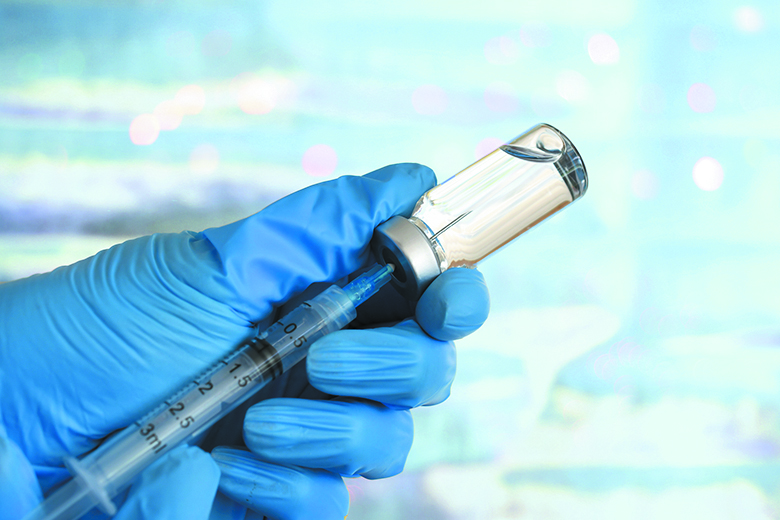
Vaccines have significantly reduced or defeated an array of debilitating and potentially lethal infectious diseases. Nevertheless, as the availability of information about vaccines has grown online and elsewhere, so have misconceptions about vaccine safety, prompting some to ask, “Are vaccines safe?”
Vaccination against respiratory and other infections is important for your overall health and, in particular, your heart and blood vessels. That’s because the effects of influenza, COVID-19, respiratory syncytial virus (RSV), shingles, and other infectious diseases go beyond the lungs and skin. They also increase your risk of major cardiovascular events, such as heart attack and stroke, especially if you already have cardiovascular disease (CVD) or risk factors for it.
In a recent consensus statement, the American College of Cardiology (ACC) recommends vaccination against respiratory and other infections for people with CVD, noting that vaccination may help reduce the risk of CVD-related complications.
“There’s a lot of emerging science about the long-term effects of infection, like cardiovascular disease, heart attack and stroke,” says Kaitlyn Rivard, PharmD, a Cleveland Clinic infectious disease clinical pharmacist. “What we’re finding is that by using vaccines to prevent those serious infections, we are then preventing some of those long-term effects from happening.”
So, if you’re wondering are vaccines safe, consider the potential cardioprotective and other benefits that vaccination against infectious diseases can offer.
Vaccination, Infections & CVD
Different vaccines produce different results. Some, like the shingles or measles vaccines, work very well at preventing infection, Dr. Rivard says. Others don’t always ward off infection, but they do reduce the risk of hospitalization and other serious complications that can result from these infections.
Major CVD events are among these complications. In a study of 23,405 people, the likelihood of suffering a heart attack was six times higher in the first week after influenza infection versus one year before and 51 weeks after that period (NEJM Evidence, June 25, 2024). Similarly, a study of 2,655 Danish older adults found that the odds of heart failure hospitalization, stroke and heart attack were fourfold, eightfold and threefold greater, respectively, within two weeks after a positive RSV test (Journal of the American College of Cardiology, April 15, 2025).
“We’ve known for decades that inflammation drives atherosclerotic plaque instability and increases the risk for heart attacks, strokes, etc.,” says Cleveland Clinic cardiologist Luke J. Laffin, MD. “If you get some type of infection, your level of inflammation will be higher, so it can increase your cardiovascular risk.”
In its consensus statement (Journal of the American College of Cardiology, August 2025), the ACC recommends that adults with CVD be vaccinated against influenza, COVID-19, RSV and pneumonia, as well as shingles (see “ACC Vaccine Guidance”).
Vaccines are so important for individuals with (or at risk for) for CVD that the European Society of Cardiology (ESC) in 2025 issued a statement calling for vaccination against respiratory infections to be considered the “fourth pillar” of CVD prevention, alongside medications to treat hypertension, lipid abnormalities, and diabetes.
“If you get severe COVID, flu or RSV, it’s going to be bad not only for your lungs but also your heart and, potentially, your kidneys,” Dr. Laffin explains. “If you have cardiovascular disease, you should very strongly consider getting vaccinated.”
Are Vaccines Safe?
Vaccine uptake in the United States remains fairly poor. One potential reason is hesitancy to receive the vaccines, due to concerns about their safety, Dr. Rivard says. Like any medication, vaccines have side effects. More common vaccine side effects include temporary pain, redness and swelling at the injection site and, in some cases, systemic reactions like fever, headache, chills, and muscle aches. These broader reactions are more likely to occur with higher-dose vaccines and those containing adjuvants that create a stronger immune response, such as the shingles vaccine (Shingrix), the adjuvanted influenza vaccine (Fluad), and the adjuvanted RSV vaccine (Arexvy).
Inflammation of the heart muscle (myocarditis) has been a much-publicized potential side effect of the COVID-19 mRNA vaccines. However, Dr. Rivard says that while the risk of this complication is higher in adolescent males (about 27 cases of myocarditis per 1 million vaccine doses), the overall estimated risk in individuals up to age 64 is much less (eight cases per 1 million doses) and is significantly lower than the risk of developing myocarditis from COVID-19 infection.
Similarly, the risk of another oft-mentioned potential complication—Guillain Barré syndrome, a rare inflammatory condition affecting the nerves—is very low: on the scale of one or two excess cases per 1 million doses of the flu shot, seven to nine excess cases per 1 million RSV vaccine doses, and three excess cases of per 1 million doses of the shingles vaccine, according to the CDC.
Be aware that vaccines like those for chickenpox and measles/mumps/rubella that contain live, but weakened, viruses are contraindicated in severely immunocompromised individuals.
Overall, “There is an abundance of long-term studies that show vaccines are safe,” Dr. Rivard says. “The short- and long-term benefits of vaccination in preventing infection and complications like cardiovascular events are far going to outweigh the risks that, while real, are also very rare.”