
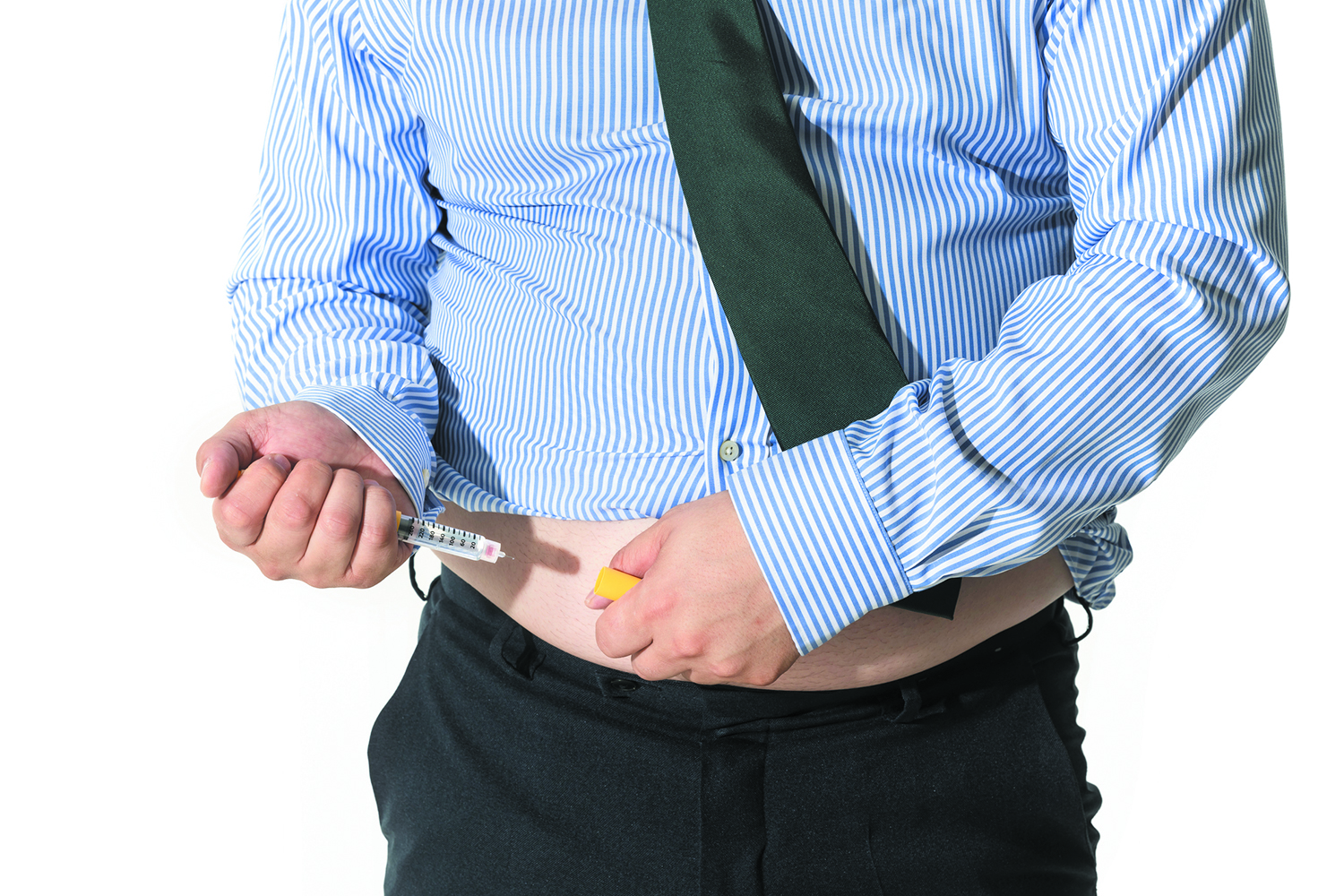
The benefits attributed to glucagon-like peptide-1 (GLP-1) receptor agonists continue to accumulate. Initially developed to improve blood sugar control in individuals with type 2 diabetes, GLP-1 medications are among the most sought-after drug classes because of their weight-loss capabilities and positive effects on other cardiovascular disease (CVD) risk factors. As such, the GLP-1s are as much an obesity treatment and CVD risk reducer as they are a diabetes medication.
“The GLP-1s are improving the whole cardiometabolic profile,” says Vikas Sunder, MD, a Cleveland Clinic preventive cardiologist. “They improve insulin resistance, but they also improve lipid profile, blood pressure and weight. I’ve seen that firsthand. That’s why I’ve prescribed them for so many patients.”
Keep in mind that, like all medications, the GLP-1s have potential side effects, so understand what to expect, and work with your health-care team to monitor your progress and optimize your outcomes.
Obesity Treatment Plus Other Benefits
The GLP-1 medications are administered by injection, although an oral form of semaglutide (Rybelsus®) is available (see “About the GLP-1s”). All of the medications improve blood sugar control, lowering hemoglobin A1c by 1% or more, depending on the drug and dosage, Dr. Sunder says. The drugs also can reduce cholesterol and triglyceride levels, as well as blood pressure. “If you reduce weight by about 1 kilogram [2.2 pounds], that equates to a reduction of about 1 millimeter of mercury (mmHg) in blood pressure,” Dr. Sunder says.
Three GLP-1s—liraglutide, semaglutide and tirzepatide—have U.S. Food & Drug Administration (FDA) indications as weight-loss medications. Results vary, with clinical trial data suggesting a 5% to 10% average weight reduction with liraglutide, 10% to 15% with semaglutide and 15% to more than 20% with tirzepatide, depending on the dosing, duration of treatment, and how well you complement treatment with healthy lifestyle habits, Dr. Sunder says.
Other data suggest that GLP-1 medications can lower the risk of kidney disease and certain obesity-related cancers, stabilize chronic liver disease and potentially reduce the likelihood of Alzheimer’s disease and related dementias in people with Type 2 diabetes (JAMA Neurology, May 1, 2025).
About the GLP-1s
| MEDICATION | DOSING | INDICATIONS |
| Dulaglutide | Weekly injection | Type 2 diabetes, CVD risk reduction (Trulicity®) |
| Liraglutide | Daily injection | Type 2 diabetes, CVD risk reduction (Victoza®); weight loss (Saxenda®) |
| Semaglutide | Weekly injection | Type 2 diabetes (Ozempic®); weight loss, CVD risk reduction (Wegovy®) |
| Semaglutide | Daily oral tablet | Type 2 diabetes, CVD risk reduction (Rybelsus®) |
| Tirzepatide | Weekly injection | Type 2 diabetes (Mounjaro®); weight loss, obstructive sleep apnea (Zepbound®) |
Note: All GLP-1 agonists promote weight loss (to varying degrees), regardless of their approved indication.
GLP-1 Side Effects
Here’s a look at some GLP-1 side effects and what you can do in response.
- GI: For nausea, avoid large meals rich in fatty foods, and consume ginger products (e.g., ginger tea, ginger ale). For constipation, consume fiber-rich fruits (apples, pears [with skin]), vegetables (broccoli, leafy greens), beans and whole grains (whole oats); stay well hydrated.
- Muscle loss: Perform strength-training exercises on at least two to three nonconsecutive days a week, and, if necessary, seek guidance from an exercise professional. Get at least 1.0 to 1.2 grams of protein per kilogram (2.2 pounds) of body weight per day. For a 200-pound man, that equates to about 91 to 109 grams a day.
- Dehydration: Stay hydrated by drinking about eight 8-ounces glasses of fluids (primarily water) a day and consuming water-rich produce (e.g., celery, cucumbers, watermelon) and soups/stews.
- Nutritional shortfalls: Because you’ll eat less while on the medications, you face a risk of nutrient deficiencies. Include an array of nutrient-rich foods in your diet, and consult a dietitian. “You want to create a calorie deficit, but you don’t want to create a nutrient deficit,” Dr. Sunder advises.
- Medication adjustments: The positive effects of GLP-1 medications on blood sugar, blood pressure and lipids may necessitate dose adjustments to certain medications. Review this with your health-care team.
- Sleep apnea: The weight loss you achieve can improve obstructive sleep apnea, so you may require adjustments to your positive airway pressure (PAP) treatment.
Weight-Loss Medication & Heart Helper
The SELECT trial found that semaglutide reduced the risk of cardiovascular death, heart attack, and stroke in adults without diabetes who had CVD and either obesity or overweight. A recent analysis of SELECT found that these effects of semaglutide were independent of its weight-loss properties, suggesting another mechanism for its benefits (The Lancet, Nov. 8, 2025). Semaglutide, liraglutide, and dulaglutide now have FDA indications for CVD risk reduction, and an ongoing study is examining the CVD-protective effects of tirzepatide.
The GLP-1s are routinely used in people with and without established CVD, Dr. Sunder says. “I prescribe these medications all the time for patients with overweight or obesity with weight-related conditions such as hypertension or hyperlipidemia,” he notes. “It is effective not only in optimizing weight, but it helps with diabetes/prediabetes, blood pressure, and cholesterol, as well.”
Moreover, research suggests that GLP-1s may improve survival and reduce hospitalizations in people with heart failure with preserved ejection fraction, for which obesity is a major driver. Plus, a recent study found that use of GLP-1 medications was associated with a reduced risk of major adverse CVD events and adverse limb events (e.g., amputation) in people with moderate peripheral artery disease (Society of Vascular Surgery annual meeting, June 2025).
What to Expect from GLP-1 Medications
To minimize side effects, your healthcare provider will prescribe a low starting dose of a GLP-1 agonist and gradually increase it over weeks to months (depending on the medication) to reach a maintenance dose. If you experience side effects, your practitioner may reduce the dose.
Research suggests that more than half of people prescribed GLP-1 medications discontinue them within a year, due to side effects, cost and other reasons. In promoting rapid weight loss, the drugs can also cause unwanted effects (see “Managing Side Effects”).
Some of the more prominent side effects are gastrointestinal (GI) in nature, such as nausea, diarrhea and constipation. The risk of these effects appears to be similar between dulaglutide, semaglutide, and tirzepatide in adults with type 2 diabetes (Annals of Internal Medicine, Nov. 4, 2025). These problems may occur when first starting the medications or when the dose is increased and may resolve within a week or two on their own or with the help of GI medications, Dr. Sunder says.
“Anecdotally, I’d say they occur in about 10% of my patients, which is pretty low, to be honest,” he adds. “The majority of patients I see do not have any side effects. They tolerate the medications well and are very pleased with the results.”
Expect some weight loss within the first month of treatment, Dr. Sunder says. If your weight loss plateaus, your physician may increase the dose or switch to a drug with greater weight-loss potential (e.g., tirzepatide). “I’ve had some patients start on the lowest dose of a GLP-1 and we see 5 to 10 pounds of weight loss in the first month, but I also have patients where it takes a couple of dose-adjustment cycles, which is typically after four weeks,” he says.
A key question that remains is how long to stay on the medications. Dr. Sunder says he usually prescribes GLP-1s with a plan for at least 12 months of therapy. Since obesity is a lifelong disease, some experts advocate lifelong obesity treatment with GLP-1s to manage it, especially since studies have found that more than half of people who discontinue the medications regain at least some weight after one year. No standardized protocol for weaning off the medications has been formulated, although some data support less-frequent dosing (i.e., once every two weeks instead of weekly) and dose reductions as strategies. “I think it’s an individualized discussion that patients should have with their physicians right now,” Dr. Sunder advises.
The cost of the GLP-1 medications—upwards of $1,000 to $1,500 a month—has been a major barrier to their more widespread use. Medicare and many private insurance providers cover the cost when GLP-1s are used for type 2 diabetes and/or CVD risk reduction, but not necessarily as an obesity treatment alone. However, under an agreement between the federal government and drugmakers, Medicare is expected to cover the cost of certain brands of semaglutide and tirzepatide for people with obesity and related comorbidities by mid-2026. Beneficiaries will pay a co-pay of $50 a month, according to a White House statement. Check with your insurance provider to see what it covers.
Your Role in Obesity Treatment
Dr. Sunder’s patients return for a follow-up visit at one month to monitor their progress, check for side effects, and have their doses adjusted as needed. Be sure your provider has sufficient support to oversee your care, Dr. Sunder emphasizes.
“Discuss with your provider what the follow-up will be,” he advises. “Unfortunately, I’ve had some patients who got started on the lowest dose of the drug, there was no follow-up for six months or a year, and they weren’t seeing results because they didn’t change the dose. You need to keep on top of it.”
Dr. Sunder cautions that GLP-1 medications should be prescribed for individuals who have failed to lose sufficient weight with diet, exercise, and other healthful lifestyle measures alone. Furthermore, continuing these beneficial behaviors if you stop GLP-1 treatment will be critical to preserving the weight loss you’ve achieved with the medication.
“In our preventive cardiology program, we have a registered dietitian and an exercise physiologist, and we first refer patients for consultations with them,” Dr. Sunder says. “We’re not just handing GLP-1 medications out for patients who haven’t given diet and lifestyle measures a shot, because that’s the first-line treatment.
“Personally, I’ve had patients come off of these medications and maintain their weight loss,” he continues. “But, if your diet goes back to the way it was, you’re going to gain the weight back.”
