Hips don’t lie. If yours are sore, tight or weak, it probably means they could use some TLC in the form of hip stretches and exercises. Hip issues are common among people who spend lots of time sitting—endless hours in desk chairs or on sofas can shorten the hip flexor muscles and cause other hip problems. Hip issues even can occur in people who exercise regularly—especially if much of that exercise involves running on treadmills, which can create an imbalance between hip-related muscle groups. And counterintuitively, tightness or weakness in the hip muscles sometimes can trigger knee pain. If you suffer from any of this, you may wonder what are the best exercises for your hips and how to stretch hip flexor muscles.
Physical therapist Jonathan Su, DPT, recommends proceeding with caution—some of the options that pop up when people search on Google for “beginner hip flexor stretch” aren’t ideal. Common hip flexor stretches such as the standing hip flexor stretch and kneeling hip flexor stretch often fail to deliver the desired results for two reasons—they’re often done improperly…or they don’t address other nearby muscle groups that likely also require attention. The hips are complex, and when one set of hip muscles has a problem, it’s a good bet that other nearby muscle groups do, too.
Here are two exercises and two stretches that will help hurting hips. Complete each two to three times per week when experiencing hip issues…then once those issues have been resolved, once or twice a week for maintenance.
Two Great Hip Exercises
Hip muscles rarely get much attention during workouts. The following two exercises can keep your hips happy and healthy.
Single-leg glute bridge
The single-leg glute bridge is best known for benefiting the butt—the glutes referenced in its name refer to the buttocks’ gluteal muscles. But glutes and hip flexors serve inter-related functions in the body, and this exercise is excellent for both.
Starting position: Lie on your back with your knees bent and your feet flat on the floor and hip-width apart. The distance between the backs of your heels and your butt should be 18 to 24 inches. Note: Precise foot position is critical with this exercise. To confirm that your feet are the proper distance from your backside, lift your butt off the floor until your body forms a straight line from your shoulders through your knees. If this creates a 90-degree knee bend, your feet are correctly placed…if not, adjust your foot position until a 90-degree knee angle is achieved.
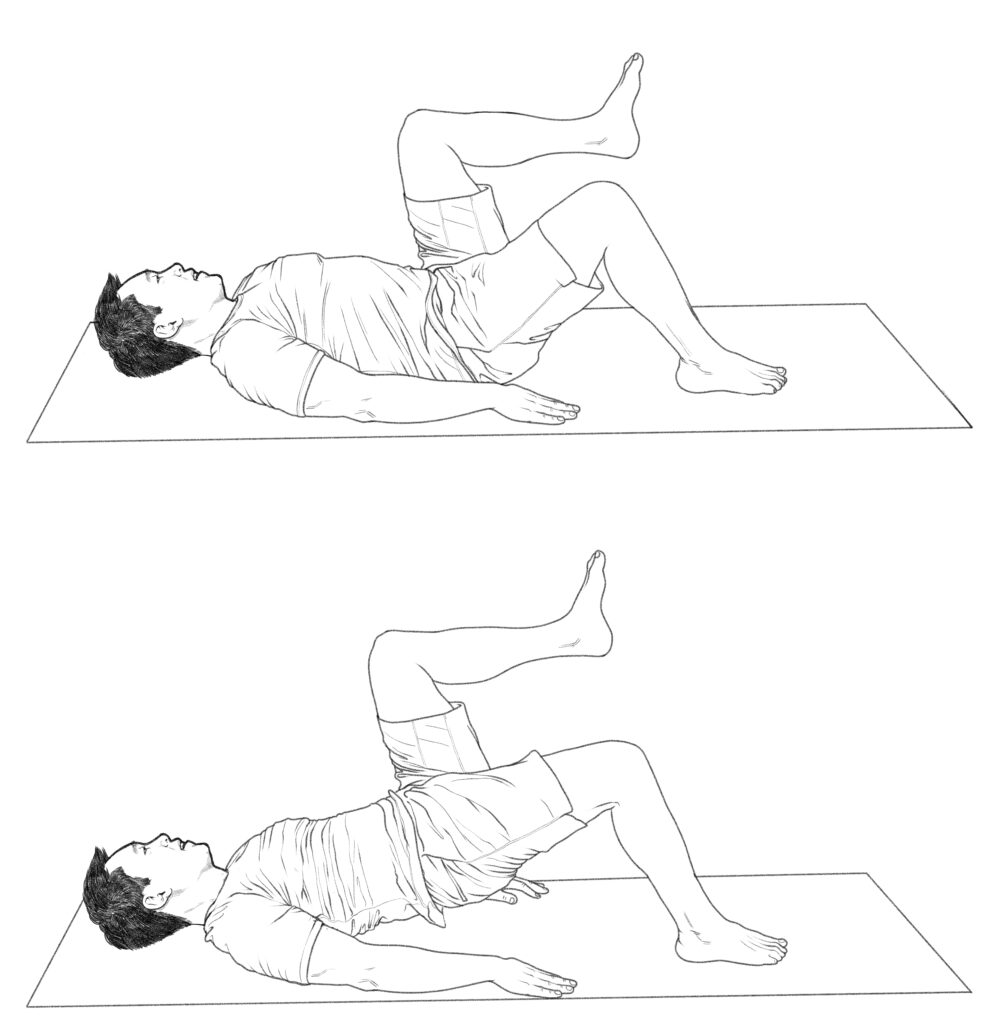
Once your feet are properly positioned, lower your butt back to the floor and raise one knee toward the ceiling, lifting that foot so that the other foot remains positioned on the floor. Your arms can be placed alongside you, palms down.
To perform the exercise: Slowly lift your butt off the floor until you’ve formed a straight line from shoulders through non-elevated knee, hold briefly in this position, then slowly lower your butt back to the floor, and immediately repeat. Complete 15 to 20 reps, ideally without taking a break and without allowing your elevated foot to return to the ground. Keep your hips level throughout—don’t sag to one side or the other. Then repeat with the other leg.
If this exercise becomes easy for you: Use your hands to hold a weight above your pelvis while performing it to increase the challenge.
Side-lying straight leg lifts
These leg lifts mainly benefit the hip abductor muscles on the outside of the hips, an often-overlooked muscle group that can contribute to hip and knee problems.
Starting position: Lie on your side with your legs extended straight, one stacked directly on top of the other. Fold your lower arm to form a cushion for your head and place the hand of your upper arm palm down on the floor in front of you for balance.
To perform the exercise: Slowly lift the foot of your upper leg two to three feet upward toward the ceiling while keeping both legs straight. Hold briefly at the top of this movement, then slowly lower the leg back down to the starting position and immediately repeat until you’ve completed 15 to 20 reps. Then switch sides and repeat with the other leg.
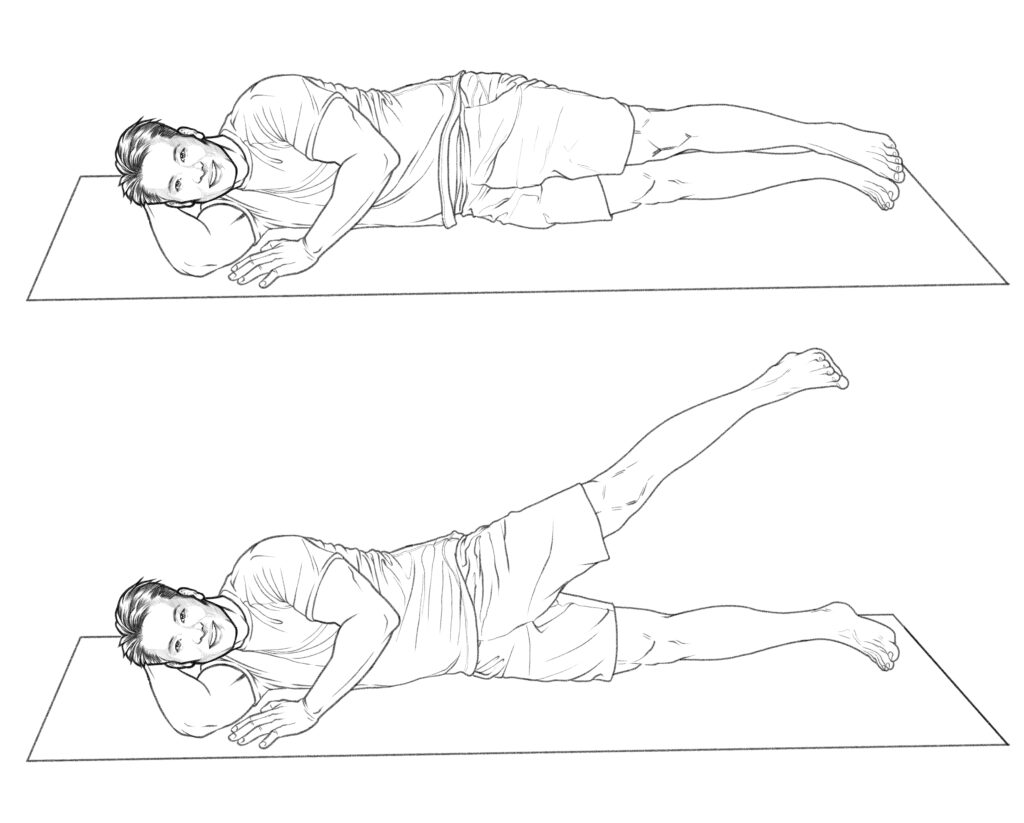
Reminder: Keep your hips stacked one directly above each other while doing leg lifts—some people accidentally allow their hips to roll backward. Also keep your knees straight and your toes pointed forward—some people accidentally allow their knee to bend and/or their toes to point up toward the ceiling, seemingly minor mistakes that significantly detract from this exercise’s effectiveness.
Great Hip Stretches
Hip stretches can be as important as hip exercises—many hip issues are caused by tightening and shortening of the hip flexors and other hip-related muscle groups.
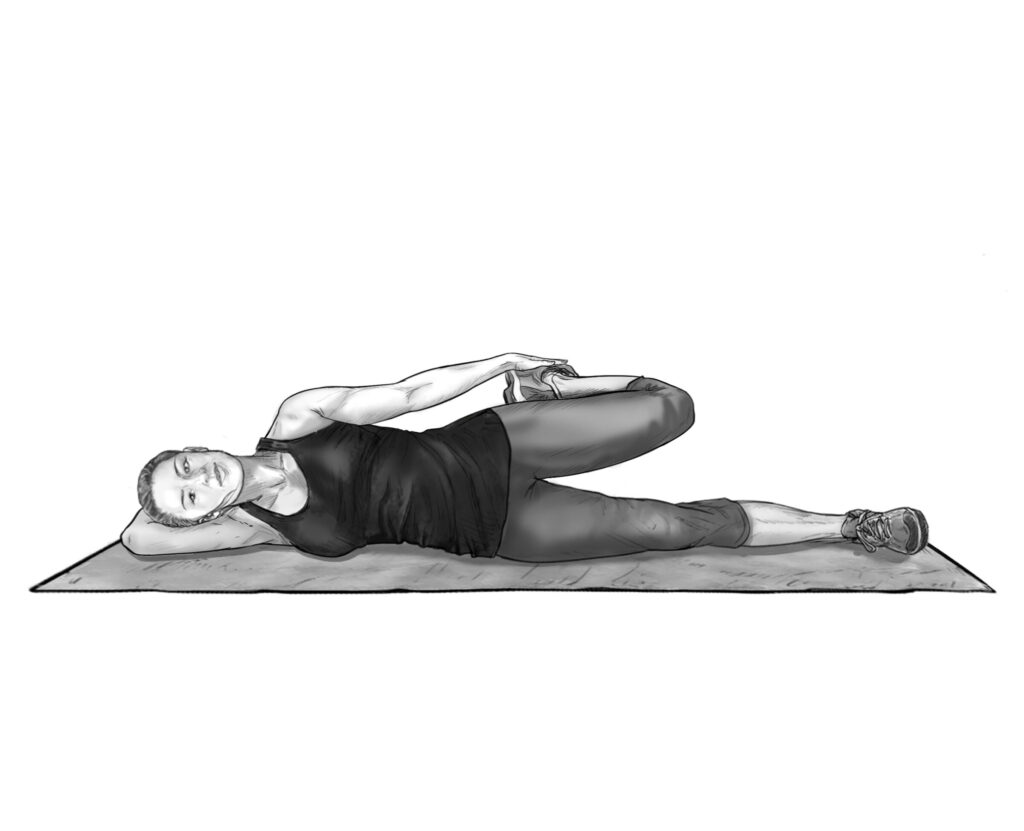
Side-lying quadriceps stretch
Lie on your side with your body straight and your legs stacked directly on top of each other. Bend your top leg back, and grasp it with your top arm, pulling the heel toward the buttocks as above, and using a belt or towel for assistance if necessary. Your lower arm can be folded back to serve as a cushion for your head. While holding this heel as close as you can get it to your butt, gently thrust your hips forward. Hold the stretch for 30 to 60 seconds, then lie on your other side and repeat with your other leg.
Single-leg over stretch
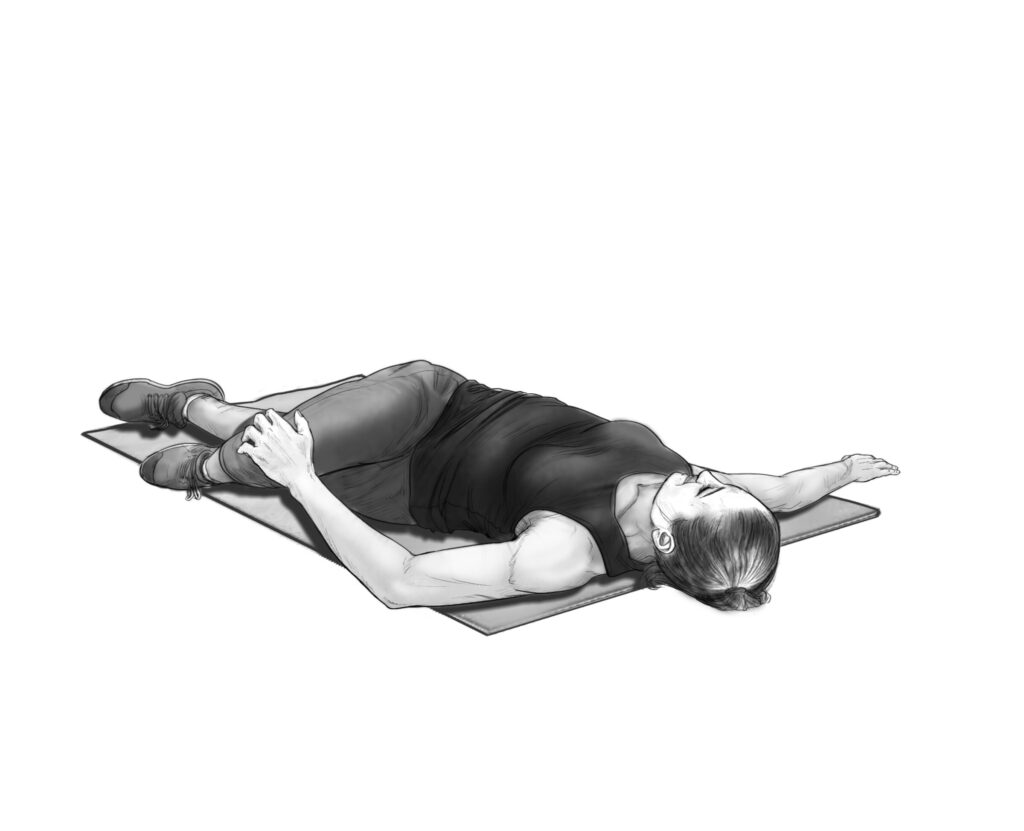
Starting position: Lie on your back, legs together, arms extended outward so that your body forms a “T” with your palms facing down. Lift and bend one leg until both its knee and hip are at 90-degree angles—your shin should be parallel to the ground.
To perform the exercise: Reach the opposite hand over your body to grasp this raised knee—that is, use your left hand to grasp your right knee if your right leg is the one that’s raised. Use your arm to pull this raised knee across your body—that is, if your right leg is raised, pull it to your left. Hold this stretch for 30 to 60 seconds, keeping the arm and shoulder that are not pulling your knee on the ground throughout and maintaining the 90-degree hip and knee bends. Avoid the common mistake of pulling your knee up farther toward your chest. Return to the starting position, then repeat with the other leg.