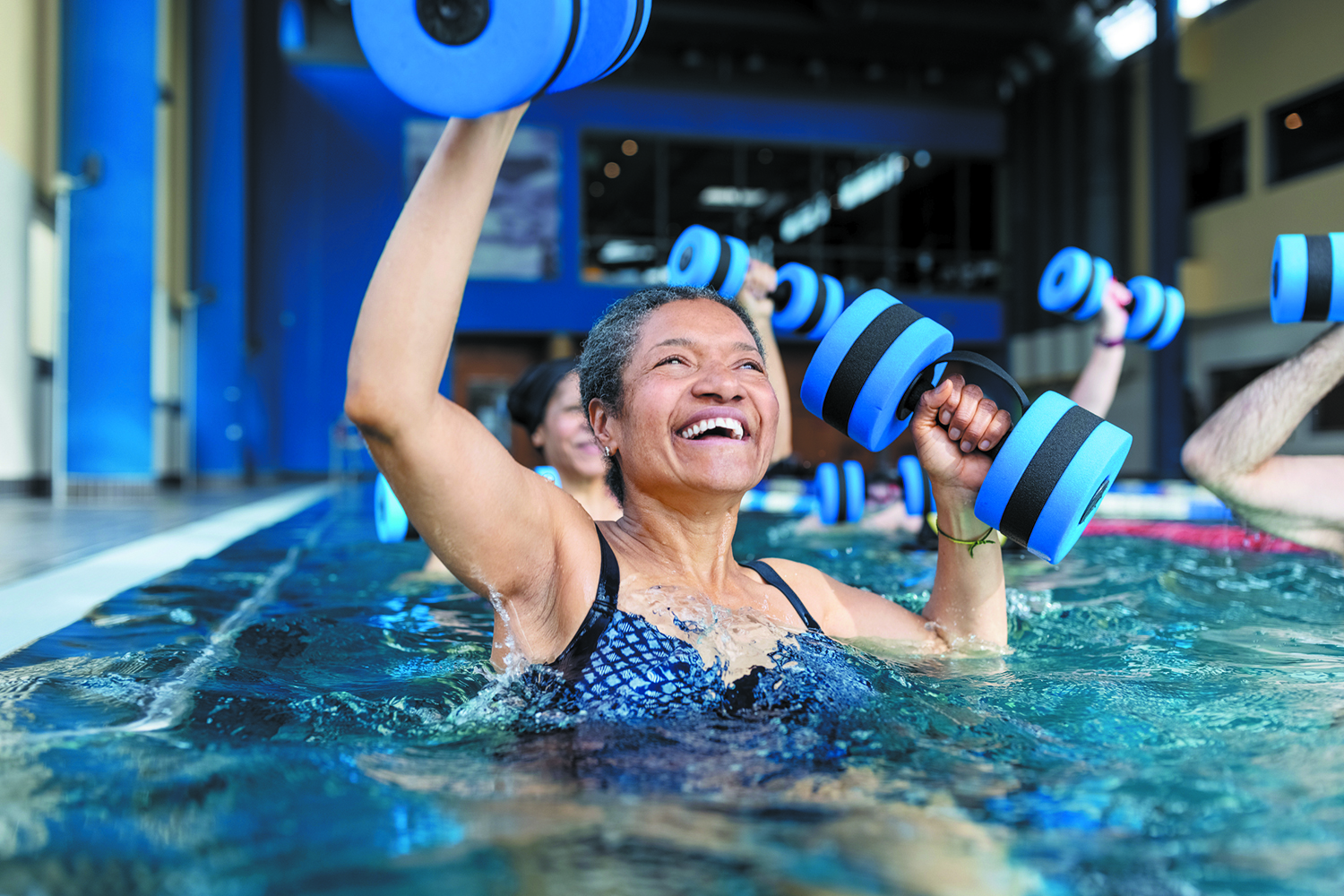
Exercising in the water can help you stay active, independent, and socially connected—all while protecting joints and improving overall health.
Water aerobics and pool exercises are more than just a way to stay fit; they are a gateway to a fuller, more vibrant life. Occupational therapist Genevieve Kras, OTR/L, elaborates: “Water aerobics is a means to improve function, promote independence, and enhance quality of life through therapeutic movement.”
For some people, high-impact exercises can feel overwhelming or even painful. But in a pool, the unique properties of water—buoyancy, resistance, and hydrostatic pressure—make these activities accessible and beneficial for a wide range of abilities and conditions. In fact, water-based workouts also are increasingly recognized as one of the most effective ways to maintain physical health, cognitive function, and independence.
Why Pool Exercises Are So Powerful
One of the biggest advantages of water aerobics is that the natural buoyancy of water supports body weight and reduces the force placed on bones and joints, making movement easier and safer. For people with arthritis, orthopedic conditions, or joint pain, this is a game changer.
“The buoyancy decreases joint stress,” Kras explains. “That makes water exercises ideal for those with musculoskeletal issues. At the same time, you’re still building endurance, balance, and strength—things you absolutely need for everyday activities like walking, bathing, and climbing stairs.”
Water aerobics is also effective for weight management. A 2025 study published in BMJ Open analyzed data from 10 clinical trials involving 286 participants ages 20 to 70 across several countries. The study found that water aerobics performed for more than 10 weeks led to an average weight loss of nearly 3 kilograms (about 6.6 pounds) and reduced waist circumference by approximately 3 centimeters (more than one inch). The exercises analyzed in the study included water-based aerobics, Zumba, yoga and jogging, performed mostly two to three times weekly for 60-minute sessions over six to 12 weeks. The benefits were most pronounced in exercise programs lasting 12 weeks, with significant reductions observed specifically in women and those over age 45.
Water Exercises Reduce Fall Risk
Muscle loss and balance issues become more common with age, and both can increase the risk of falls. Therefore, maintaining strength, balance, and endurance becomes crucial for performing daily activities and preventing falls. Pool exercises target the muscles needed for these tasks. When you work out in the water, you have resistance in every direction, offering a gentle but effective way to strengthen muscles and improve coordination. It makes sense, and science substantiates the benefits many times over.
For example, research published in the Journal of Physical Therapy Sciences examined if pool exercises could reduce fall risk. Study participants were ages 65 and older. The pool exercise program involved 15 participants attending 45-minute sessions twice a week for 12 weeks. The exercises included activities like walking in water, practicing balance, and gentle resistance training using special equipment made for the pool. After taking part in the program, the participants had better balance and felt more confident, which helped reduce their risk and fear of falling. The results show that supervised pool exercises can be a safe and effective way for people to stay steadier and safer in their daily lives.
Aquatic Exercise Improves Overall Fitness
A systematic review published in Ageing found that aquatic exercise, regardless of modality, has a moderate positive effect on physical functioning in healthy older adults. The review analyzed data from 28 studies and found that water workouts improve muscle power, flexibility, agility, and walking ability. Notably, these benefits were observed with both moderate and high-intensity water exercises, and the effects were at least as strong as those from land-based exercise.
But unlike land-based cardio, pool exercises allow older adults to work hard without overheating or overexerting themselves. Still, it’s important to approach these workouts with care.
“Water aerobics can be surprisingly exerting,” Kras says. “People with COPD, cardiac issues, or pulmonary conditions should monitor their fatigue levels closely. And anyone starting a new program should first check with their doctor, especially if they have cardiovascular disease or open wounds.”
Water Aerobics: Mental Health and Sensory Benefits
Water doesn’t just support the body; it also soothes the nervous system. The feeling of water against the skin is calming, and this sensory feedback can be particularly helpful for older adults with sensory processing challenges or neurological issues. “The water enhances sensory input, providing both tactile and proprioceptive feedback,” Kras says. “That can regulate the nervous system and help with mood and mental focus.”
Proprioception is your body’s ability to sense its position and movement in space without relying on vision. It’s like an internal GPS that helps you know where your arms, legs, and other body parts are, even if your eyes are closed. This sense is crucial for balance and coordination. For example, during water exercises, when you’re walking or marching in a pool, the water’s resistance and buoyancy make you use your muscles and joints differently than on land.
Challenging your proprioceptive system also can be safer in the water than on land. As the flow of water moves you around, however subtly, your body is constantly trying to right itself. And if you lose your balance, it’s not like you’re going to smack onto a hard floor—the water catches you. In this way, working out in the water both challenges and supports your efforts.
Social Connection and Community
Group water aerobics classes foster a sense of community and belonging, which is especially important for people who may be at risk of isolation. Kras points out that “recovering from illness and injury can be an isolating experience for some people,” but group aquatic exercise classes offer an opportunity for social engagement.
Research supports the idea that group exercise, including water aerobics, enhances socialization, motivation, and mental well-being. For example, people gravitate toward the exercise behaviors of those in the group around them, leading to improved motivation and better physical results. People often make friends in exercise classes. Having an exercise buddy improves exercise adherence, meaning that when you commit to someone else, you’re more likely to be consistent. Exercise is not a one-and-done activity. To gain the lifelong benefits of exercise, you need to embrace it as a lifelong practice.
“Even just a couple of sessions a week can make a noticeable difference in how you feel,” says Kras. “And the best part? Most people find themselves looking forward to it.”
Many YMCAs, community centers, and senior fitness facilities offer beginner-friendly water aerobics classes. Look for instructors trained in adaptive fitness or aquatic therapy for older populations. It’s also smart to invest in non-slip water shoes and bring a towel and water bottle.