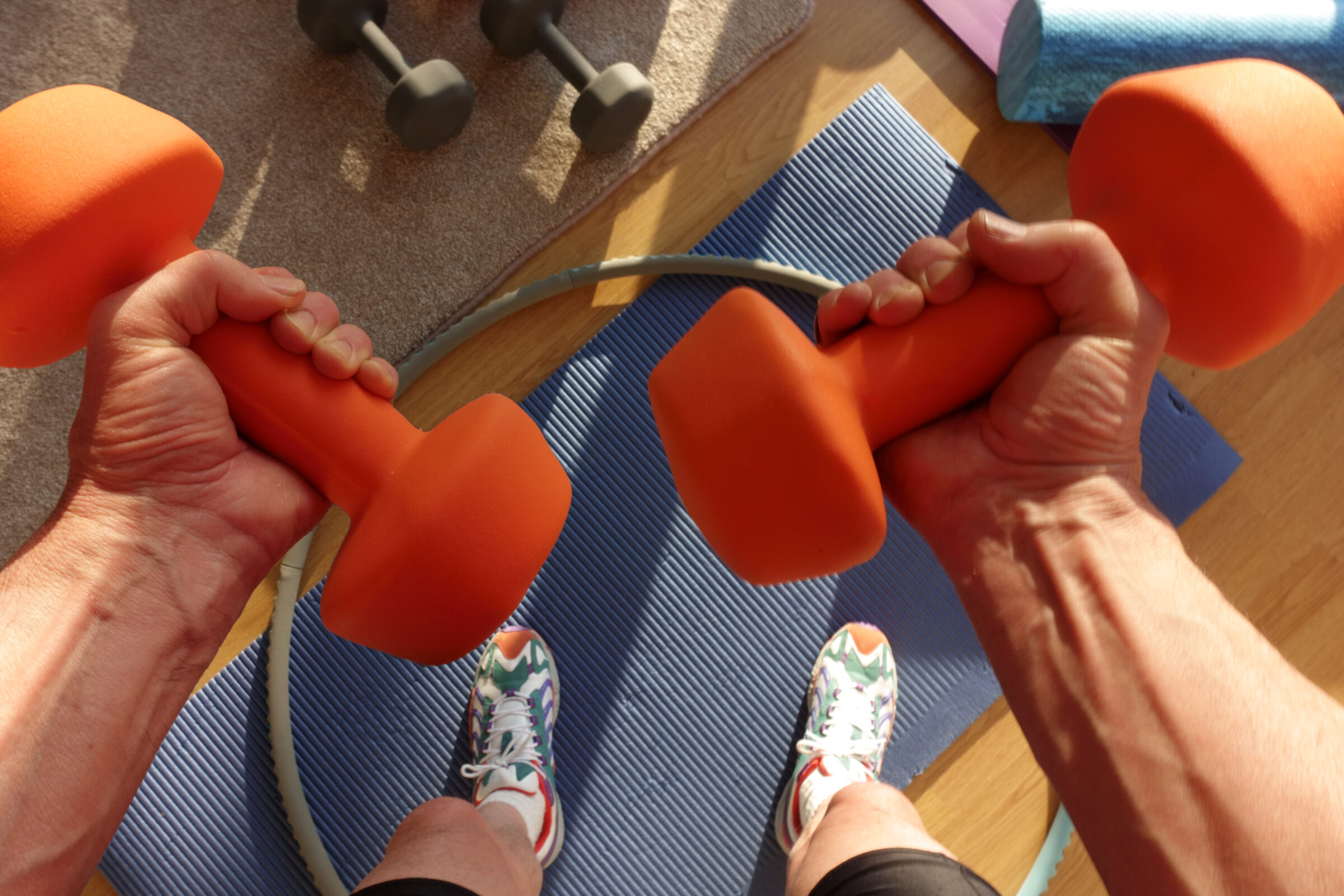
Forearm exercises don’t always get much attention, but they’re essential for everything from opening jars to improving your pickleball swing. Many older adults overlook the role of forearm muscles, even though strong wrists and grip strength can dramatically improve daily life and reduce injury risk.
Why Forearm Workouts Matter
Your forearm muscles power your grip. Every time you squeeze a paddle, twist a doorknob, or lift a bag of groceries, those muscles are working. When you grip, your wrist naturally extends, and the forearm muscles activate to give you strength and stability. Muscle imbalances—like when your dominant arm is much stronger than the other—can increase the risk of injury and reduce athletic performance. Try these simple exercises to boost strength and reduce the risk of injury.
The Best Forearm Exercises
- Wrist curls and wrist extensions
- How to do it: Sit in a chair or at a dining table with your forearm supported and your wrist hanging off the edge. Hold a small weight (even a 1-pound dumbbell or a can of soup works). For curls, hold your palms up, let your wrist and fingers drop toward the ground, then curl toward your chest. For extensions, flip your hands so your palms are down and lift the back of your hand toward the ceiling.
- Reps: Do two to three sets of 15 repetitions.
- Tip: Stick to partial range of motion if you have wrist or carpal tunnel issues to avoid aggravation.
- Wrist eversion and inversion
- Eversion (thumb up): Hold a weight with your thumb pointing up and move your wrist upward.
- Inversion (pinky down): Hold the weight with pinky pointing down and move your wrist downward.
These variations strengthen supporting muscles that improve stability and balance between sides.
- Balanced training for both arms
Because most of us overuse our dominant arm, unequal strength is common. To correct imbalances, do double sets on the weaker side. Avoid making your strong side too strong.
Avoid Overuse and Injury
Forearm muscles are relatively small, so overtraining can lead to soreness, tingling, or even overuse injuries. Use a a “just enough” approach: Strengthen the muscles, but don’t push them past fatigue every day. Add weight gradually for 10–15 reps that feel challenging. Research shows that exercises taken through the full range of motion can lead to up to 50 percent greater strength gains.
The Bottom Line
Forearm exercises build grip strength, balance the body, and protect against injury. For older adults and pickleball players especially, a combination of wrist curls, extensions, and balance training can make a big difference. Find more exercise tips here.