
If your spine is screaming, back pain exercises are probably the last thing you feel like doing. Fact is, the worst thing you can do for your aching back is to remain sedentary.
That’s why for back pain, exercises are vital for relieving discomfort and improving function, and they’re the foundation on which other treatments for back pain are based.
“Physical therapy is always the most important treatment modality, and it’s the mainstay of chronic pain management,” explains Cleveland Clinic pain management specialist Kristin Powers, MD. “Physical therapy is a great way to learn what triggers a person may have, and then how to avoid them but still move safely and be active.”
Back Pain Exercises: Seek Guidance
A physical therapist can provide you with an exercise “prescription” geared to your individual capabilities and needs. Essentially, it guides you in understanding your physical activity limits, how to exercise within them and how you can expand them so you can perform back stretches and other back pain exercises that increase the strength and flexibility of your spine and the structures that support it.
“We know that having a trained person who can help make sure you’re not doing something wrong but instead doing exercise that’s more tailored and specific to you is a good idea,” says Marleen Caldwell, DPT, MPT, a Cleveland Clinic physical therapist.
By educating you on your exercise parameters and how to work within them, a physical therapist can also help you overcome fears about exercising with chronic back pain, thereby enabling you to gain the benefits of staying active.
“We see that people tend to be afraid to move with back pain, but once they come here and start moving, it feels better,” Caldwell says. “Sometimes, not moving and having everything stiffen up can contribute to the pain, so if you’re not moving, that can make things worse.”
You’re liable to feel some discomfort while exercising. If the pain is severe (e.g., at least a 7 out of 10 on a pain scale), stop what you’re doing. And, if pain persists for more than 20 minutes after you finish exercising, it’s not the exercise for you, Caldwell advises.
The Back Pain Exercises You Need
Caldwell emphasizes three key elements to a physical therapy regimen for people with chronic back pain:
Back stretches: To improve your spine’s mobility and function, Caldwell recommends exercises targeting the hip flexors, a group of muscles located in the front of the hip that allow you to bend your leg and stand from a seated position. These muscles can tighten if you sit for prolonged periods. “If the hip is tight, it’s going to make the back move more than it needs to, so it could put more stress on your low back,” Caldwell explains.
She also recommends exercises that extend the thoracic spine, which extends from the base of your neck to the bottom of your rib cage. If you spend a lot of time sitting, your thoracic spine is hunched forward. Thoracic extension exercises—or something as simple as lying flat on your back—can provide the stretch your thoracic spine needs.
Core exercises for back pain: Exercises to strengthen the core muscles of your back, buttocks and abdominal muscles are vital to stabilize and support your spine.
Posture: Good posture minimizes strain on the muscles and ligaments in the back, neck and pelvis and allows them to function more efficiently. Poor posture can increase stress and fatigue on these tissues. A slouching posture can cause muscle fatigue in the lower back and neck muscles, which is then transferred to the spinal joints and disks. A simple exercise such as a wall stand—holding your heels, butt and back flat against a wall—can improve your posture, Caldwell says.
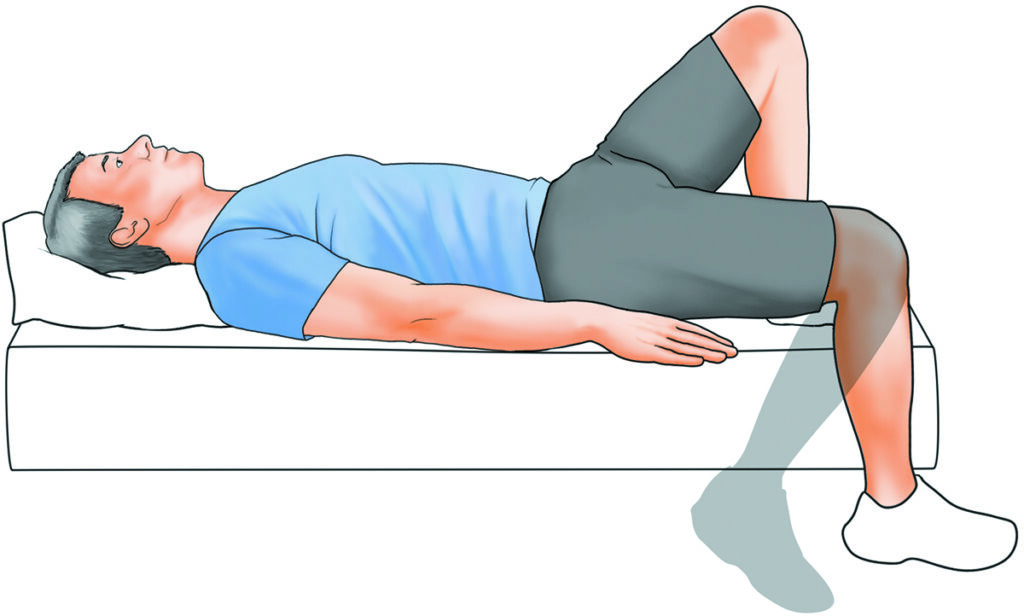
Hip Flexor Stretch
Lying on your back near the left edge of your bed, bend your right leg, keeping your right foot flat on the bed. Hang your left leg over the edge, keeping the leg relaxed and your thigh resting flat against the bed. Hold for 20 seconds, and then repeat with the opposite leg on the right edge of the bed. Do 3–5 repetitions with each side daily.
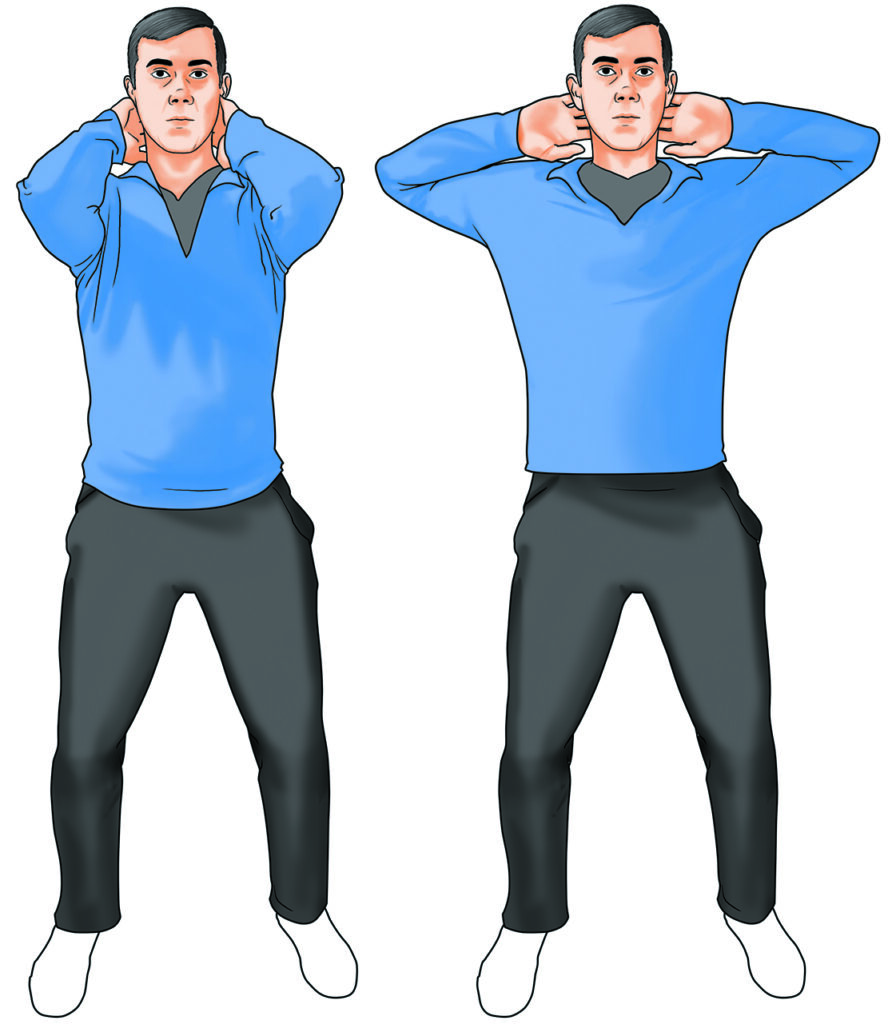
Thoracic Spine Stretch
Place your hands behind your head at your neck level, with your elbows directly in front of you. Slowly extend your elbows backward and hold for a few seconds. Perform one set of 10 repetitions daily.
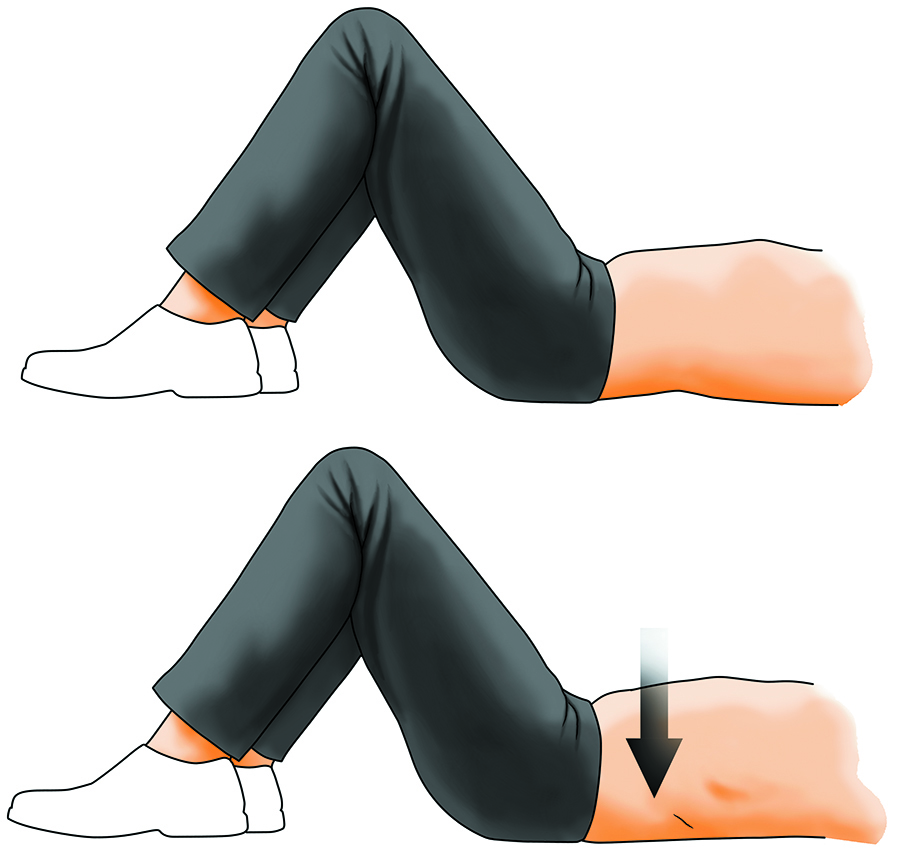
Abdominal Bracing
Lie on your back with your knees bent and your feet flat on the floor. Use your abdominal muscles to flatten the arch in your lower back and push your belly button toward your spine. Hold for 5–10 seconds. Do three sets of 10 repetitions.
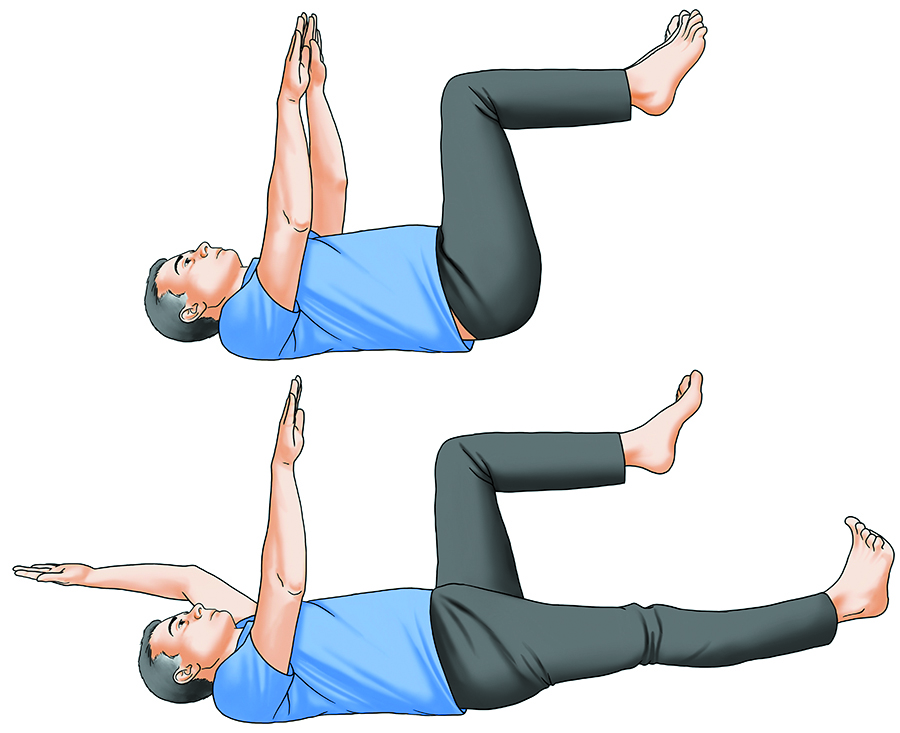
Dead Bug
Lie on your back, with your arms raised straight above your chest and your knees and hips bent at a 90-degree angle. Engage your abdominal muscles as you slowly bring your left arm overhead and extend your right leg, stopping them a few inches above the floor. Gradually return your leg and arm to the starting position, and then repeat with the opposite limbs. Aim for 2–3 sets of 10 repetitions, or whatever is comfortable for you.
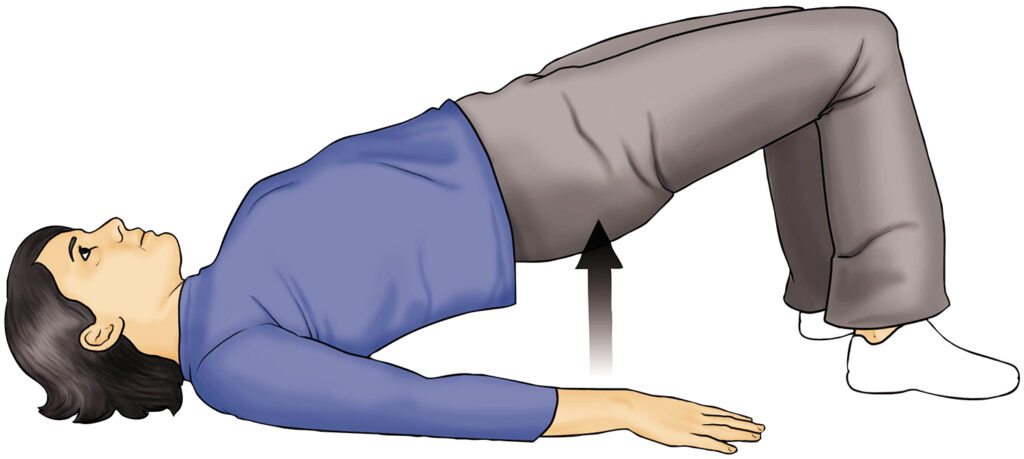
Bridge
While lying on your back, tighten your lower abdominal muscles, squeeze your buttocks, and raise your buttocks off the floor. Hold for five seconds. Aim for two sets of 10–15 repetitions on at least two days a week.
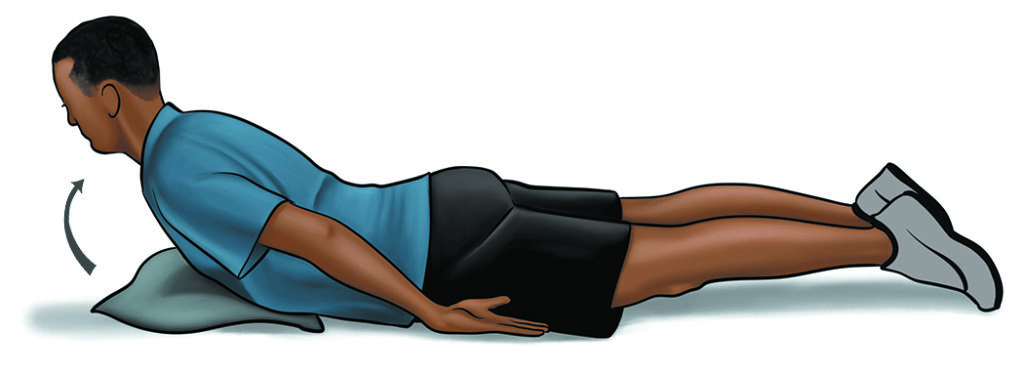
Prone Trunk Lift
Lie prone on a bed, with a pillow placed under your abdomen and your arms at your side. Squeeze your shoulder blades together and raise your upper chest and back, keeping your abdominal muscles tight and your head neutral. Hold for a few seconds. Do 5 repetitions daily.
Other Back Pain Exercises
Walking and other aerobic exercises can improve your cardiorespiratory fitness and also your mental outlook, by distracting you from back pain. In a recent analysis of data on 11,194 people (mean age about 55), walking for more than 100 minutes a day was associated with a 23% lower risk of developing chronic low-back pain, compared with walking less than 78 minutes a day, during a mean follow-up period of more than years (JAMA Network Open, June 13, 2025).
“Walking gets you outside, and it gets your mind off your pain,” Dr. Powers says. “Maybe mechanically it’s doing something as well, but I think it also plays into the psychological space.”
Walking and other conventional exercises can be challenging or impossible to perform if you have chronic back pain, so consider alternatives or modifications to these exercises so you can benefit from them safely.
Aerobic exercises: If you have spinal stenosis and standing/walking is too painful, ride a recumbent stationary bike. Swimming and other aquatic exercises are good choices for aerobic (and strengthening) exercise, as the buoyancy of the water reduces the load on your back.
Sit-ups: Avoid full sit-ups. Instead, do abdominal crunches, raising only your head and shoulder blades off the floor. Better yet, try abdominal bracing.
Planks: Try an elevated plank: Rest your forearms on the side or end of your bed, walk your feet out and lower your hips to hold the plank.
Pushups: Start mostly vertical with wall pushups, and then reduce the angle of incline with countertop pushups. Gradually build up to pushups while resting on your knees.
Squats: Do a wall squat: Bend your knees, gradually slide down the wall and then return to a standing position.
Overall, review your exercise choices with a physical therapist, and develop a plan that can bolster your back and keep you moving.
“You want to move within your abilities,” Caldwell says. “With time and repetition, generally you tend to have less pain, or you may have the same pain but you’re able to move more.”
“The goal of physical therapy is not necessarily to take away the pain,” Dr. Powers adds. “It’s to keep you strong so that you can move despite the pain, stay functional, have better quality of life and be able to do the things you want to do, not sit on the couch.”