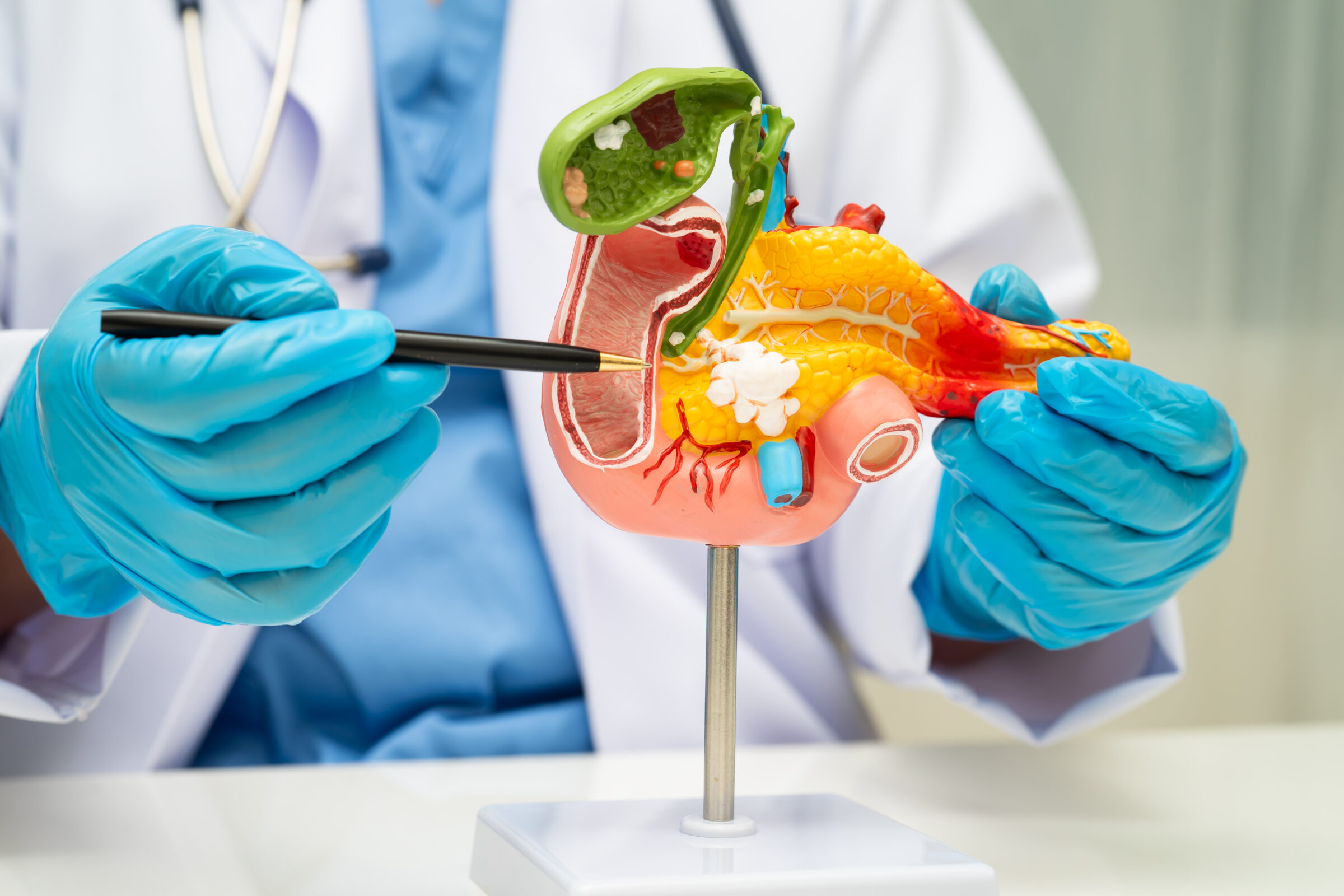
Pancreatitis is inflammation of the pancreas. This vital organ sits behind your stomach and has two key jobs: making insulin (endocrine function) and producing digestive enzymes (exocrine function). Insulin helps your body use sugar (carbohydrates) for energy, while digestive enzymes break down the food you eat.
Acute vs. Chronic Pancreatitis
There are two types of pancreatitis—acute and chronic—and the difference matters.
Acute pancreatitis comes on suddenly and is usually very painful. Fortunately, most cases improve within a few days and don’t cause lasting damage.
Chronic pancreatitis develops gradually over years. Ongoing inflammation leads to scarring (fibrosis) and permanent damage. This form often requires long-term treatment because it affects both insulin production and digestion.
What Causes Pancreatitis?
The most common cause of acute pancreatitis is gallstones. These hardened deposits form in the gallbladder and may travel down the bile duct, where they can block the area where the pancreas releases its enzymes. This backup can cause the enzymes to begin digesting the pancreas itself.
Alcohol use is the second most common cause. Drinking four to five alcoholic drinks daily for five or more years significantly raises the risk. Combined, gallstones and alcohol account for about 70% of acute pancreatitis cases.
Other causes include inherited genetic mutations, smoking, and certain medications—especially those used to treat blood cancers.
Chronic pancreatitis is most often caused by repeated episodes of alcohol-induced acute pancreatitis. Smoking, genetic conditions, and pancreatic tumors are also contributors.
Pancreatitis Symptoms
Acute pancreatitis typically starts with sudden, severe pain in the upper middle abdomen (epigastric pain) that may radiate to the back. Nausea and vomiting are common. Other symptoms can include fever, rapid breathing, and a fast heartbeat. If gallstones are involved, jaundice (yellowing of the skin or eyes) may occur.
Chronic pancreatitis can cause similar symptoms, but they’re usually milder and may come and go. Some people experience chronic indigestion instead of pain. If insulin production is affected, symptoms of diabetes—such as high blood sugar—may appear. When digestive enzymes are low, the body can’t absorb nutrients properly, leading to weight loss and greasy, foul-smelling stools that float (steatorrhea).
Is Pancreatitis Life-Threatening?
Most people recover from pancreatitis. Overall, the death rate is about 2 percent.
Acute pancreatitis leads to around 275,000 hospital admissions each year in the U.S., with 80–90 percent of cases being mild. However, about 10 percent of patients experience a severe inflammatory response that can cause complications such as lung or kidney failure. These cases account for most deaths.
Chronic pancreatitis increases the risk of developing pancreatic cancer, which also contributes to pancreatitis-related deaths.
Diagnosis and Treatment
Acute pancreatitis is usually easy to diagnose based on symptoms, physical exam, and a history of gallstones, alcohol use, or family history. Blood tests showing high levels of the enzyme lipase and imaging studies confirm the diagnosis. Treatment focuses on supportive care, including IV fluids and pain control. If a gallstone is the cause, a procedure may be needed to remove it.
Chronic pancreatitis may take years to diagnose because symptoms can be subtle. Diagnosis is more likely after repeated bouts of acute pancreatitis. Imaging and blood tests eventually reveal damage. Treatment includes enzyme replacement medications and diabetes management. In both acute and chronic cases, avoiding alcohol and quitting smoking are critical for recovery and prevention.
Risk Factors and Prevention
Men are more likely to develop pancreatitis, with the average age of diagnosis around 40. Chronic pancreatitis often follows 10 to 15 years later.
Key risk factors include:
- Alcohol use
- Smoking
- Family history of pancreatitis
- Obesity
- Diabetes
- High triglyceride levels
To prevent pancreatitis:
- Avoid excessive alcohol
- Quit smoking
- Maintain a healthy weight
- Stay physically active
- Eat a heart-healthy, Mediterranean-style diet
If you’ve had pancreatitis, it’s best to avoid alcohol entirely.