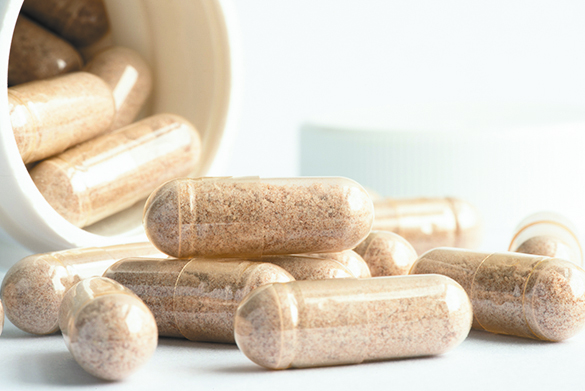
Bothered by symptoms associated with benign prostate enlargement (BPH), many men seek relief by turning to over-the-counter supplements like saw palmetto extract, what they consider a “natural” solution to their urinary woes.
“I think saw palmetto is one of the most commonly used supplements,” says Andrew Altman, MD, a Cleveland Clinic urologist. “I feel like just about every one of my patients has tried it, and I will often get asked about it.”
Unfortunately, evidence from high-quality studies suggests that saw palmetto is unlikely to BPH symptoms, but it carries few risks and some men have reported benefits from it, Dr. Altman says. Just don’t consider it a substitute for more proven therapies.
What Is Saw Palmetto Good For?
Saw palmetto extract is derived from the berries of a small tree native to the southeastern United States. How saw palmetto might work on an enlarged prostate is unclear, although some evidence hints that it could act in a manner similar to prescription medications used to treat BPH, such as alpha-blockers (alfuzosin, silodosin, tamsulosin) and 5-alpha reductase inhibitors (dutasteride, finasteride).
Some early research suggested that saw palmetto might moderately improve urinary symptoms, although these studies had significant limitations, according to the American Urological Association (AUA).
Later, well-designed randomized trials published in 2006 and 2011 found that saw palmetto was no more effective than a placebo. Moreover, in an analysis of 27 placebo-controlled studies involving a total of 4,656 people, saw palmetto, used alone or combined with other herbal supplements, did not improve BPH-related urinary symptoms or quality of life (Cochrane Database of Systematic Reviews, June 2023).
Based on data like these, the AUA does not recommend saw palmetto (or any other supplement) for treating BPH. “Occasionally, patients say they get benefits, but it’s hard to tease that out from a placebo effect,” Dr. Altman says. “There’s not really too much benefit from using it to treat urinary symptoms associated with BPH.”
However, some research has identified saw palmetto benefits for men with chronic prostatitis/chronic pelvic pain syndrome (CPPS). In fact, the most recent AUA guidelines note that saw palmetto and other nutraceuticals (quercetin and bee pollen) may be prescribed to reduce pain and improve urinary symptoms and quality of life for men with CPPS (Journal of Urology, August 2025).
“I will often recommend over-the-counter saw palmetto and quercetin for CPPS just because I know they’re safe and there’s some data to support their use in this area,” Dr. Altman says.
Saw Palmetto Side Effects
Saw palmetto is generally well-tolerated, although it may cause some gastrointestinal issues, dizziness and headache in some users. Like all over-the-counter supplements, saw palmetto is not strictly regulated by the U.S. Food and Drug administration, so there’s no guarantee about the quality, purity and safety of a given product.
Some saw palmetto supplements can be pricey, so you might experience some “financial toxicity,” as Dr. Altman describes it. A chief concern with using saw palmetto or any nonprescription product to ease urinary symptoms is the possibility of missing other, potentially serious causes of those symptoms.
“A lot of guys will use over-the-counter supplements and say, ‘I’m seeing an effect—real or not—so I guess I don’t need to see a doctor,’ and often that would be a mistake,” Dr. Altman says. “You don’t want to miss a diagnosis of something more significant, like prostate cancer or chronic urinary retention.”
The Take-Home Message
If you’re experiencing BPH symptoms, seek an evaluation, and discuss medications and minimally invasive procedures that are proven to help. “If a patient came to see me for lower urinary tract symptoms from BPH and they’ve tried nothing else, I would not recommend saw palmetto,” Dr. Altman says. “I would usually start with an alpha-blocker, which is very effective.”
- Has not been shown in well-designed trials to be more effective than placebo at relieving lower urinary tract symptoms, and is not recommended in guidelines as a treatment for BPH. Ask your doctor about more proven prescription medications and procedures that ease BPH symptoms.
- Is included in guideline recommendations as an option for treating male chronic pelvic pain syndrome (CPPS).
- Is generally well tolerated, but it may cause some gastrointestinal upset, headache and dizziness in some users and may potentially may interact with anticoagulant (blood-thinning) medications.