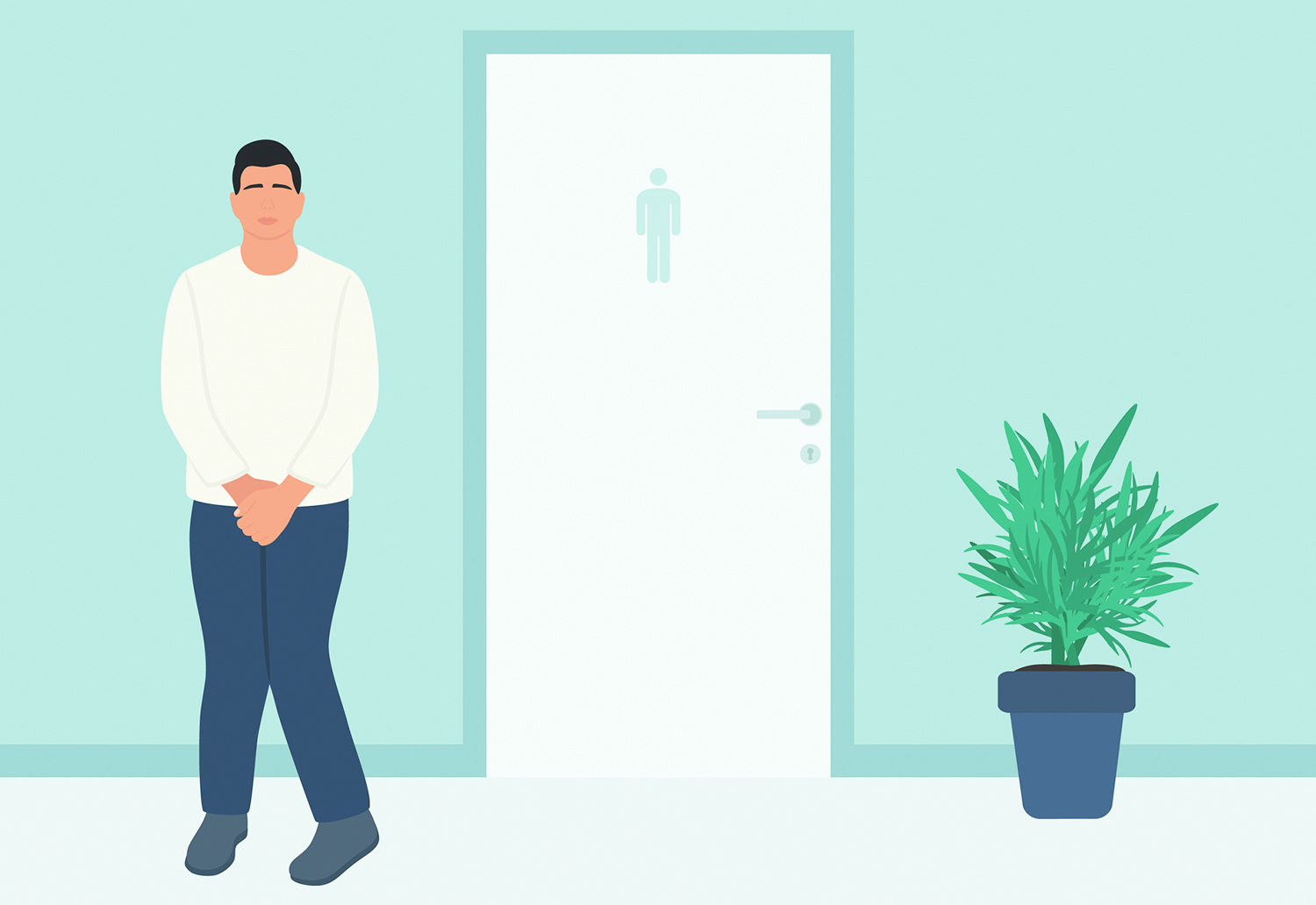
There’s a reason you’ll find an entire aisle at the supermarket or drug store dedicated to incontinence products. Urinary incontinence is a major issue for many older adults, including men.
Although urinary incontinence is more common in women, an estimated 10% to 30% of men experience it, oftentimes due to problems with the prostate that can affect the bladder. Yet, only about one in five men bothered by urinary incontinence ever seek help for it, some data suggest.
“I see a lot of men who have struggled with it for a long time before they feel comfortable enough to see someone,” says Molly DeWitt-Foy, MD, with the Center for Genitourinary Reconstruction at Cleveland Clinic’s Glickman Urological Institute. “I think a lot of men feel like it’s just so embarrassing that they can’t even talk about it.”
Fortunately, treatment for urinary incontinence can help you stay dry, active and enjoying your life.
What Is Urinary Incontinence?
Simply put, urinary incontinence is an inability to halt the flow of urine, or involuntary urine leakage. Experts have identified three primary types:
- Stress incontinence, characterized by urine leakage that occurs during certain activities (e.g., when you cough, sneeze or lift something) due to a weak urinary sphincter at the bottom of the bladder. In men, this type is most commonly seen after prostate cancer surgery (radical prostatectomy).
- Urge incontinence, a sudden or urgent need to urinate caused by a dysfunctional, or overactive, bladder that contracts when it’s not supposed to. This problem can occur in men with a significantly enlarged prostate (i.e., BPH) that presses against the bladder and obstructs urine flow through the urethra. If you notice that your urine stream is slower or you have difficult starting to urinate, don’t ignore it, Dr. DeWitt-Foy emphasizes. “Pay attention to what it feels like when you pee,” she says. “If you’re feeling you’re having to strain to get the urine out, or your urine stream is really slow, that is not normal and you should see a urologist. It could be because of an enlarged prostate or something like a urethral structure. All of those chronic obstructions can lead to serious bladder dysfunction down the line.”
- Overflow incontinence, a less common form that occurs when the bladder cannot empty completely, fills up and overflows with urine. Bladder obstruction from enlarged prostate can cause this type in men.
Although you might expect some urine leakage to be a typical part of aging, it’s not normal, nor is it necessarily benign. Urinary incontinence may be a sign of other medical problems, like diabetes and neurological disorders like multiple sclerosis or a spinal cord injury. It also may prompt you to avoid social situations, thereby detracting from your emotional, as well as physical, quality of life.
“I see a lot of patients who get depressed and make serious life changes in terms of their activities because of incontinence,” Dr. DeWitt-Foy says. “I’ve seen men who say, ‘I retired and I was planning on traveling, and I don’t want to travel anymore. I don’t want to spend time with my friends or family.’ That’s because they’re worried about having incontinence and having to go to the restroom frequently.”
Treatment for Urinary Incontinence
Several conservative treatments or self-help measures may reduce or prevent urinary incontinence, including pelvic floor physical therapy, a specialized form of therapy that strengthens the structures that control urine flow.
Anticholinergic medications—examples include oxybutynin (Oxytrol), tolterodine (Detrol) and solifenacin (Vesicare)—can ease bladder dysfunction and urge incontinence. Though effective, these drugs can cause dry mouth and constipation, which may perpetuate urinary incontinence. Other options include newer medications known as beta-3 adrenergic agonists—mirabegron (Myrbetriq) and vibegron (Gemtesa)—which are very effective for urge incontinence, Dr. DeWitt-Foy says. Also, injections of botulinum toxin (Botox) can help with overactive bladder leakage.
For more severe urge incontinence that fails to respond to conservative treatments, your doctor may recommend sacral nerve modulation, in which a small pacemaker-like device implanted under the skin of the buttock sends an electrical current along a wire that stimulates nerves controlling the bladder and pelvic floor muscles. Another option is percutaneous tibial nerve stimulation, which sends electrical pulses from the tibial nerve in the ankle to stimulate the nerves that control the bladder.
Men with stress incontinence can wear absorbent pads or place a foam-covered clamp over the penis for two hours at a time to prevent urine leakage. One recent study found that men with early post-prostatectomy stress incontinence treated with electroacupuncture regained continence more quickly, compared with their counterparts receiving sham (control) acupuncture (JAMA Network Open, Sept. 30, 2025).
Surgical options for men with mild or lower-volume urinary incontinence (requiring the use of one or two absorbent pads a day) include placement of a urethral sling (which functions like a hammock to support the urethra and prevent leakage) or adjustable balloon devices (ProAct) below the bladder neck.
Another choice is an artificial urinary sphincter, a three-piece device that includes a saline-filled cuff that squeezes the urethra. Pressing a tiny pump implanted in the scrotum relaxes the cuff and allows you to urinate. In a recent study of 115 men with stress incontinence treated with an artificial sphincter, 94% experienced at least a 50% reduction in urine leakage, and 60% reported zero pad use at one year (Journal of Urology, February 2026).
“This is a fantastic device,” Dr. DeWitt-Foy says. “Patients who get this are deeply grateful because often it gives them their life back. They stop leaking and they can leave the house again.”
- Optimize your weight. Abdominal obesity increases the risk of type 2 diabetes and places strain on the bladder, both of which can contribute to urinary incontinence.
- Avoid constipation, another urinary incontinence risk factor. Consume plenty of fiber from fruits, vegetables and whole grains, stay physically active, and don’t put off the urge to use the bathroom.
- Modify your fluid intake to reduce urine output, but be careful not to become dehydrated. Limit or avoid alcohol, caffeine, and artificially sweetened beverages, all of which can irritate the bladder.
- Try bladder training. Schedule regular bathroom trips (even if you don’t have the urge to urinate), and then delay your trips by five or 10 minutes, gradually increasing the time.
- Practice double-voiding. With each bathroom trip, urinate once, wait a few minutes, and then try again.
- Take part in pelvic floor physical therapy from a certified therapist. Visit pelvicguru.com to find one near you.
Don’t Ignore Urinary Incontinence
Take your urinary health seriously, Dr. DeWitt-Foy emphasizes, and don’t hesitate to seek help for urinary incontinence. “Those of us who urinate without bother don’t appreciate how hard it is to manage your urine when your bladder is not working properly. It is a constant problem,” she says. “We can’t always fix everybody, but there’s almost always something we can do to help.”