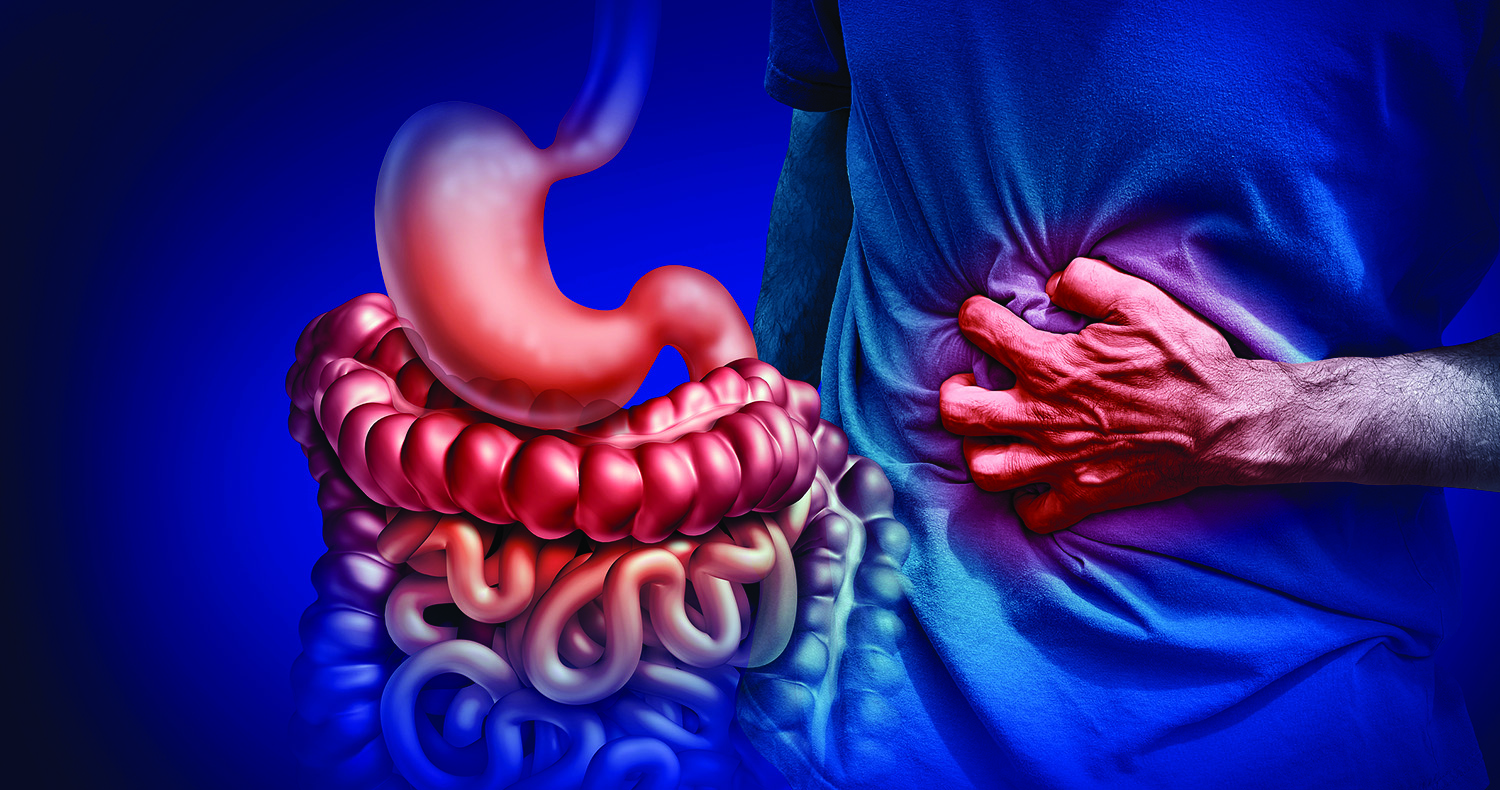
Inflammatory bowel disease (IBD) is an umbrella term for diseases underpinned by abnormal immune system activity that causes inflammation in the intestines.
The two main types of IBD—Crohn’s disease and ulcerative colitis—are more likely to affect the young, but statistics from the Centers for Disease Control and Prevention (CDC) have suggested that both subtypes are on the rise in older adults. Some of these individuals have longstanding IBD that was diagnosed in their youth, but others may develop new-onset IBD at ages 60 and older—in fact, about 10% to 20% of new inflammatory bowel disease diagnoses are reported in this age group.
Medications are available to control inflammatory bowel disease symptoms and reduce the risk of complications, but some of the most effective drugs can cause potentially serious adverse effects in older people, particularly if they have other chronic diseases.
Fortunately, there are nonpharmaceutical approaches that may help you live better with both types of inflammatory bowel disease—for example, recent research suggests that you may gain significant relief through dietary changes.
Crohn’s Disease vs. Ulcerative Colitis
Crohn’s disease and ulcerative colitis are underpinned by inflammation, but there are differences in how they manifest.
“Crohn’s disease causes inflammation in all four layers of the intestinal wall,” says Mount Sinai gastroenterologist Brijen J. Shah, MD. “While it usually affects the small intestine, it may develop in any area of the gastrointestinal tract, from the mouth to the anus. It tends to have a patchy spread, leaving healthy tissue between inflamed areas.”
Ulcerative colitis affects the large intestine (colon) and rectum. “It causes continuous areas of inflammation and ulcers in the mucosa, which is the top layer of the intestinal lining,” Dr. Shah says.
There also are differences in Crohn’s symptoms versus ulcerative colitis symptoms. “Ulcerative colitis causes cramp-like abdominal pain, especially on the lower-left side of the abdomen,” Dr. Shah says. “Bloody diarrhea is another common symptom, along with nausea, loss of appetite, weight loss, and fatigue. Crohn’s disease symptoms vary depending on which part of the intestine is affected and the severity of the disease, but usually include abdominal pain, diarrhea, and bloating.”
People with either type of IBD also may have nondigestive symptoms, including arthritis, eye pain, ulcers, or rashes on the skin, liver and kidney problems, and anemia-related symptoms. (Anemia occurs when the body doesn’t make enough red blood cells to effectively carry oxygen to tissues. The condition can result in fatigue, shortness of breath, and cold hands and feet.) Due to underlying inflammation, people with IBD are at increased risk for blood clots and heart disease. They also are at greater risk for colorectal cancer, which makes it even more important that older adults with IBD get regularly screened for the disease.
Who Is at Risk for Inflammatory Bowel Disease?
While people who are diagnosed with IBD at younger ages usually have a strong family history of the condition, researchers have found that older adults who are diagnosed with new-onset IBD generally do not. This finding indicates that other factors are more influential than genetics in people who are diagnosed for the first time in older age.
One such factor may be antibiotic use. A 2022 analysis showed that antibiotic use was associated with a 64% increase in new-onset Crohn’s disease and ulcerative colitis in older adults, and that the risk went up substantially with each course of medication.
“We think that antibiotics may affect the balance of good and bad bacteria in the gut, thereby increasing a person’s susceptibility to a range of health problems, including IBD,” Dr. Shah says. “If one of my older patients mentions symptoms indicative of IBD, their antibiotic use is something I consider when making a diagnosis.”
Another medication class Dr. Shah considers is nonsteroidal anti-inflammatory drugs (NSAIDs) like ibuprofen (Advil, Motrin) and naproxen (Aleve).
“Even though these drugs reduce inflammation, they may contribute to and worsen IBD,” he explains. “We’re not sure why this happens, but I recommend my patients with IBD opt for topical NSAIDs or acetaminophen (Tylenol) if they need to use pain-relieving drugs.”
He adds that smoking is another possible contributing factor—it increases the risk of developing Crohn’s disease, worsens disease severity in people who have the condition, and makes surgical treatment more likely.
How Crohn’s Disease and Ulcerative Colitis Are Diagnosed
If you have new symptoms suggestive of IBD, your doctor likely will order blood tests and stool sample analysis as first steps in the diagnosis. Certain other conditions are more likely to cause symptoms resembling those of IBD in the elderly, including infections and colorectal cancer, and these initial tests can help rule out those conditions.
Ulcerative colitis can be confirmed with a colonoscopy or sigmoidoscopy. Both tests involve having a flexible tube with a tiny camera and light at the tip inserted into the rectum and advanced through the colon. Prior to the test, you will need to fast and take strong laxatives to clear your bowel.
If Crohn’s disease is suspected, you may have an upper endoscopy. For this test, a flexible tube similar to that used in colonoscopy is passed down your esophagus (often colloquially known as “food pipe”) so that your doctor can examine your upper gastrointestinal tract. Additionally, a magnetic resonance imaging scan may be done to examine your small intestine.
Ulcerative Colitis and Crohn’s Treatment Options
A range of medications is available to treat IBD, but it can be difficult to find a regimen that controls the symptoms while avoiding side effects.
“The immune system naturally wanes in older age,” Dr. Shah says. “Because some of the more effective IBD medications suppress the immune system, there is a risk that using these drugs may reduce an older adult’s immune function still further, placing them at risk for infections.”
Another complication is that older people are at greater risk for frailty and other chronic diseases than their younger counterparts. “Frailty lowers your physiologic reserve, which essentially is your body’s capacity to withstand stressors like disease and injury,” Dr. Shah explains. “Older age also affects the way medications are absorbed and used by the body, and because older people often take more drugs, this raises the risk of drug interactions.”
He emphasizes that these treatment considerations must factor into how physicians manage and monitor IBD in older people. “Treatment approaches have to be tailored to each individual and aimed at easing symptoms while doing no harm,” he explains. “But we also want to ensure that caution does not result in undertreatment, since this may put older people with IBD at risk for hospitalization and surgery.”
Dietary Approaches for Inflammatory Bowel Disease
If you are diagnosed with IBD, you probably will be advised to avoid eating foods that are known to trigger symptoms, such as dairy products, raw vegetables, high-fat foods, “junk” food (French fries, cookies, soda, etc.), red and processed meat (hot dogs, deli meat, bacon), and spicy foods.
The impact of refined grains (such as white bread, pasta, and cereals) on IBD was highlighted in a study published in the American Journal of Gastroenterology, Aug. 2, 2025. The study, from a team at McMaster University, included more than 124,000 people. The analysis showed that those who consumed 19 grams or more of refined grains per day had a 19% greater risk for IBD than people whose daily consumption of refined grains was less than 9 grams.
“Refined grains have had much of their fiber and some of their nutrient content removed and typically have higher amounts of additives than whole grains,” Dr. Shah notes. “Consuming high amounts of refined grains is associated with several chronic diseases.”
Other recent research (Gastroenterology, May 2025) suggests that consuming a Mediterranean-style diet, rich in fruits, vegetables, whole grains, and healthy fats, may alleviate IBD symptoms.
“The study focused on younger people, but older adults also may benefit. Moreover, the Mediterranean diet has been associated with a lower risk for cardiovascular disease, obesity, and dementia, likely because it reduces inflammation,” Dr. Shah says.
Another eating plan that may benefit people with IBD is the Specific Carbohydrate diet. The diet is based on the theory that certain carbohydrates encourage unhealthy bacterial growth in the gut, and that this process produces byproducts that cause inflammation. Following the diet means avoiding these carbohydrates (which include grains and grain products, dairy, potatoes, chickpeas, and soy) in favor of unprocessed meat, poultry, fish, shellfish, egg, most vegetables, fruits, and nuts.
Along with consuming a healthy diet, you may need to supplement certain nutrients. “Crohn’s disease can interfere with the absorption of nutrients if it affects the last portion of the small intestine,” Dr. Shah notes. “In these cases, I recommend people take vitamins B12 and D, and calcium.” He adds that if you suffer from intestinal bleeding, iron supplements may be needed.
It also is important to limit your alcohol intake, as alcohol irritates the digestive tract and can cause IBD exacerbations.
Fasting May Help Crohn’s Disease
Recent research (Nature Medicine, Jan. 13, 2026) suggests that short-term fasting may benefit some people with Crohn’s disease. The small study, from a team at Standford University, included 97 people with Crohn’s disease, ages 18 to 70, 65 of whom were asked to restrict their calorie intake to 700 to 1,000 calories per day (mainly plant-based foods) for five days in a row each month. In between the fasting periods, they could consume their normal diet.
By the end of the three-month trial, 70% of people in the fasting group reported meaningful improvements in their symptoms and had reduced levels of biological markers associated with intestinal inflammation, compared with 44% of the participants who followed their normal diet.
“Previous studies have suggested that intermittent fasting lowers levels of C-reactive protein, a marker that is known to indicate the presence of systemic [bodywide] inflammation,” Dr. Shah says. “This may be the reason for the benefits seen; however, we don’t know if these short fasts would help in cases of severe disease. We also would want to be careful about older people— who already may be eating less than they should—reducing their calorie intake, so I would recommend anyone who considers doing so to run it by their doctor first.”
Indeed, some of the study participants showed improvements even though they did not fast. “This likely represents normal symptom fluctuations, given that these individuals were taking their usual medications and following their usual diets, which likely had already been adjusted to help them better manage Crohn’s,” Dr. Shah says.
Surgery for Inflammatory Bowel Disease
Surgery to remove intestinal tissue affected by severe IBD is possible in older adults whose symptoms are not controlled by medications and dietary changes, but it is important to carefully weigh the consequences and risks.
The standard surgery for ulcerative colitis is called proctocolectomy and removes the entire colon and rectum. This cures the disease, but some people may need to have an ostomy, in which the end of the small intestine is attached to an opening in the abdomen, through which stools pass out of the body into a bag.
Because Crohn’s disease can develop in any part of the gastrointestinal tract, it cannot be cured through surgery. But you may gain some symptom relief through the removal of some areas of diseased tissue or through a procedure called strictureplasty, which widens narrowed portions of the intestine to allow better function.
“In older age, any type of surgery is associated with a greater likelihood of surgical complications, including infections, bleeding, cardiovascular complications, and blood clots,” Dr. Shah says. “If you are considering surgical treatment for IBD, carefully consider how likely you are to recover well from the procedure, whether it will improve your function, quality of life, and independence, and what the complications might be.”