Are you sitting comfortably? If not, hemorrhoids may be to blame.
This often-painful condition is one of the most common problems to affect older adults. Although they’re not life-threatening, hemorrhoids can be unpleasant, and one of their hallmark symptoms—rectal bleeding—can potentially signal a more serious condition that warrants an evaluation from a health-care professional.
“Try to overcome any embarrassment you may feel about mentioning the issue to your doctor, since it is important to get the all-clear for more serious health problems,” advises Mount Sinai gastroenterologist Brijen J. Shah, MD.
If it turns out that hemorrhoids are what ails you, you can practice some self-care strategies that can help prevent them from worsening and provide hemorrhoid relief.
What Are Hemorrhoids?
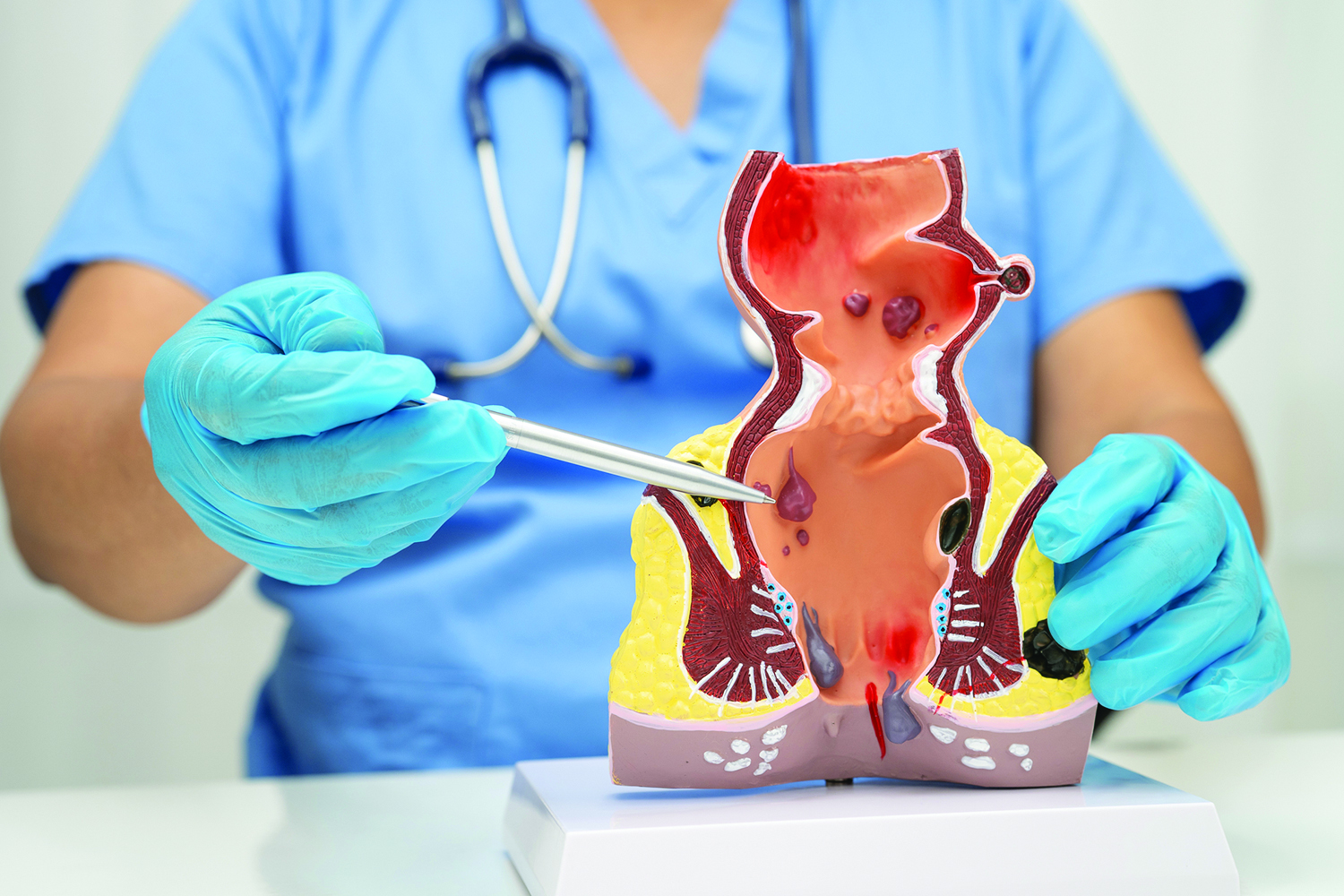
Hemorrhoids are caused by swelling of the tissue that surrounds blood vessels in the lower part of the rectum and anus. They’re broadly categorized as follows:
- Internal hemorrhoids contain arteries and veins that form under the lining of the lower rectum, near the anus. They typically aren’t seen or felt, but they can bleed when you bear down to pass a stool. What most people would call a hemorrhoid occurs when this tissue falls (prolapses) through the anus and becomes inflamed and itchy.
- External hemorrhoids form under the skin around the anus and can itch and bleed. In some cases, they rupture and trigger blood clot formation, creating a thrombosed hemorrhoid that can cause more intense pain, swelling, and inflammation.
- Hemorrhoid Classifications
Hemorrhoids can occur inside the anus (internal) or under the skin around the anus (external). Internal hemorrhoids can protrude, or prolapse, outside the anus and are classified into four groups:
- First-degree. These hemorrhoids bleed but cause no other symptoms and do not protrude.
- Second-degree. These protrude from the anus during a bowel movement but retract on their own.
- Third-degree. These protrude and must be pushed back into the anal canal.
- Fourth-degree. These cannot be pushed back into the anal canal.
Symptoms of Hemorrhoids
The chief symptom of an internal hemorrhoid is bright red blood seen on toilet tissue or in the toilet bowl, but internal hemorrhoids typically don’t cause discomfort.
“It’s when they protrude through the anus that they tend to become irritated, itchy, and painful, since this exposes them to friction from clothing, movement, and wiping after bowel movements,” Dr. Shah says. “If you can bear to take a look down there using a mirror, you may be able to see them—they form fleshy, purplish cushions. In a worse-case scenario, a blood clot may develop within a hemorrhoid, causing it to form a hard lump.”
Hemorrhoid Causes and Risk Factors
It isn’t entirely clear what causes hemorrhoids, but many older adults share predisposing factors for the condition.
“One such risk factor is chronic constipation,” says Dr. Shah. “By forcing you to strain to pass stools, it subjects the blood vessels in the rectum to pressure that may cause them to enlarge.”
Constipation is quite common in people ages 65 and older and may be related to a poor diet, limited fluid intake, and too little physical exercise. Health conditions like stroke, diabetes, Parkinson’s disease, and underactive thyroid—all of which disproportionately affect older adults—also make you more susceptible to constipation, as can certain medications, including nonsteroidal anti-inflammatory drugs like ibuprofen (Advil, Motrin), calcium-channel blockers (used to treat high blood pressure and angina, a type of pain caused by narrowed arteries in the heart), and calcium supplements.
Other risk factors for hemorrhoids include spending extended periods of time standing or sitting, and obesity, since these factors also increase pressure in rectal blood vessels.
How Hemorrhoids Are Diagnosed
As noted earlier, rectal bleeding can be due to a number of causes, so mention it to your primary-care provider.
Doctors know that people often find it difficult to broach “personal” health matters, so it’s possible that your doctor might prompt you during routine physicals by asking if you’ve been having any issues “down there.” If not, you can trigger a conversation yourself by saying something like, “I find this a little embarrassing to talk about, but I’ve been having discomfort down below.” This discussion should ring an alarm bell for your doctor, who can then give you an assist by asking more detailed questions about what symptoms you are experiencing.
“They also may want to do a quick visual inspection of your anal area to look for any obviously swollen blood vessels and likely will refer you to a gastroenterologist for a more thorough checkup,” Dr. Shah says.
The gastroenterologist will examine your rectum more closely, using an anoscope (a lighted tube useful for viewing internal hemorrhoids that are close to the anus) or a proctoscope (which can be used to view the entire rectum). You also may be advised to undergo a sigmoidoscopy, which enables your doctor to examine the rectum and lower portion of the colon. Sigmoidoscopy requires that you undergo “colon prep,” which involves fasting and taking laxatives to ensure that your colon is clear of waste.
“If you have not yet had a routine colonoscopy to screen for colorectal cancer, your doctor may recommend this test instead, since you will have undergone the necessary colon prep and it means your doctor can detect and remove any abnormal growths that otherwise might become cancerous,” Dr. Shah says.
Treatment Options for Hemorrhoids
If your hemorrhoids are painful, be careful to keep the area clean, but avoid using harsh soaps and shower gels—stick to warm water and pat the area dry afterward as opposed to rubbing it.
Warm baths or sitz baths can be soothing, too (you can purchase shallow over-the-toilet sitz basins at pharmacies and online). If hemorrhoids are particularly irritating and itchy, a cold compress may provide relief, Dr. Shah says.
“You also may want to try an over-the-counter hemorrhoid cream that contains witch hazel,” he adds. “Keep in mind that some other topical treatments are steroid-based. These can be effective, but you should use them as directed for no longer than one week, since steroids thin the skin.”
For second- and third-degree hemorrhoids, as well as first-degree hemorrhoids that aren’t helped by medical management, your doctor may suggest a procedure to destroy the hemorrhoidal tissue. Rubber band ligation, which involves tying off the hemorrhoid until it comes away on its own, is generally agreed to be the most effective of the less-invasive approaches, although it is more painful than other methods. The procedure can be performed in your doctor’s office but is not suitable for people who take blood thinners, Dr. Shah notes.
Other options include sclerotherapy, in which a solution is injected around the blood vessel to shrink the hemorrhoid, and infrared coagulation, in which a device is used to burn the hemorrhoidal tissue.
If nonsurgical procedures are not effective, the hemorrhoids are particularly severe, or other conditions in the anal area warrant surgery (such as a tear), the swollen tissue may need to be surgically removed. “This is very unusual, though,” Dr. Shah emphasizes. “In fact, only about 5% to 10% of people with hemorrhoids need surgery.”
Preventing Hemorrhoids
The best thing you can do to resolve or prevent hemorrhoids is to avoid constipation. You can help by increasing your fiber intake and drinking plenty of fluids.
“Fiber adds bulk to stools and softens them, which makes them easier to pass,” Dr. Shah explains. “Drinking more fluids prevents dehydration. The latter contributes to constipation because it means that your colon absorbs more water from food as it passes through your body, and this makes stools smaller and harder.”
You can best increase your consumption of fiber by eating more fresh fruits and vegetables, and choosing whole grains (whole-wheat bread, brown rice) over refined (white) grains. Aim to consume eight to 10 glasses of fluids (preferably water) daily.
Dr. Shah strongly recommends you avoid sitting on the toilet for extended periods of time if you are finding it difficult to pass stools.
“Even if you aren’t actively straining to pass something, the mere act of sitting will place pressure on rectal blood vessels,” he explains. “Give it three to five minutes, and if nothing happens, get up and walk around if you can, since physical activity may help get things moving.”
If you take medications that might be causing constipation, speak to your doctor to see if a substitution or adjustment in the dose might help. If these measures don’t ease constipation, discuss with your doctor whether a short course of laxatives is advisable.