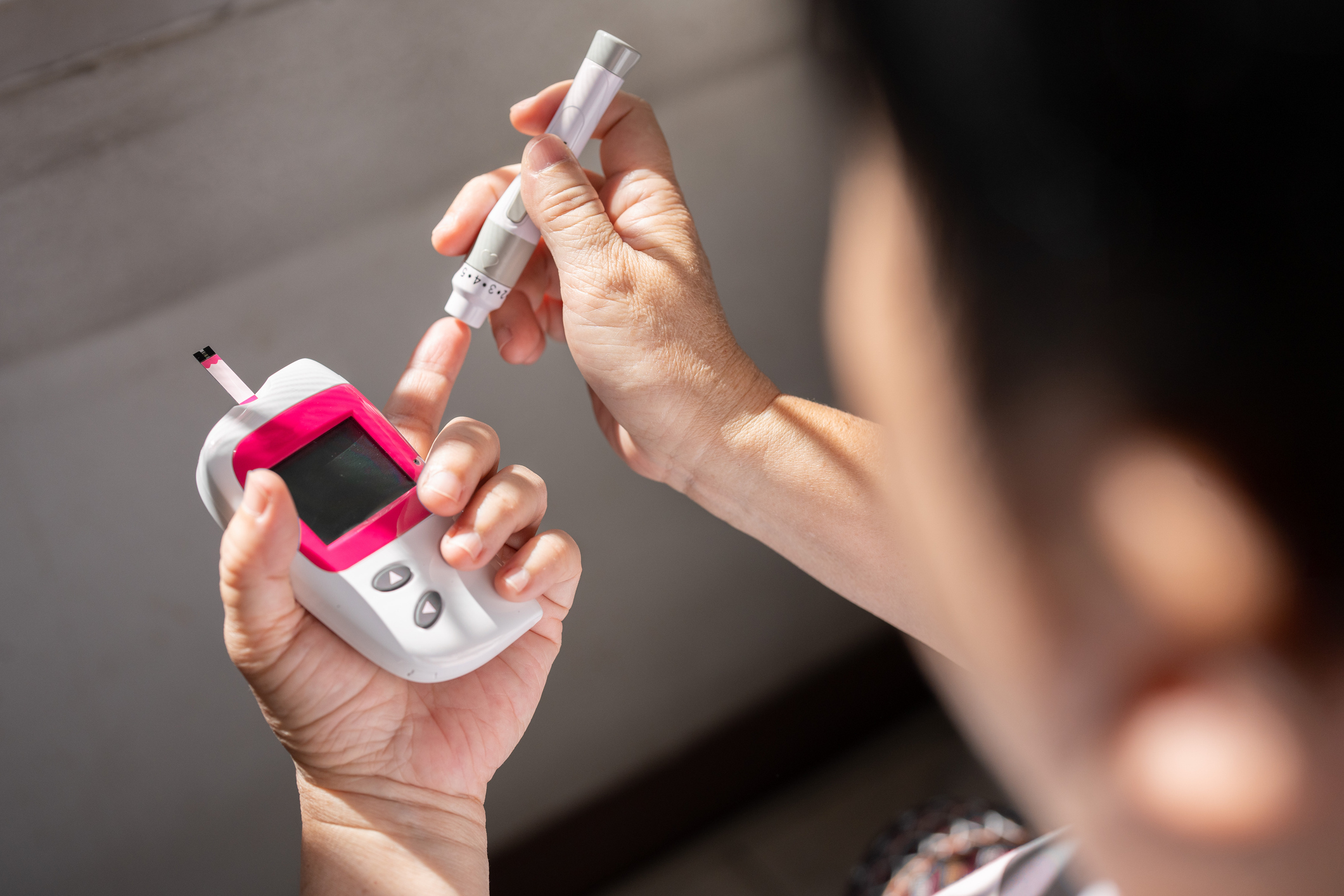
You may have heard that excessive thirst and frequent urination are warning signs of diabetes. That is true, but like so many other chronic conditions, including high blood pressure and high cholesterol, you might not experience symptoms until it becomes advanced…and prediabetes has virtually no symptoms.
“There is significant variation among people,” explains Osama Hamdy, MD, senior staff physician at Joslin Diabetes Center in Boston. “Some people don’t have any symptoms at all…sometimes the symptoms are so subtle that people will not even notice any difference. That’s why 8.7 million adults—roughly 23% of diabetes cases—are undiagnosed and why screening is important to discover many of those cases.”
What Is Diabetes?
“In the old days, we used to say it was a carbohydrate-intolerance disease,” says Dr. Hamdy, “but starting in the 1980s, it was defined it in a different way—a high blood glucose level as a result of beta-cell dysfunction (when pancreatic beta cells aren’t able to produce enough insulin)…insulin resistance (when your body doesn’t respond as well to insulin as it should)…or a combination of the two. I personally prefer the old definition because it was more accurate. If you control the amount and type of carbohydrates you ingest, you can control diabetes in a very efficient way.”
The Subtle Symptoms of Diabetes
Here are some of the early symptoms of diabetes, according to Dr. Hamdy…
Fatigue
“In the beginning, some people start to feel more tired than usual,” says Dr. Hamdy. Some describe it as having less capacity for physical activity, feeling tired after little work or just not being able to make the effort they used to. And that is because glucose is not getting into your cells where it’s needed to create energy.
Waking up during the night to urinate
If you’ve already been waking up to go in the middle of the night, an increase in frequency could be a sign of diabetes.
Brain fog
To some extent, waking up to urinate is a sleep disturbance, and it can leave you feeling confused the next morning.
Hunger
People feel hungrier—they crave carbohydrates and gain weight.
Infections
Yeast infections, urinary tract infections, gingivitis and/or dental abscesses may result from elevated blood sugar. Boils and itching can be other manifestations.
If you’re experiencing any of these symptoms, ask your doctor for an evaluation.
Other symptoms include blurry vision, slow-healing wounds, and tingling or numbness in feet.
Risk Factors for Diabetes
Many common circumstances can increase your diabetes risk, says Dr. Hamdy…
- Gestational diabetes, diabetes that appears during pregnancy, or giving birth to a large baby
- Taking cortisone or one of the cortisone derivatives for a long time makes you more insulin-resistant because cortisone counteracts insulin action in general. Caution: This does not mean you should not take cortisone when indicated, even if you have risk for diabetes.
- Some cancer medications, including certain monoclonal antibody drugs, can cause diabetes, though this is not common and usually occurs as a side effect of immune checkpoint inhibitors (a type of monoclonal antibody used in cancer therapy). They can also make existing diabetes worse.
- Family history of diabetes, especially first-degree relatives with type 2 diabetes and even more so if you are overweight or obese (risk rises with age and increased weight)
Having any of these risk factors is a reason to ask your doctor to test your blood sugar on a regular basis.
The A1C Test
Most routine blood tests measure plasma glucose—the amount of glucose, or sugar, in your blood. In general terms, if you were fasting for at least eight hours before the test…
- Normal: 70 mg/dL to 99 mg/dL
- Prediabetes: 100 mg/dL to125 mg/dL
- Diabetes: 126 mg/dL or higher
A random blood test, however, might not necessarily represent a true snapshot of your blood sugar, which can be high one day and low the next. But if the result of a random blood glucose is greater more than 200 mg/dL with symptoms of diabetes, the possibility of having diabetes is very high. So if your number is out of normal range, your doctor likely will order an A1C test to make a diagnosis.
“A1C is the simplest, easiest test because it is not time-specific…and you don’t need to fast,” says Dr. Hamdy. “The test shows your average blood glucose over the past 90 days and is a more accurate indicator.”
A1C results are given as a percentage…
- Normal A1C reading: Under 5.7%.
- Prediabetes: 5.7% to 6.4%
- Diabetes: 6.5% or higher
The higher the number, the greater your risk for diabetes complications such as heart disease, retinopathy (diabetes’ effect on the retina of the eyes), neuropathy (diabetes’ effect on peripheral nerves, especially in the feet) or nephropathy (chronic kidney disease related to diabetes).
For people with a high A1C, the target goal often is age-dependent. “We’d like for an adult person with diabetes to have an A1C lower than 7% or, if they are young and healthy enough, less than 6.5%,” says Dr. Hamdy. For older people, a target A1C of less than 7.5% is satisfactory, but some medical societies, including the American College of Physicians, recommend a target A1C between 7% and 8%.
Can Diet Get You Back in Normal Range?
“It depends on your phenotype cluster,” says Dr. Hamdy. There are four major phenotypes, or subgroups, characterized by what caused the type 2 diabetes…
Mild obesity-related diabetes
This basically is diabetes caused mainly by obesity. It represents about 22% of all diabetes cases. People in this category can reverse diabetes if they lose 7% to 10% of their body weight, especially in the first five years of the disease.
Mild age-related diabetes
As you get older, your pancreas ages, too, and may no longer produce enough insulin. And being overweight can put you over the edge because you also become insulin-resistant. “They will benefit from weight loss also, but not as much as people with mild obesity-related diabetes because their major problem is with beta cells,” explains Dr. Hamdy. This phenotype represents around 40% of people with diabetes.
Severe insulin-deficiency diabetes
This is when you don’t make enough insulin. “These people usually are lean and won’t benefit from weight loss,” says Dr. Hamdy. “So, this group will definitely need stimulation of the pancreas or insulin replacement.” This phenotype represents about 18% of people with diabetes.
Severe insulin-resistant diabetes
With this phenotype, which represents up to 15% of people with diabetes, the body—specifically the liver, muscles and adipose tissue (body fat)—doesn’t respond to insulin as it should. “Those people are resisting insulin significantly. They often need three or four medications plus significant amounts of insulin daily (200 units or more) without overcoming insulin resistance. A low-calorie or a low-carbohydrate diet may be necessary as well as losing weight. People in this group may not be cured, but the amount of medication needed will go down and they might be able to get off insulin after 7% to 10% weight loss.”
Are GLP-1 Drugs Helpful When You’re Newly Diagnosed?
If you’re overweight or obese, a GLP-1 can help jumpstart weight loss. “Because it helps you stick to a dietary plan, it will help you achieve your target in a much easier way,” says Dr. Hamdy. “Plus, as diabetes medications, GLP-1s stimulate the pancreas to secrete insulin while they suppress glucagon, so they improve blood glucose control. They also will be valuable for people who have beta-cell dysfunction because they stimulate beta cells. However, GLP-1s aren’t appropriate for severe insulin-deficiency diabetes because those people are lean and weight loss is not the ideal solution for them.”
Bottom line: Type 2 diabetes can be present without notice for years. For that reason, talk to your doctor about getting tested. “We now have many ways to reverse diabetes in the early stage,” says Dr. Hamdy. “You can put diabetes into remission easily with good interventions within the first five years.” Beyond that timeframe, it becomes more difficult to manage.
Dr. Hamdy advises people with diabetes to learn all they can about the condition and, for those with prediabetes, to consider attending a diabetes-prevention program to keep it from progressing to type 2 diabetes. The Centers for Disease Control and Prevention (CDC) provides a searchable registry of Diabetes Prevention Program (DPP) locations. Through the National Diabetes Prevention Program (National DPP), you can enter your city, state, or ZIP code to find nearby lifestyle-change programs. These are offered in multiple formats—in-person classes, live virtual sessions, online modules and blended options.