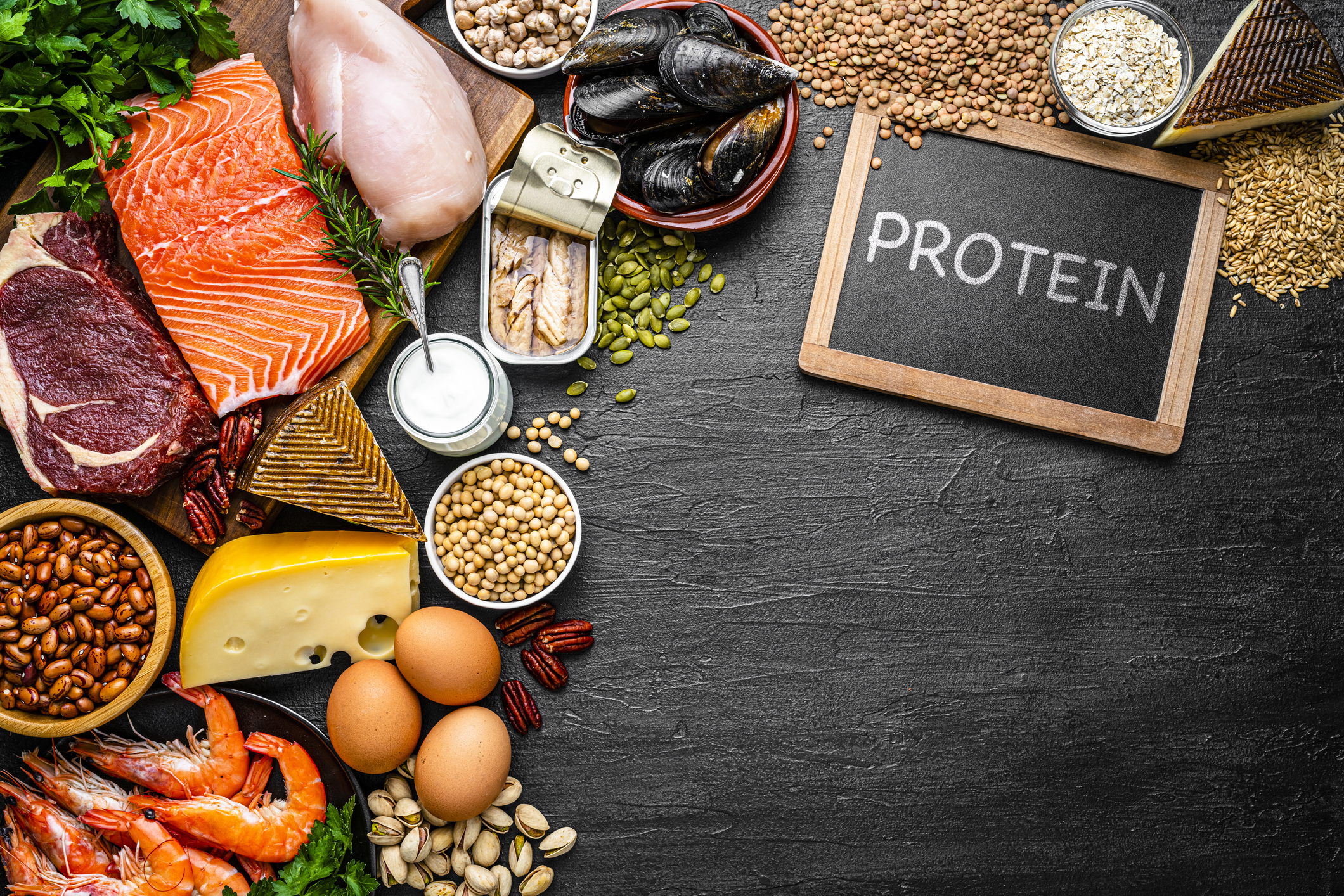
Stumped by the general recommendation that protein intake should be between the wide range of 10% to 35% of your daily calories? How can you know how much protein is too much protein…or too little, for that matter? Kelsey Mangano, PhD, RDN, associate director of the Center for Population Health at the Zuckerberg College of Health Sciences at UMass Lowell, helps put the numbers in perspective to answer the question…how much protein should I eat a day?
How Much Protein Do I Need?
When it comes to daily protein, nutritionists generally talk about grams per kilogram of body weight rather than a percentage of total calorie intake because it better reflects individual body size. (Note: One kilogram is the equivalent of 2.2 pounds.) Protein is a unique macronutrient because it contains nitrogen, which helps build cells. Bone mass, lean mass and all organ tissues are constantly being turned over to stay healthy, and that requires nitrogen. So a very tall person needs more protein than a petite person to keep that cell production operating.
For the average healthy adult, the recommended dietary intake set by the Institute of Medicine is 0.8 grams of protein per kilogram of body weight per day—that’s the equivalent of about 0.36 grams of protein per pound of body weight. That’s the minimum amount of protein your body needs to maintain your immune system and overall health and to do all of the basic everyday things that you enjoy, such as playing with your grandkids and taking a walk around your neighborhood.
If you have greater health or functional goals—perhaps you are involved in sports and other high-energy pursuits—your protein needs are higher. Greater physical activity requires stronger bones, more functional muscles, and the strength and ability to work at a higher level for extended periods. In this case, the protein recommendation is between 1.2 grams and 1.6 grams per kilogram of body weight per day (0.54 to 0.73 grams per pound of body weight).
Age also influences protein needs. When we talk about aging in terms of musculoskeletal health, there are two major turning points—at age 40 and again at age 60.
After 40, muscles and bones start to become less responsive to the same protein intake as they used to be. The body takes in fewer of the amino acids from protein. Result: You need to be more conscientious about getting protein (as well as engage in more weight-bearing physical activity, which helps the body to make the most of the protein ingested).
After age 60, the ability to absorb nutrients ramps down significantly, and you need to flood your tissues with even more amino acids. Your minimum daily intake of protein moves to 1 gram or 1.2 grams per kilogram per day (the equivalent of 0.45 to 0.54 grams per pound, respectively). If you’re getting a lot of physical activity, particularly weight-bearing activities, it should move closer toward that 1.6-gram (0.73 gram/pound) range.
If you’re taking a GLP-1 weight-loss drug, you should be very conscious of your protein intake because of the reduced appetite it causes. Focus on protein first and then foods with fiber and plant nutrients. If you don’t prioritize protein intake when you lose weight—and this is true with any weight-loss program—50% of that weight loss will be lean mass. That’s because when your body doesn’t get enough protein from your diet, it will pull what it needs from your muscle and bone stores.
Simple way to be sure you’re getting enough protein without complex calculations: Aim for 20 to 25 grams of protein per meal…or, after age 60, 30 to 35 grams per meal.
How Much Is Too Much Protein?
Protein is so satisfying that you may find it hard to eat more than you need. And you don’t want to eat so much of it that you don’t have room for the other key macronutrients—healthy carbs and fats—that provide nutrients that animal proteins don’t provide.
Beware: If you have acute or chronic kidney disease and therefore can’t process protein efficiently, work closely with your physician and a registered dietitian on a specific protein recommendation. It should provide just the right amount, not so much that you overload the kidneys or so little that you can’t maintain musculoskeletal and overall health.
Choosing the Best High-Protein Foods
People who want to build muscle often focus on chicken, chicken, chicken…but it’s not the only option.
Choose lean animal-based proteins
For best health, limit saturated fat, which comes primarily from animal proteins. Cut off any visible white fat on red meats…choose seafood, which is lower in saturated fat…and when you do eat poultry, skip the skin.
Include dairy and eggs
These are at the tippy top of the list in terms of protein quality and ease of digestibility and absorption. If you aren’t lactose-intolerant, dairy foods can be a nutrient bonanza, particularly when you’re older. You can make lean choices by buying reduced-fat options. In terms of eggs, intake depends on individual health status, including whether you’re managing your cholesterol level, so review the right limits with your health team.
Eat more plant proteins
One of the major benefits of foods like legumes (beans, peas, lentils, peanuts and soybeans) is that, although they provide a little less protein than meat, they have fiber, which is beneficial for a healthy gut and heart and for weight maintenance. They also have hundreds of phytonutrients, including disease- and age-fighting antioxidants. If you’re vegetarian, soy is the most nutritionally complete plant protein…has all the essential amino acids…and is easily digested and absorbed. Nuts also are nutritional powerhouses that deliver some protein and healthy fats.
Do You Need Protein Supplements?
Protein is better absorbed and utilized when it comes from food sources. If you eat a well-rounded diet, are meeting your goals and feel you’re functioning well, you generally don’t need to supplement.
If you’re older and have a diminished appetite or are taking a GLP-1 drug (whose specific purpose is to inhibit appetite) and getting enough protein is a challenge, you might benefit from a protein supplement. It’s often easier to drink one, and because the protein is in a simpler form, either amino acids or an isolate of protein, it’s much easier to digest.
Whey and other animal protein supplements (such as casein) tend to be more effective because they’re absorbed very easily, but if you’re lactose-intolerant or choose not to consume animal products, the next best option is soy protein supplementation.
The main caveat with protein (and all) supplements is that they’re not regulated by the FDA and may not contain what they claim on the label or contain contaminants. Look for brands that state they’ve gone through third-party certification. Trusted third-party certifiers include National Science Foundation (NSF), Informed-Sport/Informed-Choice, US Pharmacopeia (USP) Verified and ConsumerLab. Look for their seal on the front or back of the protein supplement packaging. When in doubt, e-mail the protein supplement company, ask if they engage in third-party testing, and request a copy of the test report. Also read labels to make sure you’re not getting unwanted sugar or additives (typically ingredients that you do not recognize).