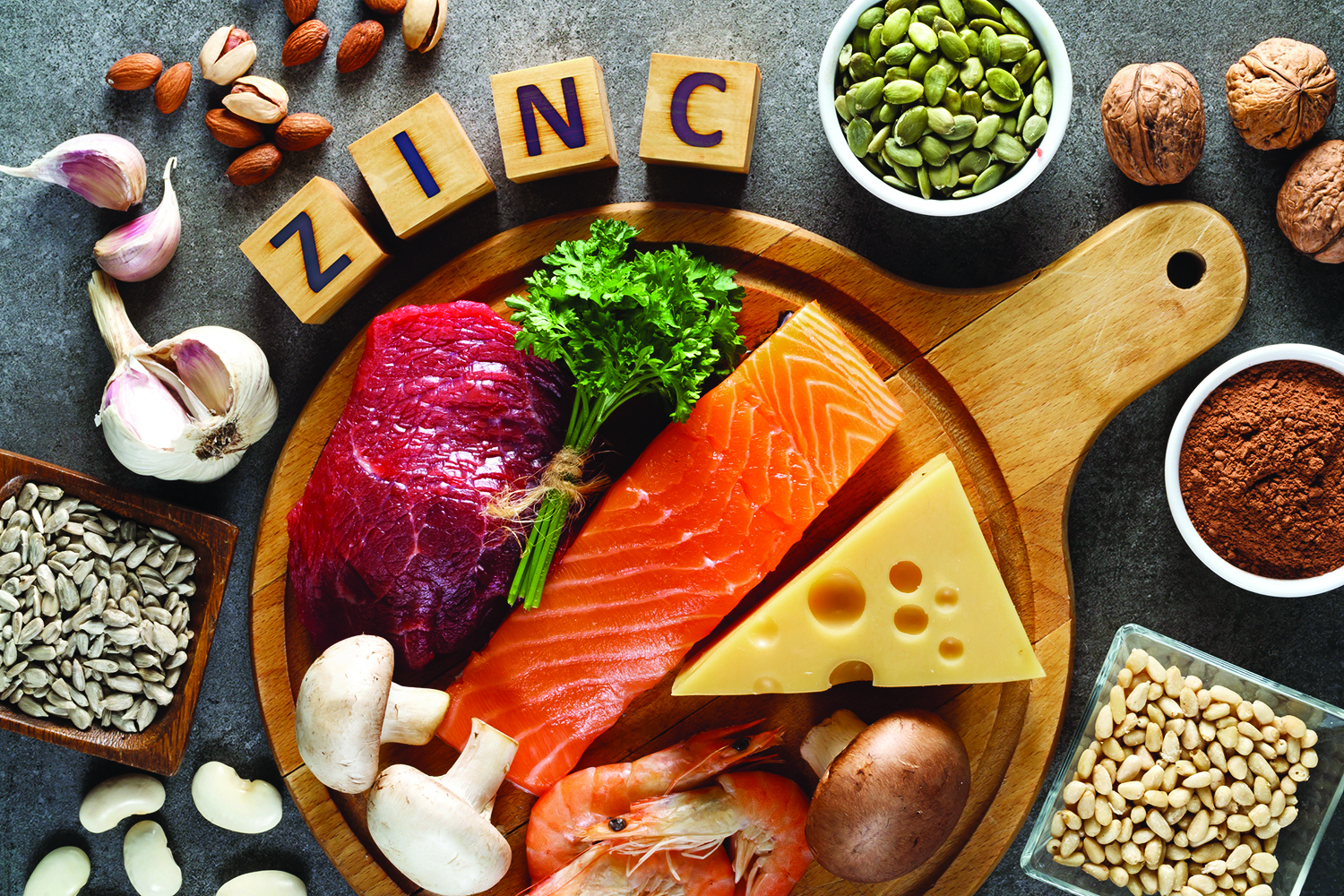
Zinc is a trace mineral, meaning that your body requires only a small amount of it to function.
However, that small amount is essential for dozens of metabolic enzymes to carry out vital metabolic processes, including creating DNA, maintaining cell growth and division, creating proteins, healing wounds and supporting a healthy immune system to help protect you from infections and disease.
Adequate zinc intake is especially important during periods of rapid growth, such as childhood and pregnancy.
Foods High in Zinc
| Food | Serving size | Zinc (milligrams) |
| Oysters, Pacific, cooked | 3 ounces | 28.2 |
| Beef, bottom sirloin, roasted | 3 ounces | 3.8 |
| Blue crab, cooked | 3 ounces | 3.2 |
| Breakfast cereal fortified with 25% Daily Value | 1 cup | 2.8 |
| Pumpkin seeds | 1 ounce | 2.2 |
| Turkey breast, roasted | 3 ounces | 1.5 |
| Lentils, boiled | ½ cup | 1.3 |
Meats, poultry, and seafood are rich sources of zinc.
“Oysters contain more zinc per serving than any other food,” says Julie Stefanski, RDN, LDN, spokesperson for the Academy of Nutrition & Dietetics. “One serving of beef, fish, chicken, or legumes each provides about 25% of daily zinc needs.”
Other foods with zinc include some plant foods, such as legumes, beans, nuts, whole grains, and several fortified, ready-to-eat breakfast cereals. In fact, breakfast cereals are a major source of zinc in the American diet.
However, plants contain a compound called phytate, which can interfere with zinc’s absorption. As such, someone following a vegetarian or a vegan diet may require slightly more zinc to allow for this interference.
Recommended Intakes
The recommended dietary allowance (RDA) for children (both boys and girls) from birth to age 13 is 2 to 8 milligrams (mg). For ages 14 to 18, the RDA is 9 mg a day for girls and 11 mg daily for boys.
The RDA for adults ages 19 and older is 11 mg per day for men and 8 mg daily for women. The recommendation during pregnancy and lactation is about 11 mg and 12 mg daily, respectively. These amounts are thought to be adequate for up to 98% of healthy adults. However, zinc blood levels and requirements can fluctuate as a result of infections, changes in steroid hormones, and muscle loss that can occur during weight loss.
Zinc Deficiency Symptoms
Because zinc is involved in critical metabolic processes in the body, zinc deficiency affects many tissues and organs, making it difficult to diagnose. Zinc deficiency symptoms include a loss of appetite or sense of smell, depressed mood, slow wound healing, diarrhea, or hair loss.
However, most people in the United States get enough zinc. The estimated average daily zinc intake from both foods and supplements is 8.4 mg to 10.4 mg per day for children ages 2 to 11, 10.7 mg a day for individuals ages 12 to 19, 16.4 mg a day for men, and 12.6 mg per day for women. For pregnant women ages 20 to 40, the mean zinc intake is 12.4 mg a day from foods alone and 22.7 mg per day from foods and supplements.
However, older individuals may have borderline adequate intakes. Those most at risk for inadequate zinc intake include people with gastrointestinal disorders such as irritable bowel syndrome and celiac disease, those who have undergone bariatric surgery, vegans, pregnant or lactating women, older infants who are exclusively breastfed, children with sickle cell disease, and people who consume excessive amounts of alcohol. Individuals with chronic liver or kidney disease are also at risk for inadequate zinc. Still, zinc deficiency is rare.
Zinc Supplementation
Zinc is available in multivitamin/mineral supplements and as a single-ingredient supplement. It is best absorbed if taken in small doses.
Zinc can come in a variety of forms, including zinc sulfate, zinc acetate, and zinc gluconate.
“The effectiveness of zinc supplementation often centers on whether a person has a pre-existing zinc deficiency,” Stefanski says. “Zinc supplements might be beneficial for a person who has a zinc deficiency, but often don’t help individuals who already have normal zinc status.”
Since copper and zinc compete with one another for absorption, consuming too much zinc can interfere with copper absorption. The symptoms of excessive zinc intake (5 mg or more used for weeks) include nausea, dizziness, headaches, vomiting, and loss of appetite.
Zinc Benefits
Zinc lozenges have long been used as a way to keep cold viruses at bay. However, a recent review of 28 randomized, controlled trials by Australian researchers found that while zinc was associated with a two-day reduction in the duration of colds in some studies, symptoms were not lessened. An earlier review concluded that zinc lozenges, at doses of 75 mg per day, reduced the duration of the common cold, but lower doses did not. And, a recent analysis of five studies suggested that zinc supplementation was associated with a lower death rate among COVID-19 patients.
Age-related macular degeneration (AMD) is the leading cause of significant vision loss in older people. The retina has a high concentration of zinc. Supplement formulations (known as AREDS 2) that provide both zinc and antioxidants (including vitamins C and E, beta carotene, copper, lutein, and zeaxanthin) may delay the progression of the condition and possibly prevent some of the damage to retina, research suggests.
The Bottom Line
If you have no serious underlying condition, take a multivitamin/mineral supplement, eat fortified breakfast cereal or a diet of foods high in zinc, the odds are that your zinc status is exactly where it should be.