Dragon fruit. The name itself is alluring.
But dragon fruit benefits—along with a healthy dose of social media attention—are what’s fueling the growing interest in, and popularity of, this colorful fruit.
Here’s a look at the health benefits of dragon fruit, how you can gain them, how to eat dragon fruit, and other key points about this delicacy.
Dragon Fruit Folklore
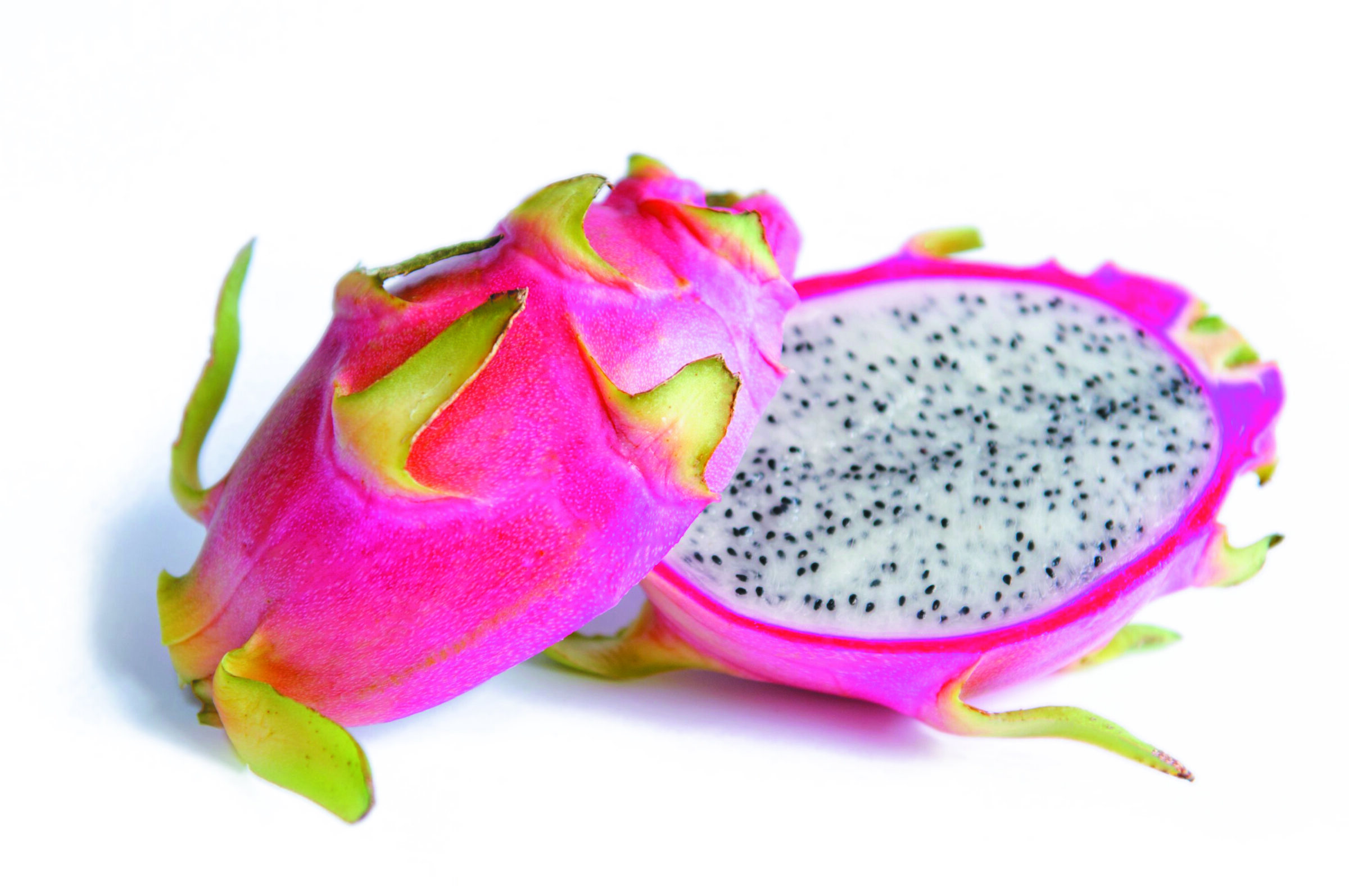
Fortunately, the dragon fruit’s only shared trait with its fierce, fire-breathing namesake is its wild appearance. This bright red or yellow fruit with leathery skin and green scale-like spikes surrounds a mildly sweet and beautiful pink or white flesh.
This tropical cactus fruit traces back to Central and South America and ancient Mayan and Aztec civilizations. It has been coveted as a gift from the gods in some Asian cultures and is given as a gift and used in religious ceremonies, as it’s thought to bring good fortune. Today, dragon fruit is grown all over the world and is widely exported.
Dragon Fruit Facts
Also known as pitaya or strawberry pear, dragon fruit is the fruit of a cactus in the Hylocereus family. The most common varieties are oval shaped and red skinned surrounding a pink or white flesh speckled with tiny edible black seeds. Another type is yellow skinned with white flesh and a sweeter taste.
A one-cup serving of cubed dragon fruit delivers a host of healthful nutrients, like 14% of the daily value (DV, based on 2,000 calories/day) of dietary fiber and 10% of the DV of antioxidant vitamin C.
Dragon fruit is also a good source of many naturally occurring plant compounds that have been linked with health benefits, including flavonoids, phenolic acids, and betacyanins, which contribute to its high antioxidant activity. Eating dragon fruit may therefore have positive effects on stress-related and inflammation issues and may help in the prevention of diabetes, stomach and intestinal problems, and colon cancer, and also in reducing blood pressure, some research suggests. Other research has found that regular consumption of dragon fruit may help lower cardiovascular risk due to its high content of betalains (antioxidant plant pigments).
Some Finer Points About Dragon Fruit
Here are some other things to know about dragon fruit:
- How to choose it. Look for dragon fruit during peak season, about June through October. Choose those with brightly colored skin, and few, if any, brown spots. Dragon fruit is also available frozen, dried, and as a freeze-dried powder.
- What does dragon fruit taste like? Ripe fruits give slightly when gently squeezed and have a mild kiwi-pear-like flavor.
- How to cut dragon fruit. Slice fresh fruit in half and scoop the flesh with a spoon, being sure to avoid the skin, which is inedible.
- How to eat dragon fruit. Cut dragon fruit into cubes and enjoy as is, or add it to salads, smoothies, yogurt, and frozen treats. Try dried dragon fruit or dragon fruit powder in baked goods, granola, trail mix, hot cereals, or in any recipe for a pop of color and nutrients.
1 cup (140 g), fresh, cubed
- Calories: 80
- Dietary Fiber: 4 g (14% DV)
- Vitamin C: 9 mg (10% DV)
- Magnesium: 30 mg (10% DV)
Note: g=gram, mg=milligram, DV=Daily Value, based on 2,000 calories/day
- 1 red dragon fruit, peeled, sliced (may use white dragon fruit too)
- 1 banana
- 1 cup plant-based milk, unsweetened, plain
- 2 tablespoons flax seeds
- Add all ingredients to a small blender. Blend until smooth.
- Pour into two glasses and enjoy!
Makes 2 servings.