Radical prostatectomy is a surgical procedure usually performed on men who develop prostate cancer in their 60s or 70s.
Adam Borland, PsyD, was 47 years old when he underwent the prostate cancer surgery in late 2024.
Ironically, the Cleveland Clinic psychologist was interviewed just a few months earlier on a podcast that focused on men’s health, including prostate cancer. Flanked by a Cleveland Clinic urologist and a former National Football League player who had survived prostate cancer, Dr. Borland remained silent about his ongoing personal experience with the disease.
“The interview happened to take place right in the middle of my prostate cancer testing. I’m sitting there awaiting my results, and I’m not telling anyone,” he recalls. “So here I am having to talk about prostate cancer with a urologist and a prostate cancer survivor, and I’m thinking, you just cannot make this up. The whole process has been really interesting.”
Prostate Cancer Symptoms Arise
Thanks to widespread screening, the majority of prostate cancers are found in an earlier, more treatable stage. Several medical groups recommend that men begin discussions about prostate cancer screening between ages 45 and 50, and even younger for men at high risk, such as African Americans and those with a strong family history of prostate cancer. Dr. Borland had none of these risk factors.
Screening with the prostate-specific antigen (PSA) blood test is especially important because in many cases, early-stage prostate cancer doesn’t make itself known. When it does, prostate cancer symptoms can mimic those of other diseases, such as benign prostatic enlargement, or BPH.
In the summer of 2024, Dr. Borland and his wife were vacationing in Canadian wine country when he noticed he was urinating more frequently than usual. Initially, he chocked it up to the wine tasting. Still, something was amiss.
He raised the issue with his primary care physician, who ordered a PSA test. The result: a PSA reading of 5 nanograms per milliliter (ng/ml), twice the normal level for a man his age (see “PSA Ranges by Age”). A subsequent magnetic resonance imaging (MRI) scan and prostate biopsy revealed that Dr. Borland had Gleason grade 7 prostate cancer. Results from a more advanced molecular test, Decipher®, further confirmed that the cancer was clinically significant.
“I’d never had my PSA checked before,” Dr. Borland says. “The severity of it was what ultimately led me to getting a prostatectomy. Then, it was a process of facing really intense fears and getting the treatment I needed, not ignoring anything or putting it off.”
Prostatectomy and Other Options
Increasingly, men newly diagnosed with early-stage prostate cancer undergo active surveillance (AS), in which they’re carefully followed and undergo treatment only when testing suggests their cancer is advancing. AS allows men to delay (and sometimes avoid) prostatectomy or radiation and the urinary and sexual side effects that often accompany these treatments. However, research suggests that many men on or eligible for AS opt for curative treatment because they’re uncomfortable living with an untreated cancer.
Although AS was discussed, Dr. Borland said his psyche and the severity of his cancer necessitated immediate curative treatment. So, in December 2024, he underwent robotic-assisted radical prostatectomy, performed by Ruben Olivares, MD, at Cleveland Clinic’s Glickman Urological Institute.
“I didn’t want to live with this diagnosis and just keep checking it. That just wouldn’t have been emotionally healthy for me,” Dr. Borland explains. “I wanted as definitive a result as I could get. I weighed all the options, and prostatectomy is what we decided on.”
Recovering Physically & Emotionally
Dr. Borland’s surgery went well. He spent one night in the hospital and another six weeks recovering physically from the prostatectomy. Months after the surgery, he still experiences some urinary incontinence, but it’s improving with the help of physical therapy. He still must undergo periodic PSA testing to stay vigilant against a return of his cancer.
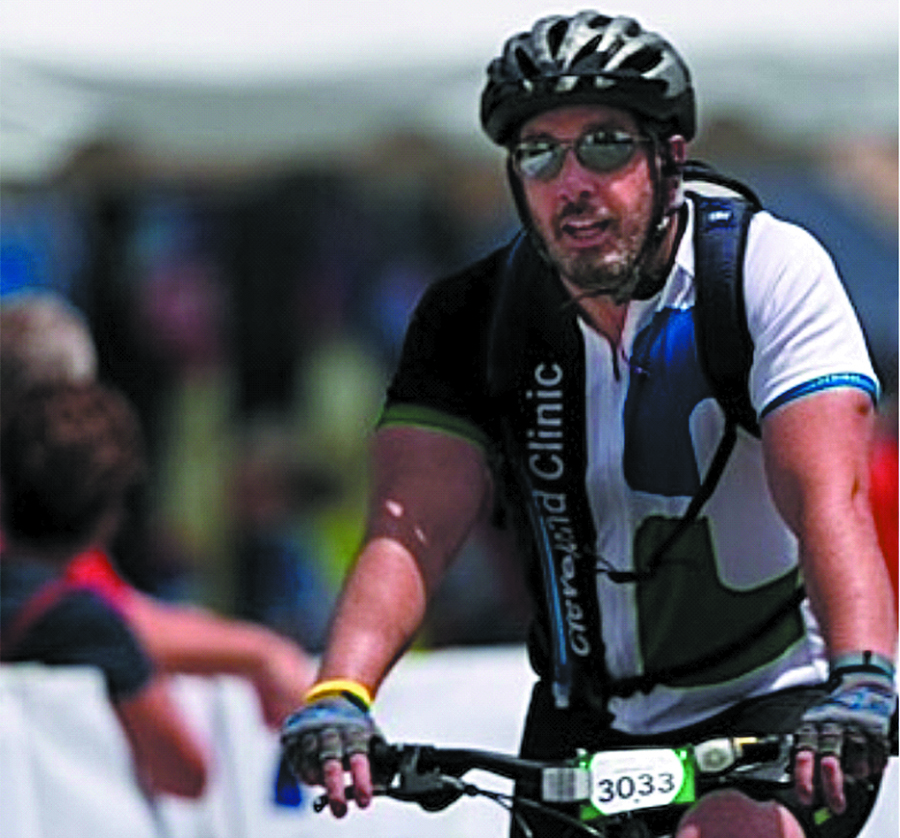
An avid bicyclist, Dr. Borland has returned to cycling, albeit not yet to the intensive level he enjoyed before his surgery. “I’m still building up to that. Thankfully, I’ve been able to return to lifting weights, playing basketball, taking walks, hiking…all the things I did before, but it’s been a gradual process,” he says. “There have definitely been some life adjustments, but overall, it’s been relatively smooth.”
Men weighing prostate cancer surgery or other treatments are should engage in careful discussions with their physicians about the benefits and potential risks of each treatment option. Oftentimes, these discussions focus on the potential physical side effects they may have to contend with afterward, but another important, and often overlooked, consequence of prostate cancer is the emotional and psychological toll it can take.
Any cancer diagnosis can trigger thoughts about your own mortality and lead to depression, anxiety and social isolation. Men with prostate cancer who experience these issues should discuss them with their loved ones and not hesitate to seek the help of a mental health professional, Dr. Borland advises.
Upon his return home from his prostatectomy, he says, he initially needed some time and space to process the physical effects of the surgery while also trying to maintain a sense of normalcy for his wife and kids. They then spent time discussing his diagnosis and treatment, and the support he received from them and other family and friends was invaluable in his recovery, he adds.
“As a psychologist, I encourage my patients to allow for healthy emotional expression,” he says. “Personally, I wasn’t someone who would cry at the drop of a hat before this experience, but during the time of my diagnosis and treatment, I would often randomly break out into tears.
“I’m still trying to come to terms with the fact that I had prostate cancer and that it was an aggressive cancer,” he continues. “Now, when I discuss my medical history, I don’t like using the term ‘cancer survivor’ because that’s not how I view it. I view it as I had cancer, and now I don’t anymore.”
Post-Prostatectomy Perspective
Dr. Borland’s experience has given him a new perspective in counseling a few men in his practice who are dealing with cancer and other prostate issues. Moreover, since his cancer battle, three men who are close to him have had their PSA levels checked.
“Considering my relatively young age and overall physical health, my diagnosis was a big eye-opener for everyone,” Dr. Borland says. “This experience has reinforced how lucky I am to have an incredible support in my life. My wife’s held my hand through every scary step, and has been my biggest champion. My kids have kept me grounded, and my family and friends have consistently reached out to see how I’m doing. My work colleagues and department head provided coverage and incredible support during my medical leave.
“I’ve met with my surgeon several times since my surgery, and the best words I’ve heard are, ‘You’re cancer-free.’ I’m so thankful for the outstanding care I received from Dr. Olivares and his entire team.”