Have you heard about tai chi walking for seniors?
Google “tai chi walking,” and you will be flooded with ads offering to teach you this form of exercise with the funny name. Some ads are accompanied by enticing claims about losing a large amount of weight, developing six-pack abs in only a few weeks, or gaining a beautiful body without a trainer.
Tai chi walking for seniors may or may not provide all of these things, but it can definitely offer a number of benefits. Read on to learn more.
What Is Tai Chi Walking?
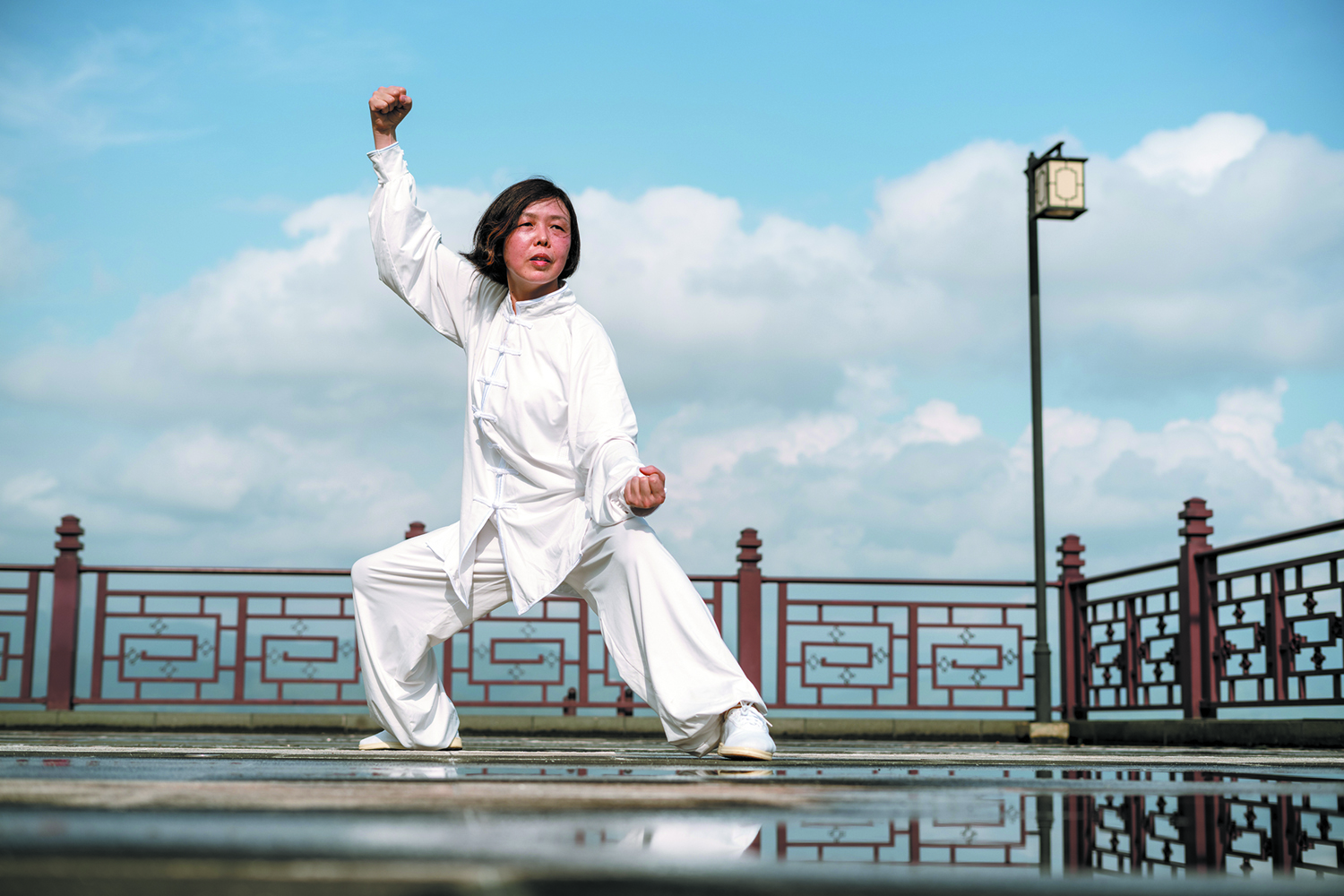
Tai chi is an ancient form of meditation designed to reduce stress and anxiety through a series of slow, flowing movements performed with focused breathing and attention.
The Yang style of tai chi comprises 32 movements that take five to eight minutes in total to perform. According to Jeffrey Yang, Sr., a Cleveland Clinic tai chi instructor (no relation to the Yang style), tai chi walking is simply the first two movements of this form of tai chi.
“It’s called ‘walking’ because you stretch out one foot a time,” he says.
Tai chi walking is actually a drill that trains you through repetitive movements. At first, the movements are robotic. After you memorize them and practice them over and over, you will be able to move fluidly and gracefully.
“Tai chi is stretching through continuous movement. The body should move like flowing water. It never stops,” says Yang.
Benefits of Tai Chi Walking for Seniors…and Anyone
A low-impact exercise, tai chi walking can be performed by anyone of any age. Slow, controlled steps and deliberate weight shifting strengthen muscles, improve balance and stamina, and increase flexibility. Cardiovascular fitness improves as blood pressure drops and heart rate rises.
“Many people are surprised to find that slow movements make their heart pump fast,” says Yang.
Research has shown that tai chi can benefit people suffering from joint pain, arthritis, fibromyalgia, and Parkinson’s disease, among other medical issues.
Internet Claims About the Benefits of Tai Chi Walking
Can tai chi walking help you lose large amounts of weight, develop a six-pack or get in shape without a trainer? Well, yes and no.
“Some of these claims are not true,” says Yang. “Tai chi walking is not a muscle-building exercise. It won’t give you a six-pack.”
Nor are you likely to lose a lot of weight. Performing all 32 movements of Yang tai chi burns 273 calories. Tai chi walking surely burns fewer calories. To lose one pound of fat, you need to burn 3,500 more calories than you consume.
On the positive side, however, tai chi is not an expensive exercise. “Once you have learned the forms, you can do them on your own without a trainer,” says Yang.
How to Learn Tai Chi Walking
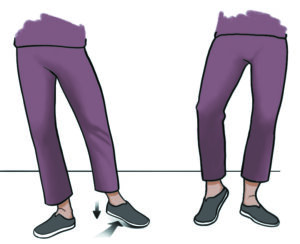
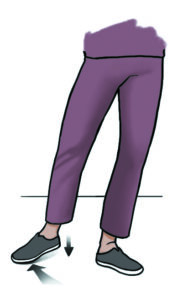
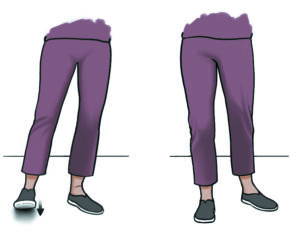
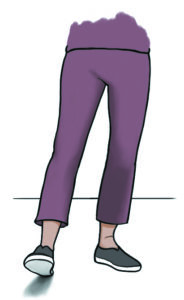
Read through our instructions and look at the illustrations, then give tai chi walking a try.
If you’d like personal instruction or are interested in learning more of the 32 movements of tai chi, you may need to take lessons.
“Look for a certified kung fu instructor,” says Yang, explaining that tai chi is a form of kung fu. “Ask what style of tai chi they teach. If they don’t answer ‘Yang,’ take a pass and look for someone else.”
How to Perform Tai Chi Walking
Choose a location with no obstructions for 5 or 6 feet in front of you and behind you.
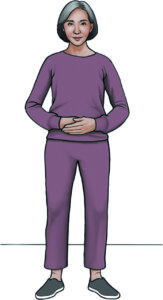
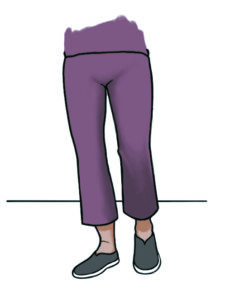
- Place one hand on your belly with your thumb at your navel. Cover this hand with your other hand. Stand with your legs a comfortable distance apart and your toes turned out.

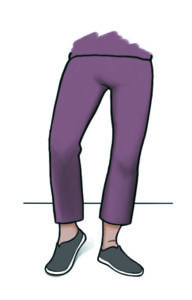
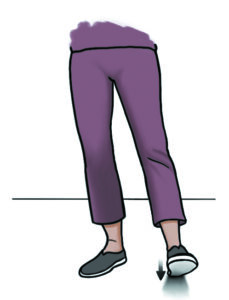
- Start by walking backward. Shift your weight to your left foot (L), and tap the toes of your right foot (R).

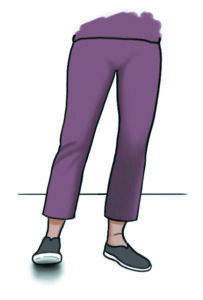
- Put your R heel down, raise your toes, and pause for a few seconds.

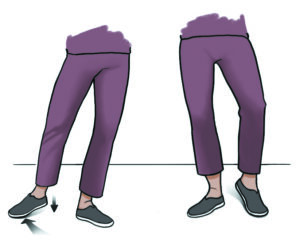
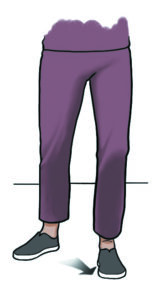
- Step backward with your R foot. Lower the toes, then the heel. Your R foot should be flat on the floor. Shift your weight back onto your R foot and tap the toes of your L foot.

- Step backward with your L foot. Lower the toes, then the heel. Your L foot should be flat on the floor. Shift your weight back onto your L foot and tap the toes of your R foot.

- Move your R foot backward. Repeat steps 4 and 5 until there is no more room to move backward.

- Then, start walking forward. With toes pointing ahead, step forward with your R foot, putting the heel down first, followed by the toes. When your foot is flat, shift your weight forward onto your R foot.

- Rock back onto your L foot and lift the toes of your R foot, leaving your heel on the ground.

- Shift your weight onto your R foot and bring your L foot forward.

- Tap the toes of your L foot, and then lower your L heel, followed by the toes.

- Rock forward onto your L foot, and then bring your R foot forward. Repeat steps 10 and 11 until you move forward as far as you can go.